Overview

A Dedicated Hub for Propulsion Research and Innovation

Our Centre of Excellence in Propulsion Systems (CoE-PS) is a dynamic research and innovation platform dedicated to advancing propulsion science, rocket technologies, and energetic materials. By connecting academia, industry, and government, we enable next-generation research, applied development, and specialised training aligned with the evolving needs of aerospace and defence sectors.

With a strong focus on experimentation, computational analysis, and industry collaboration, our CoE-PS serves as a catalyst for innovation while building skilled talent equipped to contribute to complex propulsion challenges.

Driven by Our Vision

We aim to become a globally recognised hub for propulsion systems innovation, leading advancements in aerospace technology through research-driven solutions that are sustainable, efficient, and high-performing.


Guided by Our Mission

We strive to create a collaborative environment where experts, researchers, and students explore advanced propulsion technologies, deliver impactful research outcomes, and build industry-ready capabilities.

Objectives

Our Strategic Objectives

Advance research in rocket propulsion, combustion, and energetic materials.

Establish state-of-the-art experimental and computational facilities.

Promote interdisciplinary and industry-driven research.

Support skill development through training, internships, and live projects.

Enable technology transfer, consultancy, and commercialisation.

Research Focus Areas

Areas of Excellence

  • Hybrid propellant ducted rocket motor systems
  • Boron combustion and energetic material performance
  • Small jet engines and turbine technologies
  • Combustion dynamics, stability, and diagnostics
  • Sustainable propulsion approaches for advanced aerospace applications
MAJOR PROJECTS

Areas of Impact

Team Members

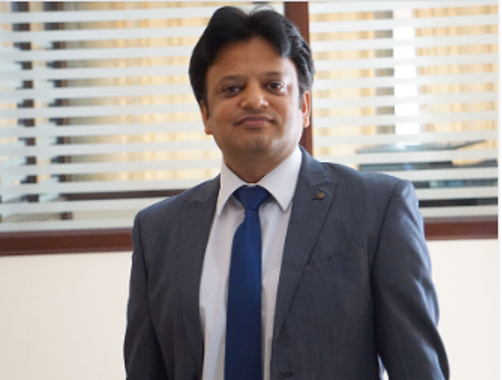
Dr Syed Alay Hashim

Director – Centre of Excellence in Propulsion Systems

Dr Syed Alay Hashim holds a PhD in Aerospace Engineering from IIT Kharagpur, with specialisation in aircraft and rocket propulsion. During his doctoral research, he developed systems for processing and testing hybrid fuels and propellants, contributing to advancements in propulsion experimentation.

With over a decade of experience in teaching and research, his work spans ducted rocket propulsion, ramjets, energetic nanoparticle combustion, and micro gas turbine engines. His current research focuses on advancing boron combustion technologies for ducted rocket applications, supporting the development of high-performance propulsion systems.

Faculty and Research Leadership

The Minds Behind the Centre

Dr. Syed Alay Hashim

Director

Centre of Excellence (Propulsion Systems)

Infrastructure and Facilities
From Testing to Simulation: Built for Innovation

Our Centre is equipped with specialised laboratories, diagnostic tools, and propulsion testing facilities that support both experimental and analytical research. This enables hands-on research aligned with real-world aerospace engineering challenges.


  • Experimental evaluation of boron combustion
  • Metallised solid fuel processing and characterisation
  • Hybrid propellant ducted rocket motor test setups
  • Micro gas turbine combustion chamber test rigs
  • Advanced diagnostic and instrumentation systems
  • Flame spectroscopy and combustion analysis
  • Computational modelling and simulation tools for propulsion systems
Industry and Government Collaboration

Collaborating With Industry and Government Leaders

We collaborate with aerospace companies, defence institutions, government agencies, and research organisations to align academic inquiry with practical applications. These partnerships support joint research, knowledge exchange, and the translation of emerging technologies into deployable solutions.

Recognitions and Accreditations

Recognition That Reflects Research Excellence

Our academic and research initiatives are supported by institutional recognition and are closely aligned with national priorities in aerospace development and technology leadership. The CoE work contributes to strengthening India’s propulsion research ecosystem while maintaining globally benchmarked standards of scientific inquiry and engineering practice.

Courses and Certifications

Curriculum and Certifications

We design our academic and certification offerings to build deep technical capability in propulsion science while connecting classroom learning with real-world aerospace applications. Through specialised coursework and hands-on training, we prepare students to develop the knowledge, skills, and confidence required to contribute to advanced propulsion technologies.

  • Specialised academic courses in Aircraft Propulsion and Rocket Propulsion
  • Certification programmes focused on Ducted Rocket Propulsion and combustion systems
  • Practical learning modules that integrate theory with laboratory experimentation
  • Internship-linked training designed to strengthen industry readiness
  • Skill development pathways aligned with emerging aerospace and defence requirements
Internship and Live Projects

Experiential Learning in Action

Our students immerse in real-world engineering environments through internships and live projects delivered in collaboration with industry and research partners. By working directly on propulsion systems and aerospace applications, students apply classroom knowledge to solve practical challenges and develop hands-on technical expertise. 

This practice-led approach builds confidence, sharpens problem-solving skills, and prepares graduates to transition smoothly into advanced research and professional engineering roles.

  • Prepare and process solid fuel grains for propulsion studies
  • Conduct propulsion testing and experimental procedures
  • Analyse combustion behaviour and system performance
  • Support experimental validation, data acquisition, and interpretation
Corporate Training and Executive Education

Professional Development for the Next Era of Propulsion

The Centre offers customised corporate training and executive education programs tailored for engineers, scientists, and industry professionals. These programs focus on propulsion technologies, combustion science, and advanced engineering practices, enabling organisations to strengthen technical capabilities and remain future-ready.

Ongoing and Completed Projects

Translating Innovation into Real-World Applications

We actively lead funded research projects in collaboration with academic institutions, industry partners, and government agencies, transforming scientific inquiry into practical propulsion solutions. Our teams design, test, and refine advanced propulsion concepts while exploring the use of metal additives in solid fuel formulations to enhance combustion efficiency, energy release, and overall propulsion performance.

  • Developing and optimising rocket motor systems
  • Formulating and testing advanced propulsion fuels
  • Investigating combustion mechanisms through diagnostics and analysis
  • Enhancing propulsion system performance through experimental validation and modelling
Consultancy and Testing Services

From Evaluation to Implementation

The Centre provides consultancy and experimental testing services in propulsion systems, combustion analysis, and materials characterisation. These services support academic institutions, aerospace organisations, and R&D establishments seeking validated insights, specialised testing, and engineering solutions.

Publications and Patents

Scientific Inquiry, Documented and Patented ​

Our faculty and researchers actively contribute to high-impact journals, international conferences, and scholarly publications, strengthening the global knowledge base in propulsion and energetic materials. The Centre’s growing patent portfolio reflects its commitment to innovation, translational research, and technology development.

Patent
SL No
1. Design of a Dual-Combustor Hybrid Ducted Rocket with an Annular Perforated Mixing Chamber for the Boron Combustion Test, Indian Patent, Application No - 202331058870. (Published on 25 October 2024)
2. Safe Screening Method for Beryllium-Based Hybrid Propellant Thruster for Deep Space Applications, Indian Patent, Application No - 202341041142. (Published on 20 June 2025)
SL No
1. Hashim S A, Saugata M, Karmakar S, and Roy A, Prakruthi K D, Adwetee R, Jagdish N, and Mali A (2025). Impact of Iron Nanoparticles on Boron Combustion in a Hybrid Propellant Ducted Rocket Configuration. Propulsion and Power Research, 14(3), 465-483.
2. Pritam B, Hashim S A, Maharshi P K, Samuel A, and Rahman Z U (2025). Advancing hybrid propellant ducted rocket motor with HTPB-boron-silver fuel and regenerative engine principles. International Journal of Energetic material and Chemical Propulsion, 24(6), 11-24.
3. Batabyal P, Kailash S, Jha A, Sharma D, and Hashim S A (2025). Regression Rate Evaluation of Boron-HTPB–Based Solid Fuel with Silver Nanoparticles in the Primary Combustor of a Ducted Rocket Motor. Journal of Aeronautics, Astronautics and Aviation, 57(7S), 1587-1594.
4. Hashim S A, Parashotambhai A P, Arah A A, Nandanwa P P, and Ali A (2025). Investigation of boron combustion efficiency through thermal analysis of condensed products in a hybrid ducted rocket motor. Journal of Aeronautics, Astronautics and Aviation, 57(7S), 1539-1545.
5. Hashim S A, Anghan P P, Arah A A, Ahmed M A, Batabya P, Mishra D, and Roy A (2025). Impact of Zirconium Nanoparticles on Boron-Paraffin Wax-Based Hybrid Propellant in Ducted Rocket Applications. Engineering Research Express, 7(2) 025536.
6. Mandal S, Divvela R, Hashim S A, Karmakar S, and Roy A (2025). (2025). Boron-laden solid-fueled hybrid gas generator: Its feasibility for potential application in ducted rockets. Combustion Science and Technology, 1-30.
7. Hashim S A, Karmakar S, and Roy A (2024). Evaluation of Boron Combustion for Ducted Rocket Applications Using Condensed Product Analysis. Defence Science Journal, 74(2), 278-287
8. Yash P, Mahotmananda N, Hashim S A, and Mengu D. (2023). Exploring the Potential of Boron Carbide in Enhancing Energy Output of Solid Fuels for Hybrid Rocket Propulsion systems. Propellants, Explosives, Pyrotechnics, 49(1), e202300173.
9. Saugata M, Hashim S A, Roy A, and Karmakar S (2023). A Short Review of Challenges and Prospects of Boron-Laden Solid Fuels for Ramjet Applications. FirePhysChem, 3(3), 179-200.
10. Hashim S A, Islam M, Kangle S, Karmakar S, and Roy A (2021). Performance Evaluation of Boron/Hydroxyl-Terminated Polybutadiene-Based Solid Fuels Containing Activated Charcoal. Journal of Spacecraft and Rockets/AIAA Journal, 58(2), 363-374.
11. Hashim S A, Karmakar S, and Roy A (2019). Experimental Observation and Characterization of B–HTPB-Based Solid Fuel with Addition of Iron Particles for Hybrid Gas Generator in Ducted Rocket Applications. Propellants, Explosives, Pyrotechnics, 44(7), 896-907.
12. Hashim S A, Karmakar S, and Roy A (2019). Effects of Ti and Mg Particles on Combustion Characteristics of Boron–HTPB-Based Solid Fuels for Hybrid Gas Generator in Ducted Rocket Applications. Acta Astronautica, 160, 125–137. (Top 10/IIT KGP)
13. Hashim S A, Karmakar S, and Roy A (2018). Combustion Characteristics of Boron-HTPB-Based Solid Fuels for Hybrid Gas Generator in Ducted Rocket Applications. Combustion Science and Technology, 191(11), 2082–2100.
14. Hashim S A, Karmakar S, Roy A, and Srivastava S K (2018). Regression Rates and Burning Characteristics of Boron-Loaded Paraffin-Wax Solid Fuels in Ducted Rocket Applications. Combustion and Flame, 191, 287-297. (Top 10/IIT KGP)
15. Hashim S A (2013). Design and Fabrication of An Annular Combustion Chamber for the Micro Gas Turbine Engine Applications. International Journal of Engineering Research & Technology, 2(8), 1307-1314.
SL No
1. Mishra D, Batabyal P, Arah A A, Parashotambhai A P, and Hashim S A (2025). Boron combustion enhancement using titanium and zirconium nanoparticles for fuel in ducted rocket applications. In AIP Conference Proceedings (Vol 3259, No 1, p 090001). AIP Publishing LLC. doi: 10.1063/5.0262892.
2. Nandanwar P P, Parashotambhai A P, Verma H O, and Hashim S A (2025, February). Attitude Controller Design for a Flying Wing UAV. In 2025 International Conference on Sustainable Energy Technologies and Computational Intelligence (SETCOM) (pp 1-5). IEEE Explore. doi: 10.1109/setcom64758.2025.10932555
3. Paul P M, Thomas A K, Hashim, S A, Harsha K S, Mahesh M, Goutham, and Prince. (2024). Automatic Screw Jack Mobile Controller for Car Lifting Using the Car Battery in the International Conference on Microelectronics, Electromagnetics and Telecommunication (pp 309-320). Singapore: Springer Nature Singapore.
4. Rakesh D, Mandal S, Karmakar S, Roy A, and Hashim S A (2024). Effect of ABS Fin Thickness on Combustion Performance of ABS/Paraffin Solid Fuel Grain. AIAA SCITECH 2024, 0970. doi/abs/10.2514/6.2024-0970
5. Hashim S A and Dharmalingam S (2023). Design of Smooth Supersonic Nozzle Profile Using Method of Characteristics. AIP Publishing, 2821(1). doi.org/10.1063/5.0164552
6. Mandal S, Hashim S A, Karmakar S, and Roy A (2023). Experimental Investigation of Boron Laden Paraffin Wax-Based Solid Fuel for Ducted Rocket Application, The American Institute of Aeronautics and Astronautics. AIAA SCITECH 2023. doi.org/10.2514/6.2023-2187
7. Hashim S A, Karmakar S, Roy A, and Sheikh S (2020). Performance Evaluation of Boron Particles with Wax–HTPB-Based Solid Fuel for the Primary Combustor in Ducted Rocket Applications. Increasing Role of Indian Aerospace Industries for Aeronautics, Space Projects and Systems. Annual Technical Volume of Aerospace Engineering Division Board. The Institution of Engineers India, 4, 91-98. ISBN 978-81-950662-4-7
8. Hashim S A, Karmakar S, Roy A, and Sheikh S (2020). Performance Evaluation of Boron Particles with Wax–HTPB-Based Solid Fuel for the Primary Combustor in Ducted Rocket Applications. National Conference on Emerging Technologies in Aerospace Structures, Materials and Propulsion Systems. The Institution of Engineers Pune, India, 7-13. ISBN 978-81-942561-9-9
9. Hashim S A, Kangle S, Karmakar S, and Roy A (2018). Screening of Nano-Aluminum Based Solid Fuels for The Hybrid Rocket Applications, The American Institute of Aeronautics and Astronautics. AIAA SCITECH 2018. doi.org/10.2514/6.2018-0669
10. Hashim S A, Kangle S, Karmakar S, and Roy A (2018). Performance Augmentation of Boron-HTPB Based Solid Fuels by Energetic Additives for Hybrid Gas Generator in Ducted Rocket Applications. Innovative Design and Development Practices in Aerospace and Automotive Engineering. Springer Singapore, 143-157. ISBN 978-981-13-2697-4
11. Hashim S A, Lahariya M, Karmakar S, and Roy A (2016). Calculation of Theoretical Performance of Boron-Based Composite Solid Propellant for the Future Applications. Innovative Design and Development Practices in Aerospace and Automotive Engineering. Springer Singapore, 327–335. ISBN 978-981-10-1771-1
12. Hashim S A, Manish N, Mishra D, and Ahuja K (2014). Reduction of the passage between the flame tubes of the combustor for a millimeter size gas turbine engine in the art of micromachine technology. Innovative Design and Development Practices in Aerospace and Automotive Engineering. Springer Singapore, 197–205. ISBN 978-81-322-1871-5
SL No
1. Hashim S A, Mandal S, Afra A A, Anghan P P, Basak N, Aftab A, and Karmakar S (2025). Performance Analysis of Primary and Secondary Combustors in Ducted Rocket Utilising Boron -Magnesium-Paraffin Wax Solid Fuel Combinations. 15th Asia-Pacific Conference on Combustion (ASPACC 2025), Singapore.
2. Pritam B, Hashim S A, Punit K M S, Zia U R, and Samuel A (2025). Regression rate evaluation of boron-HTPB solid fuel loaded with iron particles in a ducted rocket with regenerative mixing concept. 15th Asia-Pacific Conference on Combustion (ASPACC 2025), Singapore.
3. Mishra D, Hashim S A, Shashank G, Nandanwar P P, Afra A A, Anghan P P, and Karmakar S (2025). Ballistic evaluation of boron-based solid fuel with magnalium additive for combustion enhancement in ducted rocket propulsion. 15th Asia-Pacific Conference on Combustion (ASPACC 2025), Singapore.
4. Pritam B, Hashim S A, Maharshi P K, Samuel A, and Rahman Z U (2025). Advancing hybrid propellant ducted rocket motor with HTPB-boron-silver fuel and regenerative engine principles. International Conference on Sustainable Air and Space Technologies (ICSAST25), India.
5. Hashim S A, Mandal S, Afra A A, Anghan P P, and Shashank G (2025). Regression Rate Evaluation of Boron-Titanium-Wax Solid Fuel in a Ducted Rocket Motor with Regenerative Mixing Concept. International Conference on Sustainable Air and Space Technologies (ICSAST25), India.
6. Pritam B, Mishra D, Anghan P P, Afra A A, Nandanwar P P, Kumari N, Ajaz A, Rawal Y, Basavaraj S K, and Hashim S A (2025). Investigation of Regression Rate of HTPB-Based Solid Fuel on Varying Nozzle Exit Conditions in Ducted Rocket Applications. 5th National Aerospace Propulsion Conference (NAPC 2025), IIT Madras, India.
7. Hashim S A, Anghan P P, Arah A A, Nandanwar P P, and Ali A (2024). Investigation of boron combustion efficiency through thermal analysis of condensed products in a hybrid ducted rocket motor. International Conference on Advances in Aerospace Technologies (ICAAsT 2024), India.
8. Batabyal P, Kailash S, Jha A, Sharma D, and Hashim S A (2024). Regression rate evaluation of boron-HTPB–based solid fuel with silver nanoparticles in the primary combustor of a ducted rocket motor. International Conference on Advances in Aerospace Technologies (ICAAsT 2024), India.
9. Kharat V, Hupare S, Borhade S, Prasad S, Raj E, Pandi S, and Hashim S A (2024). Evaluation of regression rate based on chamber pressure of a ducted rocket. ICICEPC 2024, Combustion Institute Indian Section (CI - Pittsburg USA), India.
10. Hashim S A, Arah A A, Parashotambhai P A, Arora A, Narlekar S, Nisha P, and N Basak. (2024). Investigation of Combustor and Nozzle Performance in a Hybrid Ducted Rocket Using Boron Carbide-Based Solid Fuel. ICICEPC 2024, Combustion Institute Indian Section (CI - Pittsburg USA), India.
11. Mishra D, Batabyal P, Arah A A, Parashotambhai A P, and Hashim S A (2024). Boron Combustion Enhancement Using Titanium and Zirconium Nanoparticles for Fuel in Ducted Rocket Applications. Global Conference on Aeronautical, Aerospace and Mechanical Sciences (GCAAMS-2024), India.
12. Hashim S A, Parashotambhai A P, Arah A A, Batabyal P, Mandal S, Karmakar S, and Roy A (2024). Impact of Zirconium Nanoparticles on Boron-Paraffin Wax-Based Hybrid Propellant in Ducted Rocket Applications. International Conference on Advances in Aerospace and Energy Systems (IAES- 2024), ISRO, India.
13. Rakesh D, Mandal S, Karmakar S, Roy A, and Hashim S A (2024). Effect of ABS Fin Thickness on Combustion Performance of ABS/Paraffin Solid Fuel Grain. In AIAA SCITECH 2024 Forum, USA (p. 0970).
14. Hashim S A, Arah A A, Parashotambhai A P, Ahmed M A, Mandal S, Karmakar S, and Roy A (2023). Experimental Evaluation of Boron-Titanium-Based Solid Fuel Using a Lab-Scale Ducted Rocket Motor, First Joint International Conference on Advances in Mechanical and Aerospace Engineering (ATCON 2: ICAMAE 2023), India, pp. 232.
15. Abubakar M, Onimisi M A, Aliyu A B, and Hashim S A (2023). Characterization and Corrosion Behavior of Al and Ternary Al-Zn-Mg Alloy Produced from Beverage can Scraps in Seawater, First Joint International Conference on Advances in Mechanical and Aerospace Engineering (ATCON 2: ICAMAE 2023), India, pp. 22.
16. Paul M, Thomas A K, Hashim S A, Mahesh, Kilaru H, Gowtham, and Prince (2023). Automatic Screw Jack Mobile Controller for Car Lifting using the Car Battery, 8th International Conference on Micro-Electronics, Electromagnetics and Telecommunications, (ICMEET 2023), National Institute of Technology Mizoram, India.
17. Hashim S A, Mondal S, Rakesh D, Karmakar S, and Roy A (2023). Experimental Investigation of Boron Laden Paraffin Wax-Based Solid Fuel for Ducted Rocket Application, 13th International Symposium on Special Topics in Chemical Propulsion and Energetic Materials (13-ISICP), Oslo, Norway.
18. Hashim S A, Karmakar S, and Roy A (2023). Experimental Investigation of Boron Laden Paraffin Wax-Based Solid Fuel for Ducted Rocket Application, The American Institute of Aeronautics and Astronautics, AIAA Aerospace Sciences Meeting, National Harbor, MD, USA.
19. Dhruv P, C Dipali C, Sathish D, and Hashim S A (2022). Computational Studies on Unstart in Supersonic Inlet at Mach 1.8. International Conference on Science, Engineering and Technology (ICSET-2022) Rajkot, Gujarat, India.
20. Hashim S A and Sathish D (2022). Design of Smooth Supersonic Nozzle Profile Using Method of Characteristics. International Conference on Contemporary Innovations in Mechanical Engineering (CIME-2022), Hyderabad, India.
21. Sheikh S, Shubham P, Hashim S A, Karmakar S, and Roy A (2020). Design and Testing of Missile Launcher-Based Drone for Defense Applications. International Conference, AeSI-2020 on Aviation Technology- Current Scenario, The Aeronautical Society of India, Kolkata Chapter, India.
22. HHashim S A, Islam M, Karmakar S, and Roy A (2019). Performance Evaluation of Boron Particles with Wax–HTPB-Based Solid Fuel for The Primary Combustor in Ducted Rocket Applications. National Conference on Emerging Technologies in Aerospace Structures, Materials and Propulsion Systems, The Institution of Engineers, Pune Chapter, India.
23. Hashim S A, Kangle S, Karmakar S, and Roy A (2018). Effects Of Iron Particles on Boron–HTPB-Based Solid Fuel for SFDR Applications Using Rapid Screening Instrument, National Aerospace Propulsion Conference, NAPC, IIT Kharagpur, India.
24. Hashim S A, Kangle S, Karmakar S, and Roy A (2018). Screening of Nano-Aluminum Based Solid Fuels for The Hybrid Rocket Applications, The American Institute of Aeronautics and Astronautics, AIAA Aerospace Sciences Meeting, Florida, USA.
25. Hashim S A, Kangle S, Karmakar S, and Roy A (2018). Performance Augmentation of Boron-HTPB Based Solid Fuels by Energetic Additives for Hybrid Gas Generator in Ducted Rocket Applications. Innovative Design and Development Practices in Aerospace and Automotive Engineering, I-DAD, VTU, Chennai, India.
26. Hashim S A, Kangle S, Karmakar S, and Roy A (2017). Screening of Boron-Based Solid Fuels for Hybrid Rocket Applications, High Energy Material Conference and Exhibits (HEMCE), DRDO Pune, India.
27. Hashim S A, Kangle S, Karmakar S, and Roy A (2017). Combustion Characteristics of Boron-HTPB Based Solid Fuels for Hybrid Rocket Applications, International Conference on Theoretical, Applied, Computational and Experimental Mechanics, ICTACEM, IIT Kharagpur, India.
28. Hashim S A, Lahariya M, Karmakar S, and Roy A (2016). Calculation of Theoretical Performance of Boron-Based Composite Solid Propellant for The Future Applications, Innovative Design, Analysis and Development Practices in Aerospace and Automotive Engineering, I-DAD, VTU, Chennai, India.
29. Hashim S A, Manish N, Mishra D, and Ahuja K (2014). Reduction of the Passage Between the Flame Tubes of the Combustor for A Millimeter Size Gas Turbine Engine in the Art of Micromachine Technology, Innovative Design, Analysis and Development Practices in Aerospace and Automotive Engineering, I-DAD, VTU, Chennai, India.
30. Hashim S A, Manish N, Peter P, Ahuja K, and Grover U (2013). Low NOx Emission at Maximum Efficiency of the Gas Turbine Engine, Recent trends in applied chemistry (RTAC), VTU Chennai, India.
31. Hashim S A (2009). Setting up of Rocket Propellant Processing Facility, Fligen Aero Fest, PCET Coimbatore, India.
Achievements and Impact

Achievements That Shape the Future

Our research ecosystem has enabled students to pursue advanced studies, research careers, and industry roles across leading global universities, premier Indian institutes, and aerospace organisations. This growing network of alumni reflects the Centre’s impact on talent development and knowledge dissemination.

SL No Student Name Institute
1Mali Abhinandan SanjayUniversity of Bologna, Italy
2Ananshi AroraUniversity of Leeds, UK/IIT Bombay
3R Nisha Preethi AbisehaUniversity of Glasgow, Scotland
4Narendranath BasakIIT Guwahati
5Afra ArahIIT Madras
6Punit KumarIIT Madras
7Kailash GBIT Mesra, Ranchi
8Prajakta PramodBIT Mesra, Ranchi
9Prit ParashotambhaiBIT Mesra, Ranchi
10Adwitee RoutrayManipal University, Bangalore
11Jagdish NahakAmity University, Noida
12Amanda Elizabeth AntonyJain University, Bangalore
13Prakruthi K DCapgemini Engineering
14Nerlekar Soujanya BabasahebStar Air Airlines
15Aftab AliNSC CAD Group
16Neha KumariTATA Advance, Bangalore
17Akangsha JhaAdrasti Technology, Bangalore
18Shashank GAerospace Startup, NIITM, Bangalore
19Sanchari ChakrabortyMyCaptain, Bangalore
Research Internships and Project Opportunities

Structured Research Pathways for Emerging Innovators

We offer structured research internships and academic supervision for BTech, MTech, and PhD scholars, fostering deep experimentation and innovation in propulsion science. These pathways combine mentorship, laboratory experience, and applied problem-solving to prepare students for advanced R&D environments.

  • Short-duration technical workshops (1–2 days)
  • One-month intensive internships
  • Three-month project-based research training
  • Collaborative thesis and sponsored research opportunities
  • Sustainable propulsion approaches for advanced aerospace applications
Corporate Training and Executive Education

Professional Development for the Next Era of Propulsion

The Centre offers customised corporate training and executive education programmes tailored for engineers, scientists, and industry professionals. These programmes focus on propulsion technologies, combustion science, and advanced engineering practices, enabling organisations to strengthen technical capabilities and remain future-ready.

Internship and Live Projects

We offer a 45-day internship program that combines guided training with live projects at basic and intermediate levels.

This hands-on experience allows students to apply their technical knowledge, develop practical problem-solving skills, and become eligible for certification upon successful completion.

  • Smart Timetable Automation
    A solution that automatically generates optimised academic schedules based on faculty availability, classroom allocation, and course requirements.
  • India Tax
    A digital platform designed to help individuals calculate, file, and pay taxes securely, featuring automated computations and real-time tracking.


  • Alliance Navigation App
    A campus navigation application created to assist newcomers in locating facilities and services, currently prepared for launch in association with Apple (awaiting MoU approval).
  • Guru Chatra
    An ERP-style platform that enables seamless faculty–student communication and integrates academic services.
  • My Medicare
    A digital healthcare solution focused on simplified health management, patient safety, and effective communication between patients and healthcare professionals.
Fellowships and Assistantships

Supporting the Next Generation of Propulsion Researchers

Structured fellowships and assistantships place scholars at the forefront of propulsion research and innovation. Doctoral and postdoctoral researchers, along with research assistants, actively contribute to funded projects focused on propulsion systems and energetic materials.

Our scholars design and execute experiments, conduct advanced analytical investigations, and support technology development in collaboration with faculty and research partners. This immersive research environment enables them to build independent expertise, contribute to high-impact outcomes, and evolve as specialists in advanced propulsion science.

Start-up and Incubation Support

From Research to Innovation-Led Entrepreneurship

Our CoE-PS supports aspiring innovators in translating research ideas into viable technologies through mentorship, technical validation, and collaboration with incubation ecosystems. We encourage the development of deep-tech solutions in propulsion, materials, and aerospace subsystems.

Hackathons and Competitions

Encouraging Innovation Through Technical Challenges

The Centre promotes innovation-led learning through technical competitions, design challenges, and problem-solving forums that encourage students to apply propulsion concepts to real-world aerospace scenarios while fostering teamwork and interdisciplinary thinking.

Gallery

In Focus