NA

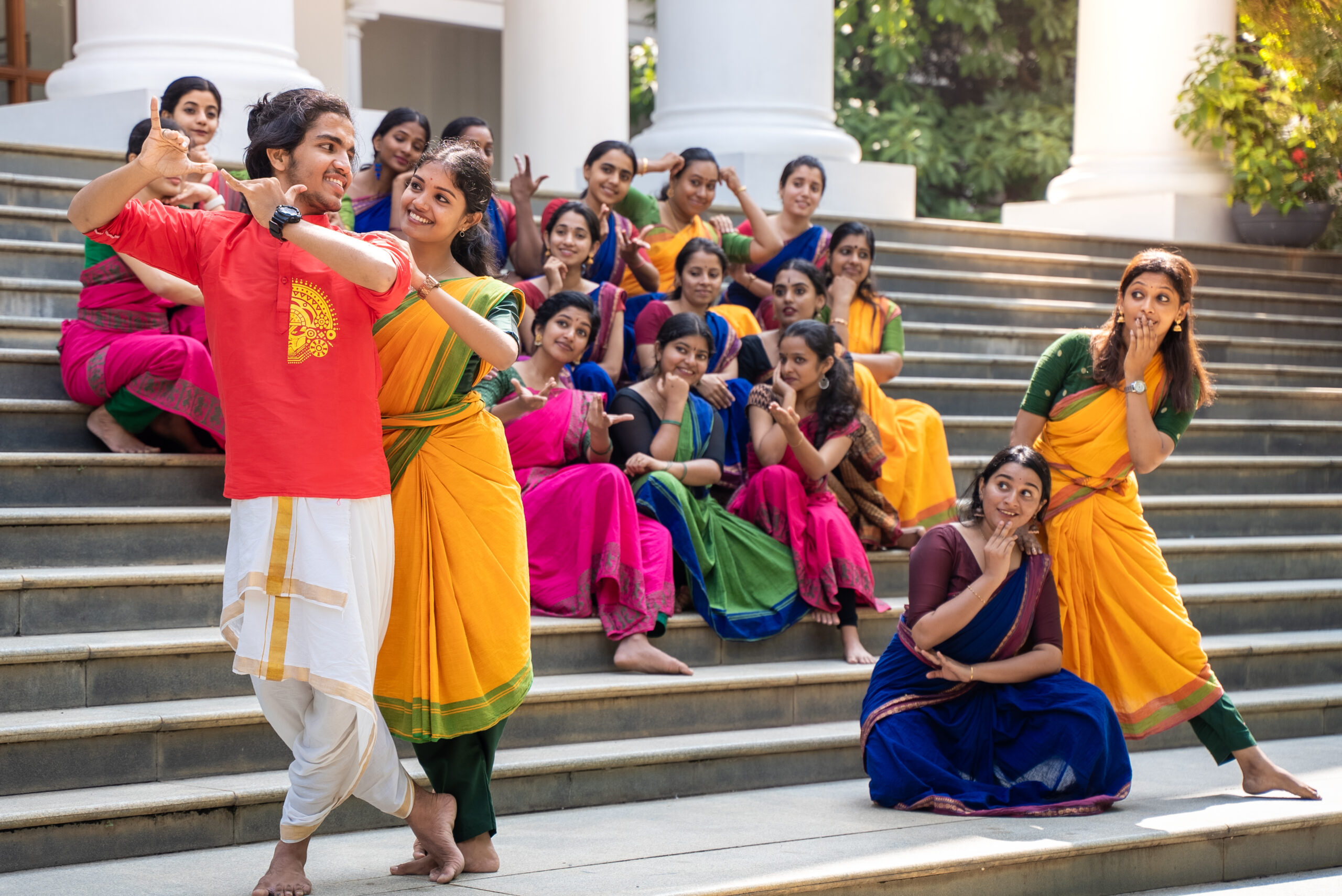
A Ph. D. in Performing Arts is a research-oriented doctoral program designed for individuals seeking advanced scholarly and practical understanding of performance traditions, techniques, history, aesthetics, and theory. It blends academic research with creative practice, fostering scholars, educators, and practitioners who contribute to the field through original research..
Duration
Regular: Two Years / Four Semesters
Lateral: One Year / Two Semesters
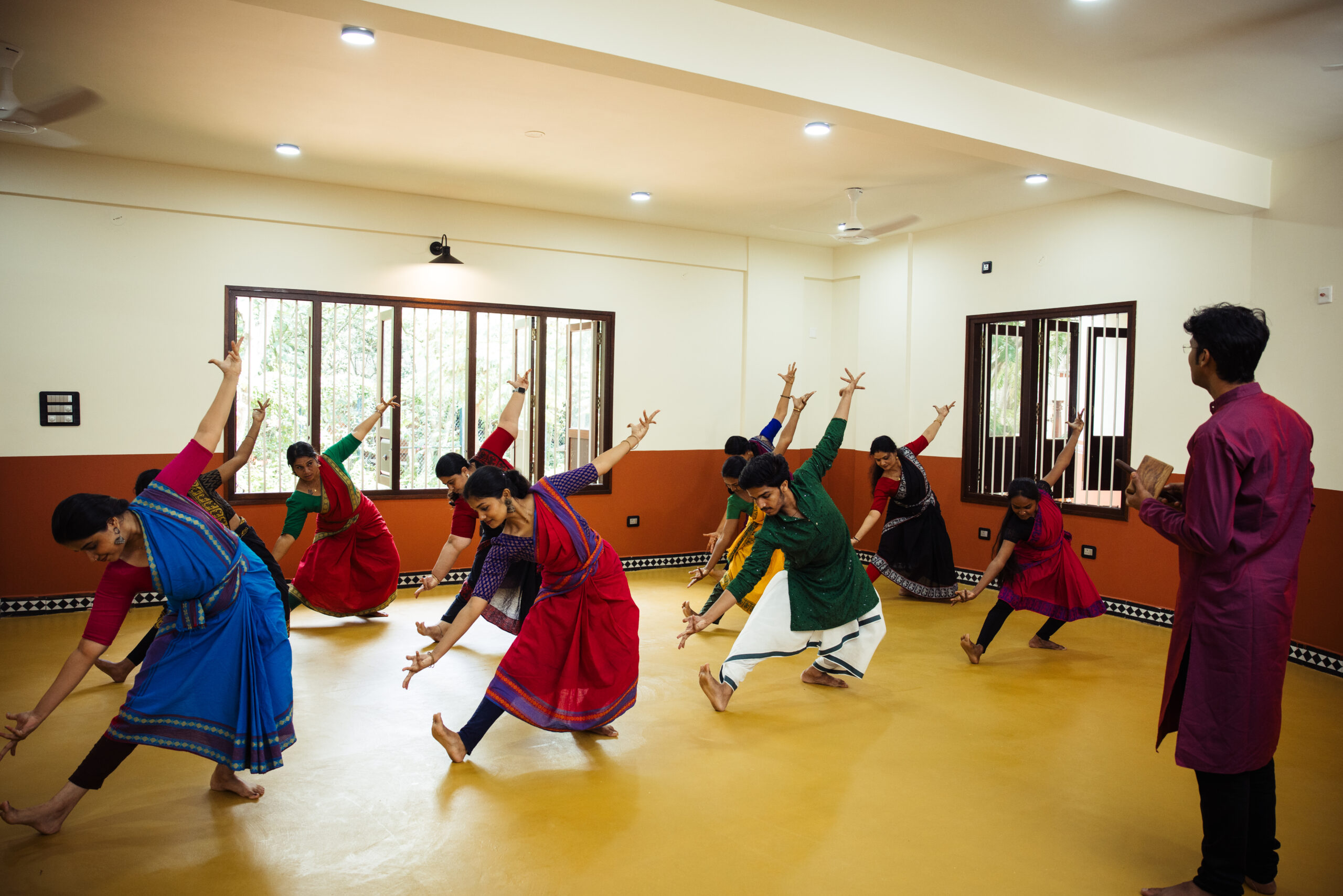

Why Choose
Ph. D. - Performing Arts
at Alliance University?
Ph. D. - Performing Arts
at Alliance University?
Lorem Ipsum is simply dummy
Global Curriculum Standard
Contemporary curriculum aligned with international benchmarks.
Expert Core Faculty
Dedicated and highly experienced dance and music faculty members.
Elite Guest Faculty
Internationally acclaimed artistes as visiting and adjunct faculty.
Comprehensive Performing Arts Library
Well-equipped library with the best resources and Sanskrit treatises in dance, music and theatre along with news articles, journals, magazines, books, e-resources, etc, on performing arts.
Interactive Artistic Workshops
World-renowned artistes for lecture-demonstrations and workshops.
Research and Publication Focus
Training and exposure in research work and publications.
Global Performance Opportunities
Performing opportunities at prestigious festivals in India and abroad as part of the performing wing / ensemble.
Advanced Performance Infrastructure
Dedicated auditoriums with advanced equipment.
‹ PREV
NEXT ›
Courses
Ph.d in performing Arts and Indic studies
Indian Classical Dance
Indian Classical Music
Epigraphy, Numismatics
Asian Art Forms
Folklore Studies
Cultural Studies
Indian Medicine
Indian Temple Architecture
NA
PEO (Program Educational Objectives)
PEO 1. To develop advanced knowledge of performing arts and Indic knowledge systems through interdisciplinary and research-oriented learning.
PEO 2. To equip students with the ability to design and conduct ethical, qualitative, and practice-based research rooted in Indic epistemologies and contemporary
methodologies.
PEO 3. To foster critical engagement with classical texts, oral traditions, and modern scholarship for original knowledge creation.
PEO 4. To prepare graduates for academic, research, cultural leadership, and knowledge dissemination roles at national and global levels.
PSO (Program Specific Outcomes)
PSO 1. Apply classical Indian aesthetic theories (rasa, dhvani, abhinaya) and Indic philosophical frameworks to the analysis of performing arts practices.
PSO 2. Design and execute qualitative and practice-based research using methods such as ethnography, fieldwork, interviews, and textual analysis.
PSO 3. Critically interpret primary Indic texts and oral knowledge traditions within their cultural, historical, and performative contexts.
PSO 4. Integrate traditional knowledge systems with contemporary interdisciplinary perspectives to address cultural, social, and artistic questions
PO (Program Outcomes)
PO 1. Knowledge Application
Demonstrate advanced knowledge of performing arts, Indic philosophies, aesthetics, and research paradigms.
PO 2. Research Problem Identification
Identify research gaps and formulate clear, feasible, and original research questions.
PO 3. Research Design
Design qualitative and practice-based research projects using appropriate methodologies and tools.
PO 4. Data Collection & Analysis
Collect, analyze, and interpret data from textual, performative, ethnographic, and community-based sources.
PO 5. Critical Thinking
Critically evaluate scholarly literature, performances, and cultural practices using theoretical frameworks.
PO 6. Communication Skills
Communicate research findings effectively through academic writing, presentations, and performative modes.
PO 7. Ethics & Integrity
Demonstrate ethical research practices, academic integrity, and respect for cultural knowledge systems.
PO 8. Interdisciplinary Engagement
Integrate perspectives from philosophy, aesthetics, culture, history, and social sciences in research and practice.
PO 9. Cultural Sustainability & Inclusion
Promote cultural sustainability, diversity, and inclusive engagement with living traditions and communities.
PO 10. Lifelong Learning & Professional Readiness
Exhibit readiness for lifelong learning, academic careers, and professional roles in research, arts, and cultural institutions.
Activity Points
Warning: Undefined variable $word_limit in /home/mkavnn8oi4g7/public_html/alliance-university/wp-content/themes/alliance_child/academics/core-components-tab.php on line 239
Warning: Undefined variable $word_limit in /home/mkavnn8oi4g7/public_html/alliance-university/wp-content/themes/alliance_child/academics/core-components-tab.php on line 243
Warning: Undefined variable $word_limit in /home/mkavnn8oi4g7/public_html/alliance-university/wp-content/themes/alliance_child/academics/core-components-tab.php on line 244
Deprecated: array_slice(): Passing null to parameter #2 ($offset) of type int is deprecated in /home/mkavnn8oi4g7/public_html/alliance-university/wp-content/themes/alliance_child/academics/core-components-tab.php on line 244
NA
• Applicants holding a master’s degree with a minimum 55% marks or equivalent Grade in a point scale as may be prescribed by the UGC from time to time, wherever the grading system is followed.
• Applicants whose results of the final examination of a program leading to a master’s degree are awaited can be given provisional admission if he/she fulfils other requirements for admission. After the provisional admission, the candidate will be required to furnish proof of completing a master’s degree with a minimum of 55% marks within three months from admission, failing which his / her admission will be cancelled.
• Applicants holding foreign Degree’s equivalent to that of a Master’s degree study with minimum 55% marks or equivalent Grade in a point scale as may be prescribed by the UGC from time to time, wherever grading system is followed; Provided that applicants with a foreign Degrees shall be admitted to the Ph.D. programme, subject to clearance by the Equivalence Committee of Alliance University.
• Applicants having completed M.Phil. Coursework with a minimum 55% marks in aggregate or its equivalent Grade, in the UGC point scale, and those candidates who have their M.Phil. Dissertation evaluated, but viva-voce is pending, maybe may also be admitted to the Ph.D. programme.
• Applicants possessing a degree approved as equivalent to the M.Phil. Degree in India, obtained from a foreign Educational Institution accredited by the UGC, if candidates with a degree from a foreign Institution shall be admitted to the Ph.D. programme, subject to the clearance by the Equivalence Committee of Alliance University.
• Admission of candidates belonging to the SC/ST/OBC, or other reserved categories shall be governed by the Karnataka State Rules in this regard, from time to time.
• Students from a four-year undergraduate programme (with Honors) can enroll directly if they have scored 75% or above, with a 5% relaxation for specified categories as per UGC regulations. Those who have scored between 55% and 75% may qualify after completing either a one-year mastes programme or a bridging course of 36-40 credits. (Refer to National Credit Framework NCrF 2024).
• For students from a three-year undergraduate programme, Ph.D. eligibility requires the completion of a bridging programme of 36-40 credits along with the necessary coursework. (Refer to National Credit Framework NCrF 2024).
Program duration
| Entry Level | Program Duration |
|---|---|
| Entry Level | 3 – 6 Years (Full-Time) |
ACCEPTED TEST SCORES

| Particulars | Indian Nationals | Foreign Nationals |
|---|---|---|
| Registration Fee | ₹50,000 | $600 |
| program Fee (Per Annum) | ₹1,00,000 | $1,400 |
| Comprehensive Exam Fee | ₹20,000 | |
| Thesis Submission Fee | ₹30,000 | |
| Doctoral Scroll Free | ₹5,000 | |
| Convocation Fee | ₹3,000 | |
| Alumni Association Fee | ₹3,000 |
| Category | Eligibility / Scope | Grant Amount / Benefits |
|---|---|---|
| Research Fellowship | Full-time scholars | ₹35,000 per month |
| Contingency Grant | Full-time scholars | ₹25,000 per year |
| International Conference Funding | Case-by-case basis; once during the program | Up to ₹1,00,000 |
| National Workshop Funding | Scholars not receiving other funding support | ₹30,000 per year |
| Inclusion & Special Provisions | Women scholars and differently-abled scholars | Special provisions and relaxations; access to Centres of Excellence and entrepreneurial fund of ₹10 Crores |
| Policy | Conditions | Awards and funding are subject to review by the Scholarship / Research Committee; limited availability on a first-come-first-served basis |
| Steps | Description |
|---|---|
| Step 1 | Submit online application |
| Step 2 | Pay Application Fee — ₹3,000 |
| Step 3 | Alliance Research Aptitude Test (ARAT) |
| Step 4 | Personal Interview |
| Step 5 | Evaluation of research synopsis on proposed dissertation |
| Step 6 | Consideration of scholastic record, work experience, and extracurricular achievements; final selection based on overall performance |
Living Spaces That Inspire Belonging
EXPLORE OUR HOSTELS
Comfort, safety, and community form the foundation of campus living. Our residential halls are thoughtfully designed to create a sense of belonging—offering a welcoming environment where students can study, unwind, and build lifelong friendships.

Separate hostels
for boys and girls
Student-friendly
common areas
Spacious rooms
(single, double, or triple occupancy)
Dedicated wardens
and support teams

Real Stories, Real Impact
STUDENT
No testimonials found.
Everything You Need to Know
What are the eligibility criteria for applying to the Ph. D. in Performing Arts program?
Applicants should hold a postgraduate degree with at least 55% marks from a recognised university. Graduates of four-year undergraduate (Honours) programs with 75% or above may apply directly. For further details, refer to the eligibility criteria in the Admissions Process Page.
What is the approval or recognition status of Alliance University?
Alliance University is a Private University established under Karnataka Act No. 34 of 2010 and is recognised by the University Grants Commission (UGC).
What financial support is offered to full-time Ph. D. scholars in the Performing Arts program?
Full-time Ph. D. scholars receive a research fellowship of INR 35,000 per month along with a contingency grant of INR 25,000 per year.
Why is the Ph. D. in Performing Arts at Alliance University a top choice for performing arts scholars in 2026?
The program is research-oriented and combines academic inquiry with creative practice, focusing on performance traditions, techniques, history, aesthetics, and theory.
What research areas can I explore in the Ph. D. in Performing Arts program?
Research areas include Indian Classical Dance and Indian Classical Music, along with broader performance and cultural studies.
Can scholars holding a foreign master\'s degree apply?
Yes. Candidates with an equivalent foreign master’s degree may apply, subject to approval by the University’s Equivalence Committee.
Course Framework
| Course Type | Course Name | Credits |
|---|---|---|
| University Core | Research and Publication Ethics | 2 |
| University Core | Learning and Development | 1 |
| University Core | Academic Writing | 1 |
| Department Core | Research Methodology | 4 |
| Department Elective | Directed Course | 4 |
| Total Credits | 12 |
Program Outcomes
Prospective Employment and Career Prospects:
Become a professional performer (Dancer/Musician/Actor) with strong ethics and communication skills.
Entrepreneurship / Artepreneurship:
Establish dance institutes/studios and to work as entrepreneurs/artepreneurs with an ability to develop new projects and choreographic works.
Research:
Pursue research in reputed art institutes and centres of eminence at the national and international level. Students will describe a range of techniques related to performing arts and rhetorical strategies used in texts, including their relationship to audience, purpose and cultural contexts.
Continuous Learning:
Adapt lifelong learning with continuous improvement by expanding skillsets in response to a changing environment and new developments.
Research Highlights
- Research fellowship of Rs.35,000 per month and a contingency grant of Rs.25,000 per year for full-time scholars.
- Rs.1 lakh funding support on case by case basis once during the programme for attending International Conferences / Seminars.
- Rs.30,000 per year funding support for attending national workshops if scholar is not availing any funding support from the agency.
- Extensive interaction and guidance with luminaries including 40+ Ivy League supervisors and faculty listed among top 2% scientists.
- Facility for transfer of research scholars from other universities or research institutions to Alliance University and vice-versa.
- Specific provisions and relaxations with respect to women research scholars and specially-abled persons.
- Rs.10 Crores revolving fund for entrepreneurial initiatives.
- Centres of Excellence, fostering innovation and cutting-edge research.
- Research projects worth 75+ Crores from government and non-government agencies.
- Numerous subscribed databases such as IEEE, Scopus, Scival, Ebsco, Dervent, Case Center, and Harvard Case studies.
- Central Instrumentation Facility - AU-STIC established to serve as the cornerstone of scientific advancement, offering researchers access to state-of-the-art equipments.
- Our institution has achieved 3,000+ SCOPUS-indexed publications with 15,000+ citations and an H-index of 50, averaging 4.2 citations per paper, with 65% of articles in Quartile 1 and 2 journals, 60% of publications cited by top 10% journals, a field-weighted citation impact of 1.93, and 34% of papers produced through international collaboration.
Areas of Research
- Indian Classical Dance
- Indian Classical Music