The Industry Certifications component of the MCA programme is a strategic differentiator, designed to seamlessly bridge academic learning with real-world industry expectations. By integrating globally relevant, skill-driven certifications into the curriculum, the programme enables students to gain industry-validated expertise that enhances both competence and career readiness.
Carefully aligned with emerging technology domains, the programme offers a curated portfolio of certifications:
MongoDB Database Administrator
Equips students with advanced skills in NoSQL database management, including data modeling, indexing, performance optimization, backup, and large-scale data handling—preparing them for roles in data engineering, backend systems, and database administration.
Salesforce AI Associate
Introduces students to AI-powered enterprise solutions within the Salesforce ecosystem, covering automation, intelligent CRM, and data-driven decision-making, with strong relevance to real-world business applications.
UiPath – Automation Developer Associate
Focuses on Robotic Process Automation (RPA), enabling students to design and deploy automation workflows, integrate systems, and optimize business processes—key to digital transformation and automation-driven roles.
A distinctive feature of this framework is its flexible dual-pathway model:
a) Direct Certification Pathway – Students can pursue global certifications, earning industry recognition along with academic credit
b) Academic Evaluation Pathway – A structured alternative ensures comprehensive assessment through internal and semester evaluations
The Industry Certifications framework emphasizes:
a) Alignment with global industry standards and emerging technologies
b) Hands-on, application-focused learning
c) Enhanced employability and competitive advantage
d) Continuous upskilling and lifelong learning mindset
By embedding certifications within the academic structure, the programme ensures that graduates are not only academically strong but also industry-validated professionals, ready to excel in a rapidly evolving and innovation-driven digital ecosystem.

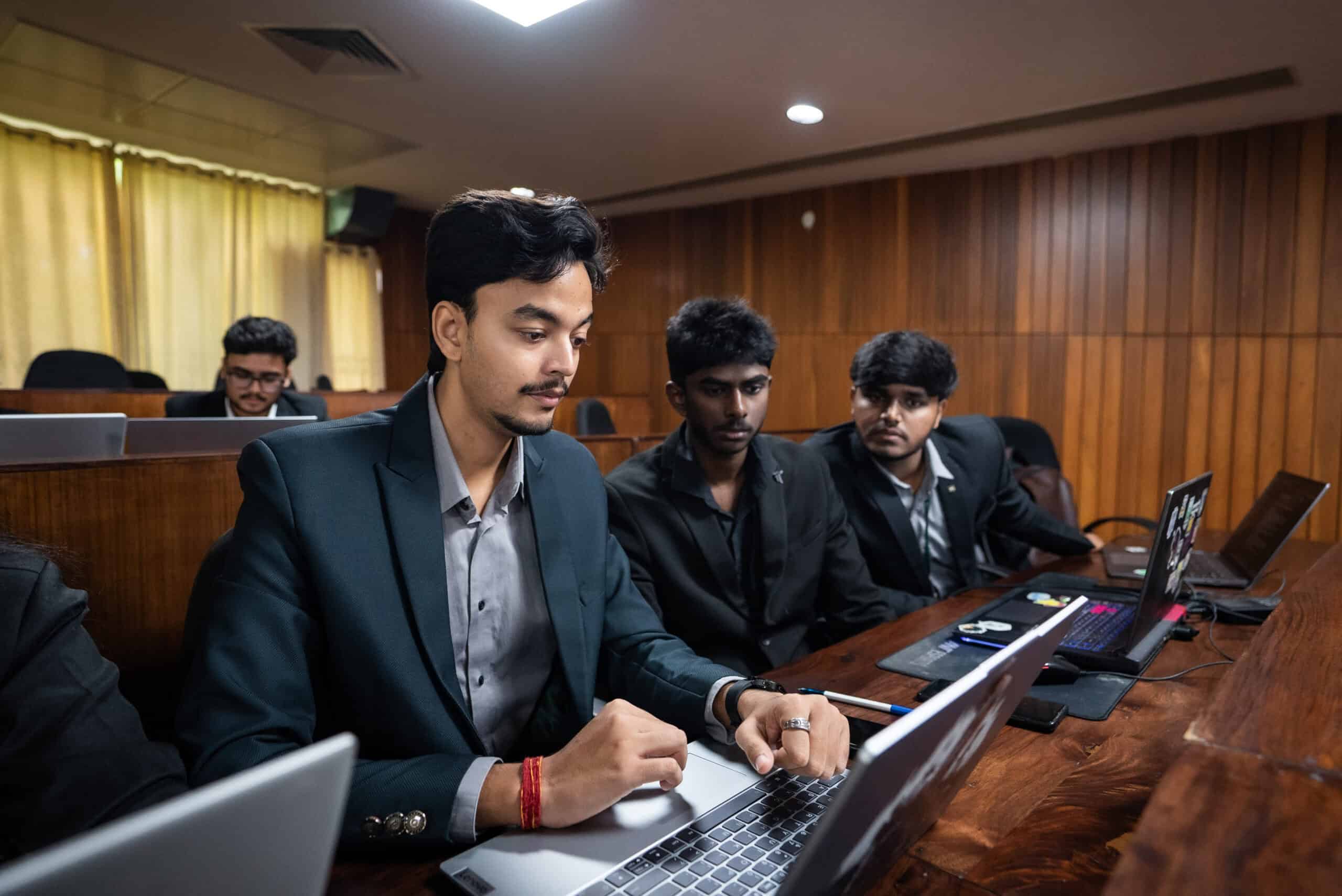
Master of Computer Applications (MCA) in Game Development is a specialized postgraduate program designed for students passionate about creating interactive and immersive video games. The program combines core computer science principles with game design, graphics programming, and interactive media, equipping students with the skills necessary to develop complex and engaging games across various platforms, including mobile, PC, and consoles.
The curriculum covers a broad range of topics, such as game programming, 3D modeling, artificial intelligence in games, game mechanics, virtual reality (VR), and game engines like Unity and Unreal Engine. Students learn how to integrate storytelling, physics, and user experience design into the development process, alongside gaining proficiency in languages like Python.
The growing demand for innovative gaming experiences in sectors like entertainment and education means that professionals with expertise in game development are in high demand. By combining technical proficiency with creativity, an MCA in Game Development provides students with the tools needed to succeed in a competitive and exciting field.
Duration
Two Years / Four Semesters


Why Choose
MCA-GD
at Alliance University?
MCA-GD
at Alliance University?
Lorem Ipsum is simply dummy
Advanced Computational & Algorithmic Proficiency
Advanced problem-solving and programming skills.
Specialized Domain Mastery
In-depth domain knowledge.
Professional Discourse & Presentation Excellence
Effective communication and presentation proficiency.
Cross-Domain Innovation & Proof of Concept
Algorithmic expertise and proof of concept development across diverse technological domains.
Knowledge Creation & Intellectual Leadership
Knowledge creation and innovation.
Technological Solutions for Social Impact
Societal problem-solving with technology.
Strategic SDG & Sustainability Contribution
Contribution to sustainable development goals (SDGs).
| Course | Category |
|---|---|
| Discrete Structures | PP |
| Communication and Life Skills - I | PR |
| Problem Solving through Aptitude - I | PR |
| Mastering Python: From Basics to Advanced | PP |
| Advanced Data Science Techniques | PP |
| Advanced UI and UX Design for Developers | PP |
| Front-End Frameworks and Technologies | PR |
| Course | Category |
|---|---|
| Applied Statistics | PC |
| Communication and Life Skills - II | PC |
| Problem Solving through Aptitude - II | PC |
| Advanced Data Structures and Algorithms | PC |
| Java Object-Oriented Design and Programming | PC |
| Database Design and Implementation | PC |
| Machine Learning Theory and Practice | PE |
| Course | Category |
|---|---|
| Web Technologies | PE |
| Quality Assurance in Software Development | PE |
| Artificial Intelligence: Concepts and Applications | PE |
| Computer Networks and Communications | PC |
| Engineering Principles of Software | PC |
| Data Mining and Warehousing | PE |
| Professional Skill Development | PC |
| Course | Category |
|---|---|
| Industry Internship Program | IIP |
| Professional Ethics | T |
| Research Methodology and Ethical Content Writing | P+T |
| Internet Crime and Cyber Security | P+T |
Course Categories:
PC – Program Core || ME – Minor Electives || SEC – Skill Enhancement Courses || DI/CP – Dissertation / Capstone Project || IIP – Industry Internship Program
‹ PREV
NEXT ›
Minors
The Program Elective in the Master of Computer Applications (MCA) programme with specializations in Data Science, General, Generative AI, and Game Designing is designed to provide focused domain expertise beyond the core and chosen specialization, enabling students to build multi-dimensional competencies aligned with evolving industry demands.
Structured as a flexible academic framework, Minor Pathways allow students to personalize their learning journey by selecting interdisciplinary tracks that complement their career aspirations and specialization areas. This approach empowers learners to explore emerging technologies and cross-domain skills, enhancing both depth and versatility.
Students can choose from a diverse portfolio of minor tracks such as Artificial Intelligence, Cyber Security, Data Science, Cloud Computing, Full Stack Development, Internet of Things (IoT), Business Analytics, UI/UX Design, and Software Product Development, reflecting the dynamic landscape of computing and digital innovation.
The Minor Pathways framework emphasizes:
- Specialized skill development in high-demand and cutting-edge domains
- Hands-on learning through labs, projects, and industry-aligned tools
- Integration of certifications and real-world applications
- Enhanced employability through domain-focused expertise
By complementing the Program Core and specialization, the Minor Pathways enable students to graduate with interdisciplinary knowledge and practical skills, positioning them as adaptable, future-ready professionals capable of thriving in advanced technical roles, innovation-driven environments, and emerging technology ecosystems.
Minors List:
- Aeronautics
- Astronautics
- Unmanned Aerial Vehicles (UAV)
- Avionics
- Structural Engineering
- Geoenvironmental & Infrastructure Engineering
- Nature Based Solutions
- Sustainable Technology
- Smart Systems
- Game Development
- Business Systems
- Quantum Computing
- Data Science
- Software Product Development
- Artificial Intelligence & Futuristic Technologies
- Artificial Intelligence & Machine Learning
- Cyber Security
- iOS Application Development
- Data Engineering
- Full Stack Development
- Cloud Computing
- Natural Language Processing and Text Analytics Systems
- Computer Vision and Image Analysis
- AI in Autonomous Systems
- Blockchain Technologies
- Internet of Things
- DevOps
- Immersive Technology
- Advanced AI and Blockchain
- AI for Healthcare and Life Sciences
- AI for Robotics and Automation
- Cybersecurity and Privacy in AI
- Data Analytics
- Embedded System and IoT
- Next Generation Wireless Communication Systems
- VLSI Design
- Bio Medical Engineering
- Automotive Electronics
- Semiconductor Technology
- Electric Vehicle Technology
- Energy Management and Audit
- Smart Grid and E-Mobility
- Green Technology
- Robotics and Automation
- Smart Manufacturing Technology
- Performing Arts and Creative Technologies
- Business Studies
- Computer Science
- Data Science
- Economics
- Fine Arts
- Literary & Cultural Studies
- Media & Film Studies
- Political Science
- Psychology
- Sociology
- Chemistry
- International Relations
- Mathematics
- Philosophy
- Physics
- Public Policy
PEO (Program Educational Objectives)
MCA: Program Educational Objectives (MCA General)
Apply skills in software development, including the ability to design, implement, and test complex software systems and applications
Adaptable to emerging technologies and methodologies, including the ability to learn and apply new tools and techniques as the field of computer applications evolves.
Program Educational Objectives (MCA Specialization in Generative AI)
Apply generative AI algorithms and methodologies to a wide range of applications, such as image generation, natural language processing, audio synthesis, and creative content generation. Create innovative solutions using novel generative AI algorithms, by developing advanced AI-driven systems that push the boundaries of generative modeling, and contributing to the advancement of the field through research and development.
Program Educational Objectives (MCA Specialization in Game Development)
Critically evaluate the quality, usability, and entertainment value of games, assess player feedback, and make informed decisions regarding game design iterations, improvements, and refinements.
Apply creativity and innovation in designing and developing original games, creating compelling narratives, characters, and game worlds, and contributing to the advancement of the gaming industry through the creation of innovative game experiences.
Program Educational Objectives (MCA Specialization in Data Science)
Analyze data to extract meaningful insights, identify patterns, trends, and anomalies, and make data-driven decisions using exploratory data analysis, statistical techniques, and machine learning models
Create innovative solutions to design data science projects, develop novel algorithms and methodologies, and contribute to the advancement of the field through research and development.
PSO (Program Specific Outcomes)
Disciplinary/Interdisciplinary Knowledge:
Apply comprehensive interdisciplinary knowledge, practical skills, and entrepreneurial mindset to address diverse challenges and innovate in chosen fields, fostering adaptability and problem-solving capacity beyond to multidisciplinary field
Critical Thinking:
Apply critical thinking skills to analyze, evaluate, and synthesize diverse information, arguments, and evidence to formulate coherent arguments, identify logical flaws, and draw valid conclusions supported by evidence.
Communication Skills:
Apply Effectively communicate complex information with clarity and sensitivity through attentive listening, analytical reading, precise writing, articulate oral expression, confident sharing of views, construction of logical arguments using appropriate technical language, and respectful language inclusive of diverse groups.
Research-Related Skills:
Demonstrate proficiency in observing, questioning, problematizing, synthesizing, formulating hypotheses, designing methodologies, employing analytical tools, executing experiments ethically, and reporting findings.
Coordinating/Collaborating with each other:
Collaborate respectfully within diverse teams, to foster cooperation and efficiently contribute towards common goals.
Complex Problem Solving:
Solve different kinds of problems in familiar and non -familiar contexts and apply the learning to real-life situations.
Analytical reasoning/ thinking:
Developing critical thinking skills to assess evidence reliability, detect logical fallacies, analyze diverse data, draw valid conclusions, and effectively address opposing viewpoints.
Leadership Readiness/qualities:
Formulating an inspiring vision, assembling a capable team, and employing effective management to navigate towards organizational goals while motivating and engaging team members with the vision.
Learning how to learn skills:
Developing lifelong learning skills for personal, professional, and societal adaptation, encompassing self-directed learning, resource identification, organizational and time management, and fostering a proactive attitude towards continuous development.
Digital and Technological Skills:
Utilizing ICT for diverse learning and work scenarios, including accessing, evaluating, and employing various information sources, along with utilizing appropriate software for data analysis.
Effectively manage software development projects throughout the entire lifecycle, including project planning, scheduling, resource allocation, risk management, and project documentation.
Develop innovative software solutions that address complex computational problems, incorporating advanced algorithms and technologies.
Program Specific Outcomes (MCA Specialization with Generative AI)
Effectively manage software development projects throughout the entire lifecycle, including project planning, scheduling, resource allocation, risk management, and project documentation.
Develop innovative software solutions that address complex computational problems, incorporating advanced algorithms and technologies.
Program Specific Outcomes (MCA Specialization with Game Development)
Construct game levels, puzzles, and challenges that balance difficulty and enjoyment.
Assess the impact of monetization strategies on player engagement and revenue generation.
Program Specific Outcomes (MCA Specialization with Data Science)
Assess the quality of data and identify potential biases or inconsistencies.
Develop novel algorithms or techniques to extract insights from complex data sets.
PO (Program Outcomes)
Disciplinary/Interdisciplinary Knowledge:
Apply comprehensive interdisciplinary knowledge, practical skills, and entrepreneurial mindset to address diverse challenges and innovate in chosen fields, fostering adaptability and problem-solving capacity beyond to multidisciplinary field
Critical Thinking:
Apply critical thinking skills to analyze, evaluate, and synthesize diverse information, arguments, and evidence to formulate coherent arguments, identify logical flaws, and draw valid conclusions supported by evidence.
Communication Skills:
Apply Effectively communicate complex information with clarity and sensitivity through attentive listening, analytical reading, precise writing, articulate oral expression, confident sharing of views, construction of logical arguments using appropriate technical language, and respectful language inclusive of diverse groups.
Research-Related Skills:
Demonstrate proficiency in observing, questioning, problematizing, synthesizing, formulating hypotheses, designing methodologies, employing analytical tools, executing experiments ethically, and reporting findings.
Coordinating/Collaborating with each other:
Collaborate respectfully within diverse teams, to foster cooperation and efficiently contribute towards common goals.
Complex Problem Solving:
Solve different kinds of problems in familiar and non -familiar contexts and apply the learning to real-life situations.
Analytical reasoning/ thinking:
Developing critical thinking skills to assess evidence reliability, detect logical fallacies, analyze diverse data, draw valid conclusions, and effectively address opposing viewpoints.
Leadership Readiness/qualities:
Formulating an inspiring vision, assembling a capable team, and employing effective management to navigate towards organizational goals while motivating and engaging team members with the vision.
Learning how to learn skills:
Developing lifelong learning skills for personal, professional, and societal adaptation, encompassing self-directed learning, resource identification, organizational and time management, and fostering a proactive attitude towards continuous development.
Digital and Technological Skills:
Utilizing ICT for diverse learning and work scenarios, including accessing, evaluating, and employing various information sources, along with utilizing appropriate software for data analysis.
Activity Points
FACEPrep Campus No.12, Avinashi Main Road, Lakshmi Nagar, Thottipalayam Pirivu, Coimbatore, Tamil Nadu, 641014.
Lorem Ipsum is simply dummy text of the printing and typesetting industry. Lorem Ipsum has been the industry\\\\\\\'s standard dummy text ever since the 1500s, when an unknown printer took a galley of type and scrambled
Program Core
The Program Core of the Master of Computer Applications (MCA) programme with specializations in Data Science, General, Generative AI, and Game Designing forms the intellectual foundation of the curriculum, delivering advanced computing excellence with strong industry alignment.
Designed to go beyond fundamentals, the Program Core equips students with the ability to analyze complex problems, architect scalable systems, and develop high-performance applications in today’s technology-driven landscape. The curriculum integrates advanced subjects such as Data Structures & Algorithms, Database Management Systems, Operating Systems, Computer Networks, Software Engineering, Cloud Computing, and Advanced Programming, ensuring a seamless transition from conceptual depth to real-world application.
Built on a framework of rigor, relevance, and innovation, the Program Core emphasizes:
a) Advanced problem-solving and computational thinking
b) Robust system design and full-cycle software development
c) Scalability, performance optimization, and efficiency
d) Adoption of modern tools, platforms, and emerging technologies
Ability Enhancement Courses (AEC)
The Ability Enhancement Courses (AECs) in the Master of Computer Applications (MCA) programme with specializations in Data Science, General, Generative AI, and Game Designing are designed to develop essential professional, cognitive, and life skills that complement technical expertise and enhance overall career readiness.
These courses focus on building communication proficiency, analytical thinking, and problem-solving capabilities, enabling students to perform effectively in dynamic academic and professional environments. Delivered through interactive and application-oriented learning methods, AECs ensure practical skill development aligned with industry expectations.
The programme offers the following AECs:
Communication and Life Skills
This course enhances students’ verbal and written communication, interpersonal skills, teamwork, adaptability, and professional etiquette, preparing them to collaborate effectively and present ideas with confidence in diverse environments.
Problem Solving Through Aptitude
This course strengthens analytical reasoning, logical thinking, and quantitative aptitude, enabling students to approach complex problems systematically and make data-driven decisions.
The AEC framework emphasizes:
a) Effective communication and interpersonal excellence
b) Analytical reasoning and structured problem-solving
c) Digital literacy and practical tool-based competencies
d) Career readiness and holistic professional development
By integrating these capabilities into the curriculum, AECs ensure that students graduate as well-rounded, adaptable professionals with the confidence and skills required to excel in technology-driven and collaborative work environments.
The Dissertation/Capstone Project in the undergraduate programme offers students a choice between two distinct pathways in their fourth year: a Capstone Project or a Research Dissertation. The key difference between these two lies in their focus, approach, and intended outcomes.
The Capstone Project is an applied, practice-oriented pathway. Students who choose this option work closely with an industry, organization, or institutional partner, ideally building upon their internship experiences from earlier years. In collaboration with the host organization, they identify a real-world problem or challenge and develop practical, implementable solutions. This pathway emphasizes hands-on problem-solving, professional engagement, and the application of academic knowledge in real-world contexts.
In contrast, the Research Dissertation is designed for students who prefer an academically rigorous, inquiry-driven approach. This pathway involves formulating a clear research question, engaging with relevant theoretical frameworks, and applying appropriate research methodologies to produce a structured and sustained piece of scholarly work.
Together, these two options provide flexibility for students to choose between industry-oriented application and research-focused exploration, enabling them to align their final-year work with their academic interests, professional goals, and future career trajectories.
The Capstone Project is the defining academic milestone of the MCA programme, offering students specializing in Data Science, Generative AI, General Computing, and Game Design an opportunity to integrate and apply their cumulative learning to solve real-world problems. Conducted across the final semesters, this experience enables students to work individually or in teams, bringing together concepts from core subjects, specializations, and electives to create innovative, practical, and impactful solutions.
Designed to bridge the gap between academia and industry, the Capstone Project cultivates advanced problem-solving and critical thinking while encouraging innovation, design thinking, and a strong research orientation. Students gain hands-on experience in collaboration, project management, and professional practices, mirroring real-world work environments.
A key focus of the Capstone is the application of emerging technologies within each specialization:
Data Science: Building predictive models, data-driven insights, and intelligent decision systems
Generative AI: Developing AI-powered applications such as chatbots, content generation tools, and multimodal systems
General Computing: Designing scalable software solutions, full-stack applications, and system architectures
Game Design: Creating immersive gaming experiences using advanced graphics, storytelling, and interactive design principles
Students are encouraged to develop deployable prototypes, scalable systems, and research-driven solutions that demonstrate both technical depth and practical relevance. High-quality outcomes may lead to publications, patents, startup ideas, or funded research opportunities, with strong emphasis on industry alignment, societal impact, and technological innovation.
As a portfolio-defining experience, the Capstone Project significantly enhances students’ readiness for careers, higher education, entrepreneurship, and research, positioning them as skilled, innovative, and industry-ready graduates in a competitive global landscape.
Warning: Undefined variable $word_limit in /home/mkavnn8oi4g7/public_html/alliance-university/wp-content/themes/alliance_child/academics/core-components-tab.php on line 239
Warning: Undefined variable $word_limit in /home/mkavnn8oi4g7/public_html/alliance-university/wp-content/themes/alliance_child/academics/core-components-tab.php on line 243
Warning: Undefined variable $word_limit in /home/mkavnn8oi4g7/public_html/alliance-university/wp-content/themes/alliance_child/academics/core-components-tab.php on line 244
Deprecated: array_slice(): Passing null to parameter #2 ($offset) of type int is deprecated in /home/mkavnn8oi4g7/public_html/alliance-university/wp-content/themes/alliance_child/academics/core-components-tab.php on line 244
The Course of Independent Study (CIS) is a distinctive 3-credit academic pathway that provides students with an opportunity to engage in research-oriented learning through a faculty-mentored project, taken in place of one course within the curriculum.
Designed to foster intellectual curiosity, innovation, and critical thinking, CIS enables students to undertake hands-on research through laboratories, field-based work, or Centres of Excellence. With close faculty guidance, students identify research problems, conduct structured inquiry, and develop meaningful academic outcomes grounded in academic rigor and practical relevance.
Credits are awarded based on consistent progress, active participation in review milestones, successful completion of the project, and the preparation and submission of a research paper to a Scopus-indexed journal, conference, or other approved scholarly platform. This pathway provides students with early exposure to high-quality research practices and supports their development as emerging scholars and innovators.
Warning: Undefined variable $word_limit in /home/mkavnn8oi4g7/public_html/alliance-university/wp-content/themes/alliance_child/academics/core-components-tab.php on line 459
Warning: Undefined variable $word_limit in /home/mkavnn8oi4g7/public_html/alliance-university/wp-content/themes/alliance_child/academics/core-components-tab.php on line 463
Warning: Undefined variable $word_limit in /home/mkavnn8oi4g7/public_html/alliance-university/wp-content/themes/alliance_child/academics/core-components-tab.php on line 464
Deprecated: array_slice(): Passing null to parameter #2 ($offset) of type int is deprecated in /home/mkavnn8oi4g7/public_html/alliance-university/wp-content/themes/alliance_child/academics/core-components-tab.php on line 464
After the completion of semesters 2 and 4, students are required to choose between undertaking an internship or participating in an international immersion program.
The internship opportunity after semester 2 is designed as a social internship, allowing students to explore and understand society by engaging with social organizations, governmental or quasi-governmental bodies, and similar institutions. Through this experience, students develop a grounded understanding of social realities, public policy frameworks, and community-level challenges, while also building empathy, ethical awareness, and civic responsibility. Field-based engagement enables students to observe and participate in real-world problem-solving and reflect on broader issues such as inequality, sustainability, public health, education, and social justice.
Alternatively, students may opt for an international immersion program, which provides structured exposure to global academic and cultural environments. Typically organized in collaboration with partner institutions abroad and led by faculty members from Alliance University, these programs may include short-term coursework, workshops, cultural exchange activities, and exposure visits. Students gain insights into diverse pedagogical approaches, cross-cultural perspectives, and global academic discourses relevant to their field. Interaction with international peers and faculty further enriches their learning experience and broadens their intellectual outlook, preparing them for global academic and professional environments.
At the end of semester 4, students again have the option to either pursue an advanced internship or participate in further international immersion. The advanced internship offers more specialized, discipline-focused training, enabling students to work with organizations and industry partners in a structured professional setting. This stage emphasizes applied learning, skill enhancement, and alignment with students’ academic and career interests.
This flexible framework ensures that students can tailor their experiential learning journey according to their academic goals, career aspirations, and personal interests. Together, these pathways balance local engagement with global exposure, equipping students with the knowledge, skills, and perspectives needed to navigate complex social and professional environments.
STUDY ABROAD OPTIONS
International Mobility
Experience global education through our international study opportunities designed to broaden academic perspectives and cultural understanding. These programmes enable students to study at partner universities abroad, gain international exposure, and develop the global competencies needed to succeed in an interconnected world.
An opportunity that lets students begin their degree at Alliance University (1 or 2 years) and then transfer to a foreign university to complete and earn their degree internationally.
Explore the World: Study a semester abroad, earn transferable credits, and gain global insights while experiencing a new culture and expanding your skills.





Alliance University welcomes students from across the world to study, collaborate, and thrive in a truly global learning ecosystem. We combine academic rigour with industry exposure, modern infrastructure with personalised support, and global perspectives with Indian values.
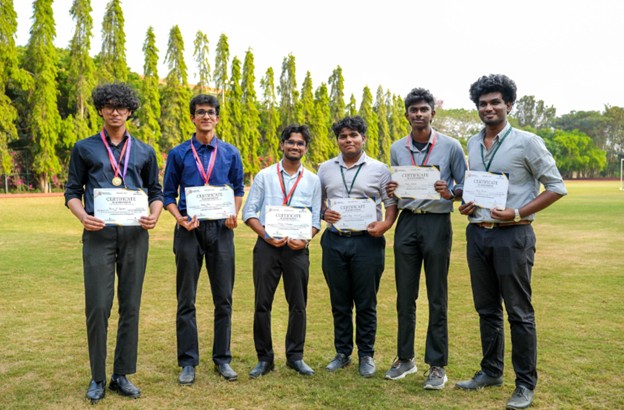
Recognising Effort, Celebrating Success
01
Sangama
02
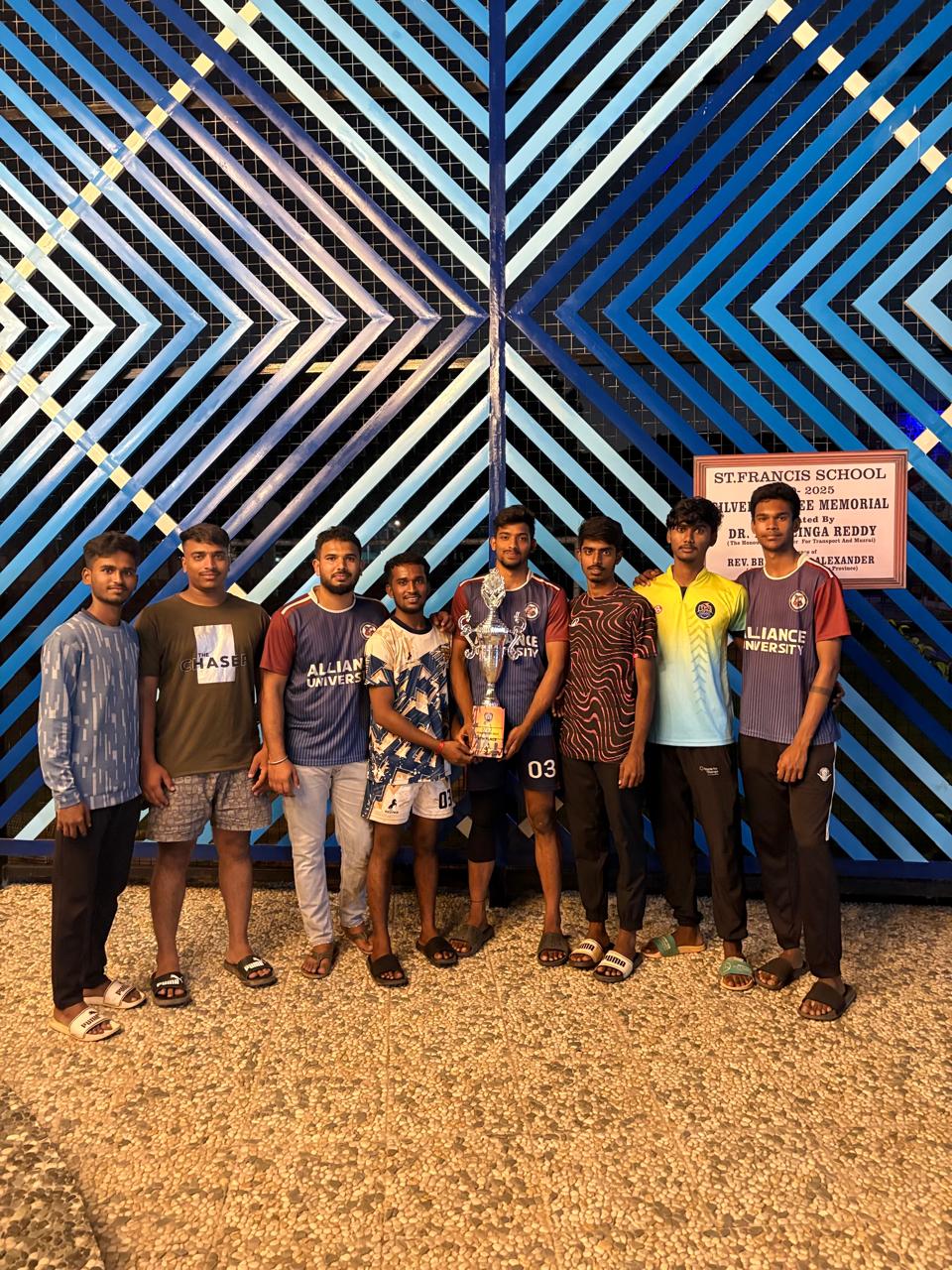
SFS Kormangala
03
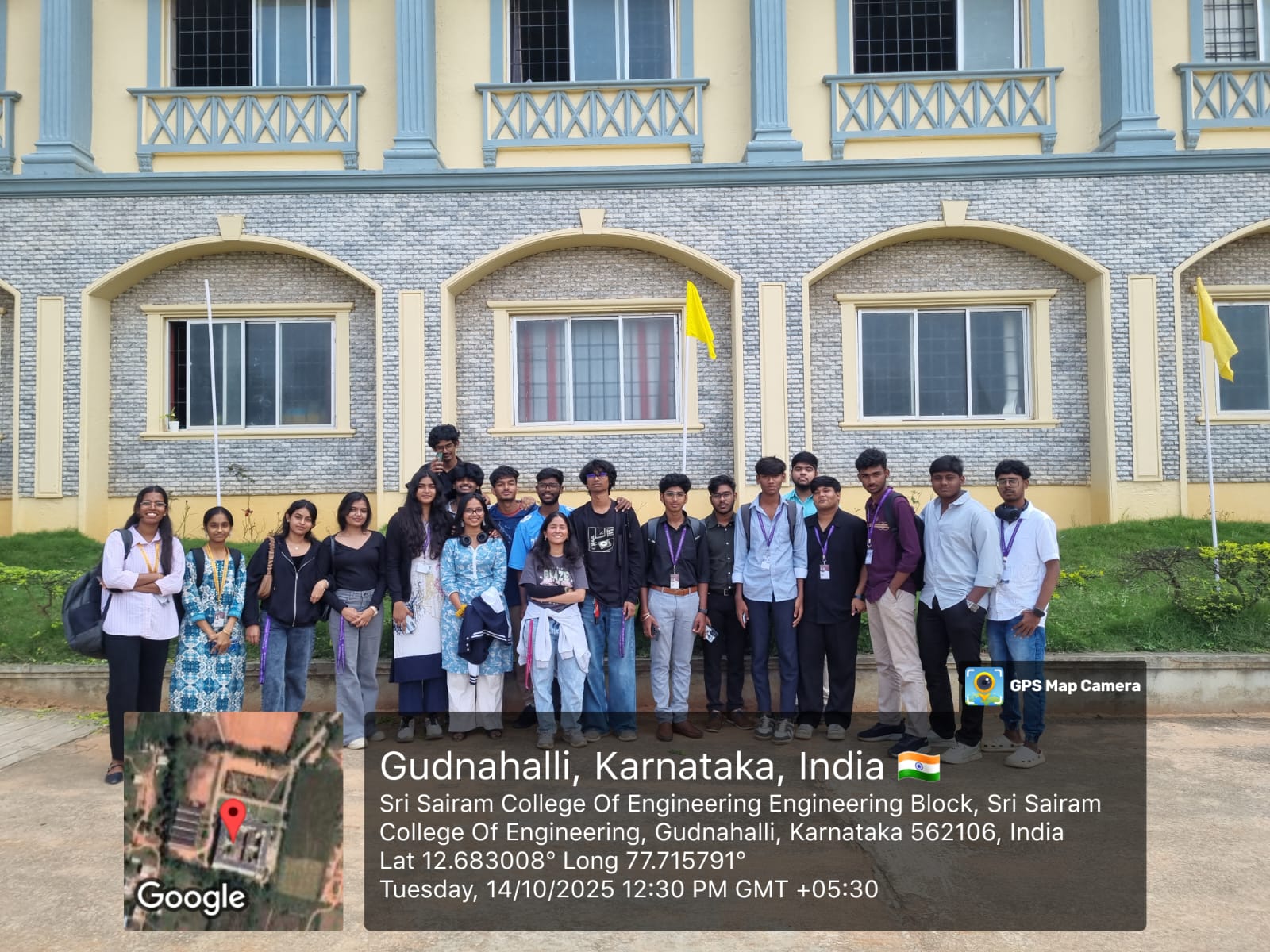
Pradyut Parva
04
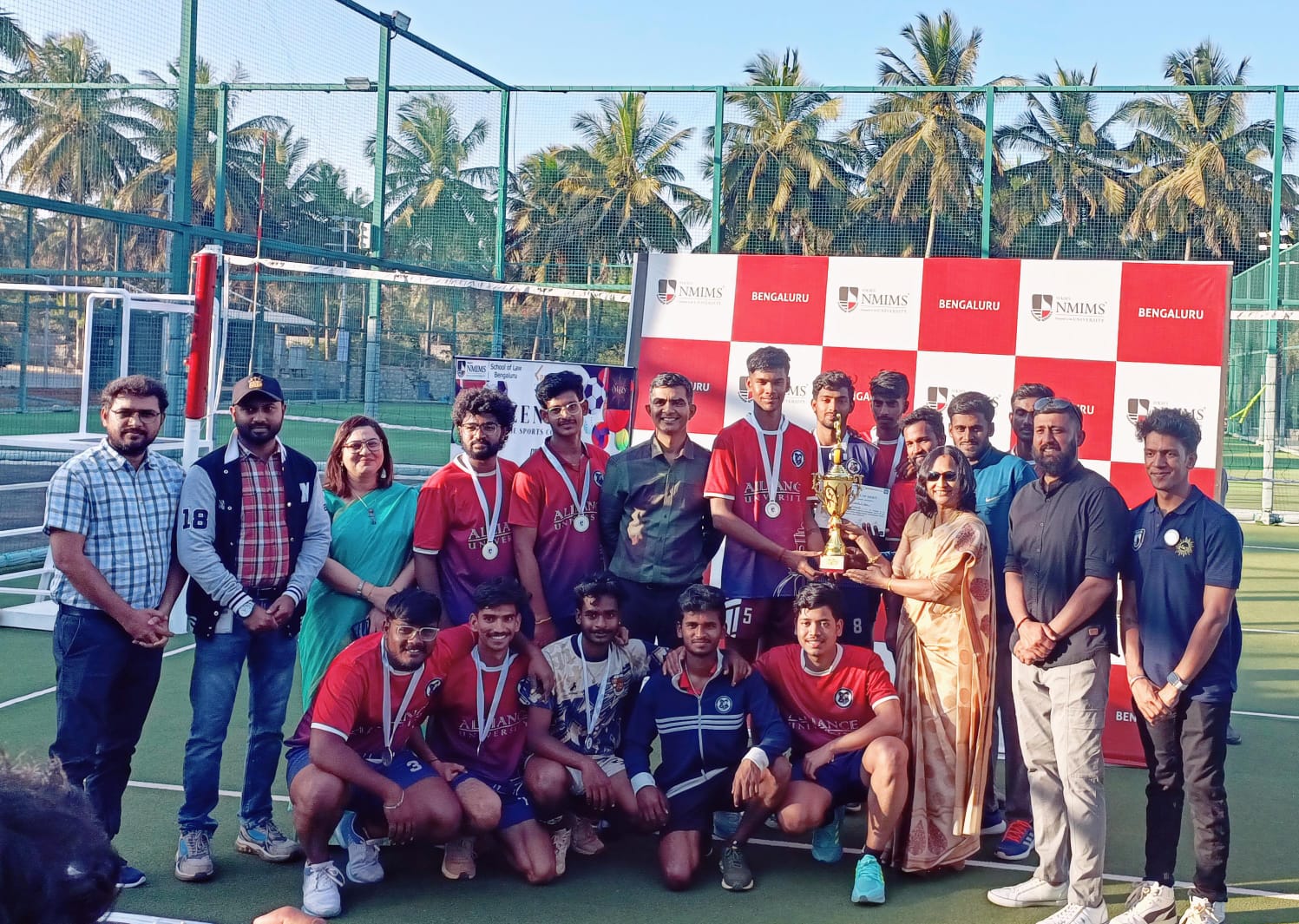
Parakram 2026 - NMIMS University_Volleyball
05
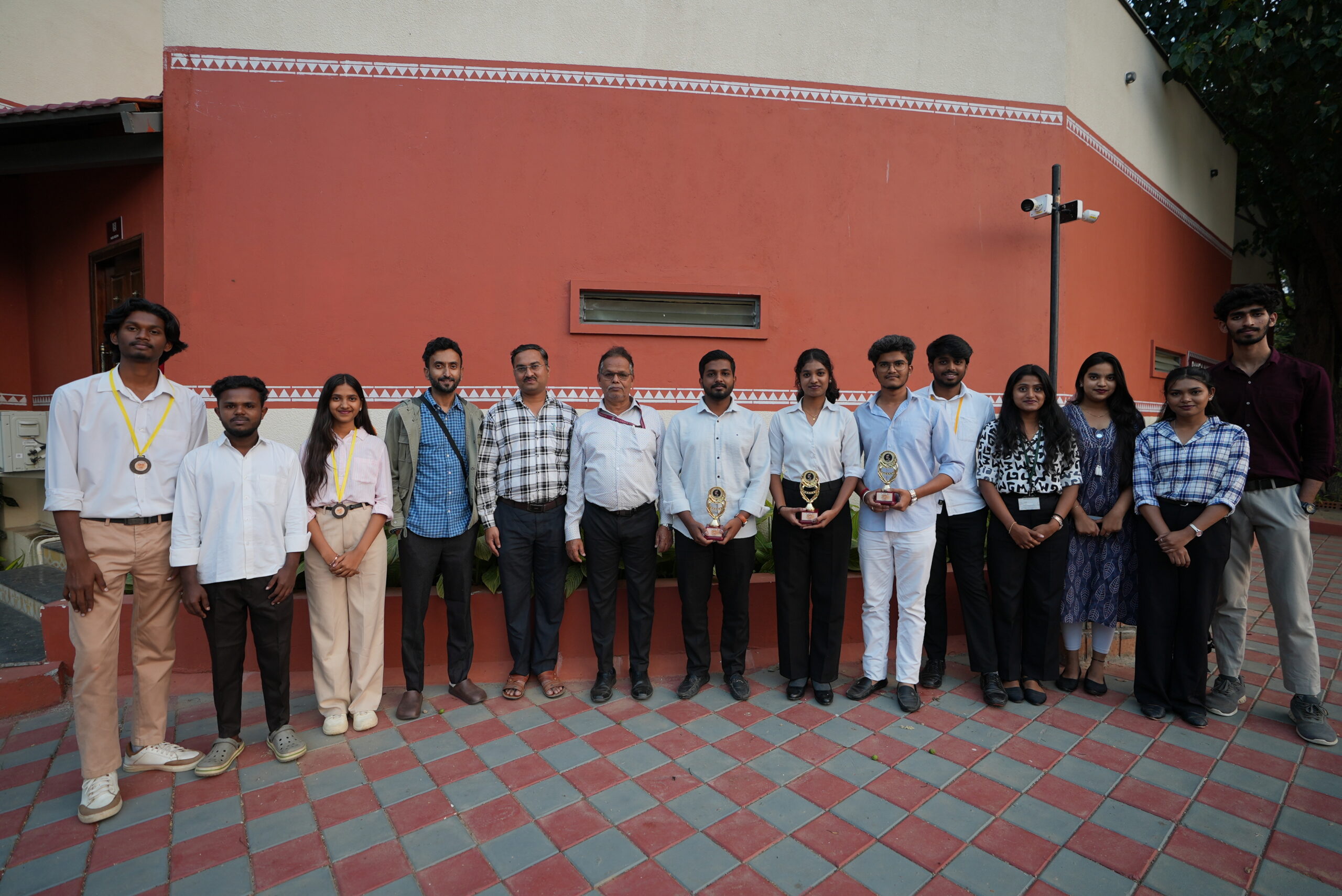
Kalarava
06
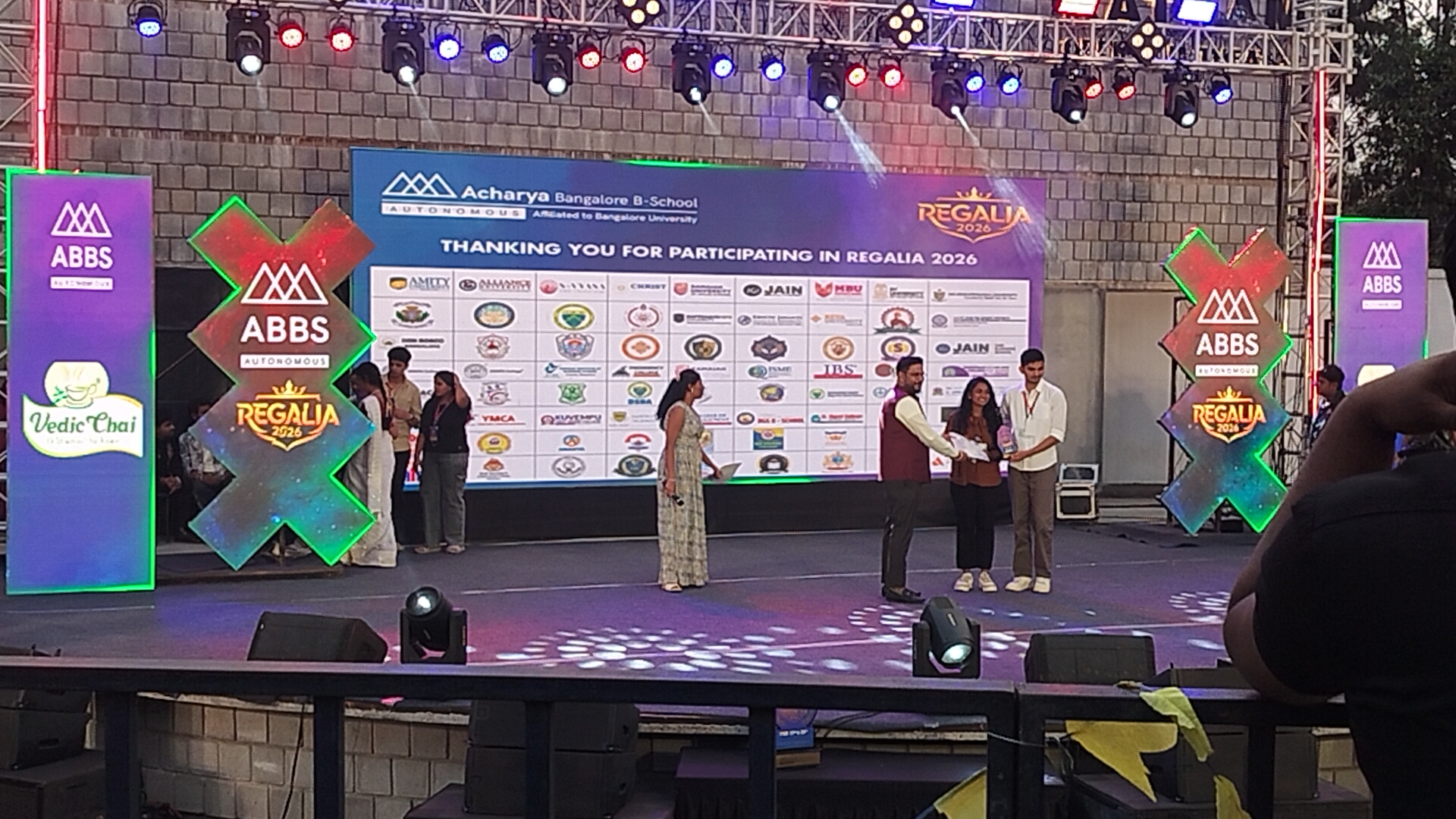
Ideathon - Regalia 2026 _Acharya College
| Category | Eligibility Criteria |
|---|---|
| General | BCA / B.E. / B.Tech. (CSE) or equivalent OR B.Sc. / B.Com. / B.A. with Mathematics at 10+2 or Graduation level (Bridge courses as applicable). Minimum 50% marks |
| Reserved Categories | 45% marks (5% relaxation for SC / ST candidates) |
Program duration
| Entry Level | Program Duration |
|---|---|
| Entry Level | Two Years / Four Semesters |
ACCEPTED TEST SCORES
| Particulars | Indian Nationals | Foreign Nationals |
|---|---|---|
| Registration Fee As per admission cycle | ₹25,000 | US$500 |
| 1st Installment (incl. Career Pathway Enhancement Fee) | ₹2,25,000 | US$3,000 |
| 2nd Installment (incl. Career Pathway Enhancement Fee) | ₹2,50,000 | US$3,350 |
| Total Program Fee Includes registration + all installments |
₹5,00,000 | US$6,850 |
| Category | Eligibility | Benefits |
|---|---|---|
| SC / ST | 60% & above (X & XII) + 70% & above National-Level Entrance Test | 20% Tuition Fee Waiver |
| Differently-Abled | 50% & above (X & XII) | 50% Tuition Fee Waiver |
| Defence & Paramilitary | 60% & above (X & XII) + 70% & above Entrance Test | 15% Tuition Fee Waiver |
| International-Level Sportsperson | 50% & above (X & XII) | 100% Tuition Fee Waiver |
| National-Level Sportsperson | 50% & above (X & XII) | 50% Tuition Fee Waiver |
| Domicile Students | 60% & above (X & XII) + 70% & above Entrance Test | 5% Tuition Fee Waiver |
Learn more
| Steps | Description |
|---|---|
| Step 1 | Submit Online Application |
| Step 2 | Pay Application Fee — ₹1000 (US$50 for foreign nationals) |
| Step 3 | Academic Evaluation & Entrance Test |
| Step 4 | Oral Extempore Presentation & Personal Interview assessment |
| Step 5 | Selection based on overall profile & performance |
Deprecated: str_replace(): Passing null to parameter #2 ($replace) of type array|string is deprecated in /home/mkavnn8oi4g7/public_html/alliance-university/wp-includes/blocks.php on line 1320
Deprecated: str_replace(): Passing null to parameter #2 ($replace) of type array|string is deprecated in /home/mkavnn8oi4g7/public_html/alliance-university/wp-includes/blocks.php on line 1320
Deprecated: str_replace(): Passing null to parameter #2 ($replace) of type array|string is deprecated in /home/mkavnn8oi4g7/public_html/alliance-university/wp-includes/blocks.php on line 1320
Living Spaces That Inspire Belonging
EXPLORE OUR HOSTELS
Comfort, safety, and community form the foundation of campus living. Our residential halls are thoughtfully designed to create a sense of belonging—offering a welcoming environment where students can study, unwind, and build lifelong friendships.

Separate hostels
for boys and girls
Student-friendly
common areas
Spacious rooms
(single, double, or triple occupancy)
Dedicated wardens
and support teams

Industrial Collaborations
FACEPrep Campus No.12, Avinashi Main Road, Lakshmi Nagar, Thottipalayam Pirivu, Coimbatore, Tamil Nadu, 641014.
Real Stories, Real Impact
STUDENT
No testimonials found.
Everything You Need to Know
How does the programme integrate game design, storytelling, and user experience?
The MCA in Game Development integrates game design, storytelling, and UX through hands-on projects using the Unity engine. Students learn gameplay mechanics, prototyping, immersive design, and AR/VR technologies while also exploring AI integration and game physics to build engaging, industry-ready games.
Are internships and collaborations with gaming studios part of the programme?
Yes. The programme includes industry mentorship, live projects, and exposure through the Centre for Industry Interaction and Centres of Excellence, enabling students to work on real-world challenges and gain practical industry experience.
What certifications or workshops are offered alongside MCA – Game Development?
Students receive hands-on training through workshops and certifications in Unity, Unreal Engine, Python programming, UI/UX design, and immersive technologies. Internship programs such as Immersive Game Development also provide practical exposure to industry-standard tools and workflows.
What is the future scope of careers in Game Development and interactive entertainment?
The field offers strong growth driven by AI, cloud gaming, AR/VR, and immersive experiences. Emerging opportunities exist in mobile gaming, XR development, game design, simulation systems, and interactive media across global industries.
What is MCA in Game Development at Alliance University, and why is it a top choice for aspiring game developers?
The programme is a two-year postgraduate course that combines core computer science with advanced game design and development. It prepares students for creative and technical roles in the gaming industry through project-based learning and exposure to modern game technologies.
Who is eligible to apply for the MCA in Game Development programme at Alliance University?
Candidates with a bachelor’s degree in BCA, B.E/B.Tech (CSE or equivalent), or B.Sc/B.Com/B.A with Mathematics (with bridge courses if required) are eligible with a minimum of 50% marks (45% for reserved categories).
How does Alliance University prepare students for mobile gaming or VR/AR development?
The curriculum includes dedicated training in Unity and Unreal Engine for mobile game development, along with courses in AR/VR technologies, game mechanics, UX design, and programming in C, C++, and Python.
What exposure do students get in VR/AR development?
Students gain hands-on experience through courses in Virtual Reality and Augmented Reality, supported by Centres of Excellence. Training includes Unity for immersive applications and Blender for 3D modelling and interactive environments.
What is the duration and structure of the MCA in Game Development programme?
The programme is a two-year degree across four semesters, covering game programming, 3D modelling, AI in games, UX design, and immersive technologies using Unity and Unreal Engine, along with industry mentorship and project-based learning.
Does the programme offer internships or live projects with gaming companies?
Yes. Students gain exposure through internships, live projects, workshops, and collaborations with gaming studios, animation firms, and IT companies working in graphics and interactive technologies.
What in-demand skills will I gain from MCA in Game Development?
Students develop expertise in Unity, Unreal Engine, 3D modelling, AR/VR development, AI in games, UI/UX design, and programming languages like C++, C#, and Python, along with strong game design fundamentals.
What is the selection process for MCA in Game Development?
The admission process includes online application submission, followed by an aptitude test and a personal interview conducted by the university.
What makes MCA in Game Development a leading programme in India?
The programme stands out for its strong blend of computer science fundamentals, hands-on game development training, industry exposure, and focus on emerging technologies like AR/VR and AI-driven gaming systems.
Are scholarships or financial aid available for MCA in Game Development students?
Yes. Category-based scholarships and financial assistance options are available as per university norms.
How does the placement cell support MCA Game Development students?
The Career Advancement and Networking (CAN) office provides career guidance, training, workshops, internships, live projects, and recruitment support through a network of 1000+ hiring partners.
What is the duration of the MCA – Game Development program?
Two Years / Four Semesters.
What skills do students gain?
Game programming, AI integration, 3D modelling exposure, VR design, physics simulation, UX engineering, and storytelling.
What career roles are available?
Game Developer, Gameplay Engineer, Technical Artist, Game Designer, Simulation Developer, VR Developer.
Are scholarships available?
Yes — category-based tuition fee waivers apply.
Which platforms are covered?
Unity, Unreal Engine, and multi-platform development environments.
What are the eligibility criteria?
Bachelor’s degree with Mathematics and minimum marks as specified.
Does the program support creative innovation?
Yes — students learn both engineering and creative design integration.