
Admissions Open 2026-2027. Apply Now Admissions Open 2026-2027. Apply Now Admissions Open 2026-2027. Apply Now Admissions Open 2026-2027. Apply Now Admissions Open 2026-2027. Apply Now Admissions Open 2026-2027. Apply Now

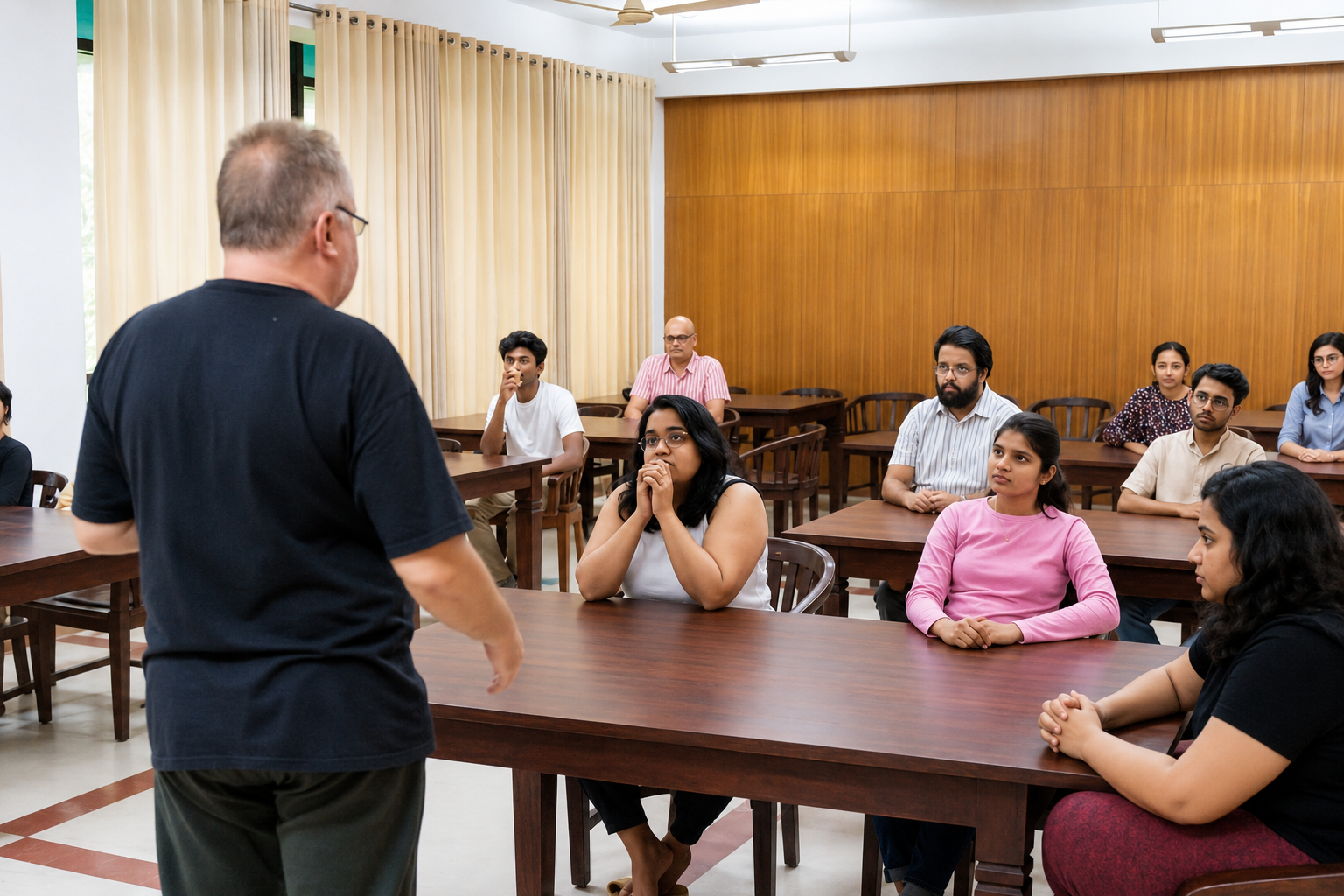
This pioneering Master’s programme in India is designed to transform students into versatile writers capable of applying their storytelling and language skills across a wide range of fields—from the creative arts to media and corporate communications. Unlike a traditional MA in English, this course does not require students to study the literary canon or have a background in literature. Instead, it blends creative writing with essential literary knowledge, encouraging exploration across genres such as fiction, poetry, non-fiction, scriptwriting, and comic design. The programme welcomes individuals from all academic and professional backgrounds, fostering a diverse and inclusive learning environment that values creativity over convention.

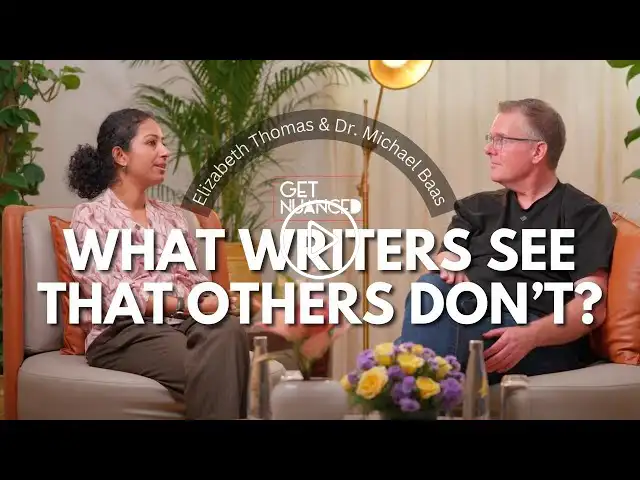
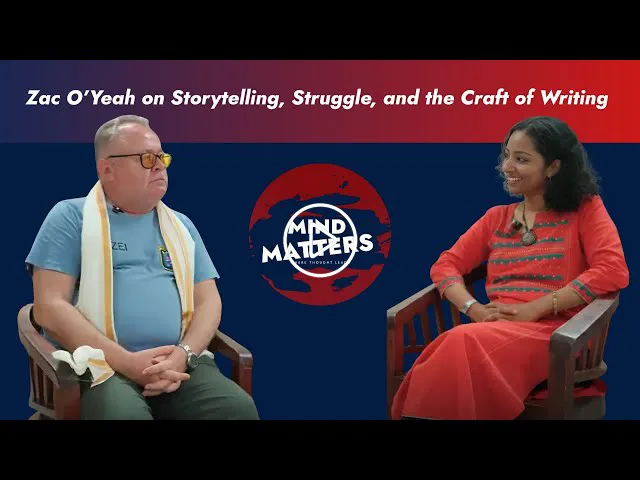
A standout feature of the course is its intensive, hands-on workshops led by some of the most acclaimed writers, poets, and scriptwriters from India and around the world. These immersive sessions not only hone technical skills but also provide real-world insights into navigating the literary and content industries. Students organize India’s largest university-led literary festival and create podcasts and video content for the school’s YouTube channel, gaining practical experience and 21st-century communication skills. The curriculum is designed to evolve continuously, responding to the changing relationship between language and technology in the age of artificial intelligence.The M.A. in English (Creative Writing) is the first-of-its-kind multilingual, transdisciplinary Masters’ programme in India. The course is taught by faculty comprising published writers, poets, playwrights, scriptwriters, advertisers, journalists, web-content creators, animation writers, translators from India and abroad.

The primary component of the course comprises of writing workshops and practice sessions under the award-winning professionals and the faculty members. The amalgamation of theoretical considerations, sampling of a wide variety of literature, and exploring each individual’s niche area, are all aimed at creating individuals who are ready to critically contribute to the creative economy.

The first-of-its-kind Mastersofficial YouTube channel. The dynamic curriculum is designed to evolve continuously to respond to an age where artificial intelligence is rapidly changing our relationship with language and literature.

Duration

Two Years (Four Semesters)

Why Choose
M.A. in English (Creative Writing)
at Alliance University?
Supporting Features
Inclusive Multi-Disciplinary Gateway
Ease of entry for students and professionals from any background.
Creative Economy Immersion
Immersive learning through participation in Bengaluru's creative economy.
Strategic Literary & Editorial Networking
Extensive networking opportunities with publishers, editors and established writers.
Masterclass-Driven Practitioner Workshops
Hands-on workshops with award-winning practitioners from literature, film and media.
Global Artistic & Intellectual Community
Exposure to a diverse community of artists and writers including international experts.
Agile & Industry-Responsive Curriculum
Dynamic curriculum evolving continuously through constant feedback from students and industry.
Renowned Corporate & Media Placements
High quality internships and placements with renowned organizations.
Experiential Event Leadership
Organizing Alliance Literary Festival: India's largest university-led festival.
Digital Content & Podcasting Mastery
Learning podcasting and content-creation on Cosmopolis, the school's YouTube channel.
Scholarly Publishing & Editorial Practice
Conceptualizing, editing and publishing university's in-house literary magazine and journal.
Diversified Media & Marketing Readiness
Training for roles in media and marketing apart from careers in creative arts.
Guided Authorship & Publication Mentorship
Guided mentorship for developing book-length projects from conception to publication.
Modular Academic Pathways
Flexible pathways including diploma exit option.

  • Literary Non-Fiction
  • Exploring an Author
  • Mechanics of Writing
  • Writing Workshop 1: Creative Explorations
  • Writing Workshop 2: Public Writing


<

    • Copy-Editing and Publishing
    • Writing for the Screen
    • The Art of Fiction: Short and Long
  • Introduction to Kannada Literature
  • Writing Poetry
  • Graphic Narratives
  • Introduction to Hindi Literature
  • Playwriting and Script Writing

    • Internship
    • Research In/and Creative Writing
  • Writing Cultural Narratives Across Platforms
  • Corporate and Brand Storytelling
  • Personal Branding and Fashioning the Writerly Self

  • Creative Dissertation
Majors
All Majors will also be offered as minors in addition to:
  • International Relations
  • Philosophy
  • Mathematics
  • Physics
  • Chemistry
  • Public Policy
  • Aeronautics
  • Biomedical Engineering
  • Legal Studies and so on.
Specializations

Digital Humanities

The Digital Humanities track equips students to engage critically with the intersections of culture, literature, and technology in an increasingly digital world. Through courses that explore digital cultures, the evolution of the book, data-driven societies, and the social life of algorithms, students are introduced to key questions about how meaning, knowledge, and power are shaped in technologically mediated environments. The track encourages students to combine theoretical inquiry with analytical and methodological tools, enabling them to examine digital platforms, media ecologies, and online communities with depth and precision. By situating humanities inquiry within contemporary technological contexts, this specialization prepares students for emerging fields of research as well as careers in digital media, research, policy, and cultural analysis.

Creative Writing

The Creative Writing track offers students an intensive engagement with the craft and practice of writing across multiple forms and platforms. Through courses in fiction, non-fiction, content creation, storytelling, and publishing, students develop the ability to shape compelling narratives for diverse audiences and contexts. The track balances creative expression with professional skill-building, enabling students to explore writing for literary, media, and industry purposes, including branding, digital content, and performance. Emphasis is placed on drafting, revision, peer critique, and editorial practices, fostering both originality and discipline in writing. By the end of the track, students are equipped not only to produce creative work but also to engage with the broader ecosystems of publishing, media, and communication.

Open Electives

Open Electives are courses designed to provide students with an introductory exposure to disciplines beyond their primary area of study. Offered across schools within the university, these courses enable students to engage with diverse fields of knowledge and perspectives. They foster an interdisciplinary approach to learning, and support the development of a more holistic academic experience.

The open electives offered by the major are:

Reading Popular Culture: Cinema, Comics, and Contemporary Media

Ways of Seeing: Painting and Photography

PEO (Program Educational Objectives)

PEO1: Interdisciplinary Inquiry
Apply interdisciplinary knowledge, critical thinking, and research skills to analyse and address complex social, cultural, and global challenges.

PEO2: Responsible Leadership
Demonstrate ethical leadership, civic responsibility, and global awareness while contributing to inclusive and sustainable initiatives in professional and community contexts.

PEO3: Lifelong Learning and Adaptability
Pursue continuous learning, intellectual adaptability, and personal growth to thrive in evolving professional and global environments.

PSO (Program Specific Outcomes)

PSO 1:

Analyse literary texts, cultural artefacts, and media forms using appropriate interpretive frameworks to understand how meaning is produced across historical, social, and cultural contexts.

PSO 2 :

Apply key concepts and theoretical approaches from literary studies, cultural studies, and related disciplines to examine issues of power, identity, representation, and cultural production.

PSO 3:

Conduct independent research using interpretive, archival, or interdisciplinary methodologies and communicate arguments through analytical writing and presentations.

PSO 4 :

Interpret contemporary cultural practices in relation to broader social processes such as nationalism, technological change, and social justice.

PO (Program Outcomes)

PO1: Interdisciplinary
Integrate knowledge, theories, and methods from multiple disciplines and cultural contexts to interpret and analyse complex local, national, and global issues.

PO2: Critical Thinking and Problem Solving
Evaluate diverse perspectives, question assumptions, and apply analytical frameworks to develop innovative and evidence-based solutions to real-world challenges.

PO3: Research and Evidence-Based Inquiry
Design and conduct research using appropriate qualitative, quantitative, or mixed methods to generate and interpret evidence responsibly and ethically.

PO4: Experiential Learning and Application
Apply theoretical knowledge to real-world contexts through internships, fieldwork, projects, and other experiential learning opportunities.

PO5: Ethical Reasoning and Civic Responsibility
Demonstrate ethical judgment and civic responsibility while promoting integrity, inclusivity, justice, and sustainability in personal and professional contexts.

PO6: Strategic Communication
Communicate ideas clearly and persuasively through written, oral, visual, and digital formats while engaging effectively with diverse audiences.

PO7: Innovation and Entrepreneurial Thinking
Demonstrate creativity, initiative, and adaptability in identifying opportunities and developing innovative solutions to social, cultural, or economic challenges.

PO8: Collaboration and Leadership
Work effectively in multidisciplinary and multicultural teams while demonstrating leadership, accountability, and collaborative problem solving.

PO9: India and Global Contexts
Analyse India’s historical, cultural, political, socio- economic, and technological developments within comparative global frameworks to engage critically with contemporary national and international issues.

PO10: Lifelong Learning and Personal Development
Demonstrate intellectual curiosity, self-reflection, and adaptability through continuous learning and personal development in a rapidly changing world.

Activity Points

In addition to the list of activities in the guidelines issued by the Department of Student Support Services, the school encourages students to participate in academic conferences, literary events, film festivals, art/theatre/video productions or departmental magazines for which activity points may be accorded upon the recommendations of the respective Heads of the Departments.

Learn More

Undergraduate students in their fourth year may choose to pursue either a Capstone Project or a Research Dissertation. The key distinction between the two lies in their orientation and expected outcomes.

The Capstone Project is designed as an applied, practice-oriented pathway. Students opting for this route are expected to engage directly with an industry, organization, or institutional partner, ideally buiding upon their work during the internships in the earlier years. In consultation with the host organization, students will identify a real-world problem or challenge that is relevant to the organization’s context.They will develop and implement viable solutions as part of their Capstone Project. This process emphasizes practical problem-solving, professional engagement, and the application of disciplinary knowledge in real-world settings.

In contrast, the Research Dissertation is intended for students who wish to undertake an academically rigorous, inquiry-driven research project. This pathway focuses on the formulation of a research question, engagement with relevant theoretical frameworks, and the application of appropriate research methodologies to produce a sustained piece of scholarly work.

Together, these options provide students with the flexibility to choose between applied and research-oriented pathways, allowing them to align their final-year work with their academic interests, professional goals, and future trajectories.
Course of Independent study is an avenue where students may take-up a real-world problem and propose solutions to the same through rigourous research and/or experimentation. Those who opt for a CIS credit will be expected to ready a publication-worthy research finding through the guidance of a faculty supervisor. The School will publish their list of projects/topics annually and students may opt for one of these.

After the completion of semesters 2 and 4 respectively, students must choose to either undertake an internship or participate in an international immersion program.

The internship opportunity after semester 2 is designed as a social internship, through which students may explore and understand society at large by engaging with the activities and concerns of social organizations, governmental or quasi-governmental entities, and similar enterprises. Through this engagement, students are expected to develop a grounded understanding of social realities, public policy frameworks, and community-level challenges, while also cultivating empathy, ethical awareness, and civic responsibility. By participating in field-based activities, students gain exposure to real-world problem-solving contexts and are encouraged to reflect critically on broader issues such as inequality, sustainability, public health, education, and social justice.

Alternatively, students may opt for an international immersion program, which offers a structured opportunity to engage with global academic and cultural environments. These immersion programs, typically organized in collaboration with partner institutions abroad and led by faculty member(s) from Alliance University, may include short-term coursework, workshops, cultural exchange activities, and exposure visits. Through this pathway, students are introduced to diverse pedagogical practices, cross-cultural perspectives, and global discourses relevant to their field of study. Students benefit from interactions with international peers and faculty, exposure to new academic frameworks, and participation in experiential learning modules that extend beyond the traditional classroom. Such engagements are designed to broaden intellectual horizons and prepare students for increasingly globalized professional and academic environments.

At the end of semester 4, students are again presented with a similar choice, enabling them to either deepen their engagement through an advanced internship or pursue further international exposure. The advanced internship is oriented towards more specialized training within the student’s chosen discipline, offering opportunities to work with organizations, businesses, and related institutions in a focused capacity. This stage emphasizes skill development, professional orientation, and applied learning aligned with the student’s academic interests.

This flexible framework ensures that students can align their experiential learning pathways with their academic goals, career aspirations, and personal inclinations. Together, these opportunities balance local engagement with global exposure, equipping students with the knowledge, skills, and perspectives required to navigate complex social and professional landscapes.

STUDY ABROAD OPTIONS

International Mobility

Experience global education through our international study opportunities designed to broaden academic perspectives and cultural understanding. These programmes enable students to study at partner universities abroad, gain international exposure, and develop the global competencies needed to succeed in an interconnected world.

Learn More

An opportunity that lets students begin their degree at Alliance University (1 or 2 years) and then transfer to a foreign university to complete and earn their degree internationally.

Explore the World: Study a semester abroad, earn transferable credits, and gain global insights while experiencing a new culture and expanding your skills.

An exciting immersion opportunity for Alliance University students to engage with leading multinational companies and innovative startups, offering a unique blend of global learning and practical work exposure abroad, all within just 7 to 14 days.
Short-term programmes lasting 2 to 4 weeks offer students an ideal opportunity to gain international exposure without disrupting their academic schedule.

Learn More

Learn More

Alliance University welcomes students from across the world to study, collaborate, and thrive in a truly global learning ecosystem. We combine academic rigour with industry exposure, modern infrastructure with personalised support, and global perspectives with Indian values.

Learn More

Category Eligibility Criteria
General Bachelor’s degree with a minimum of 50% aggregate and English as a compulsory subject
Reserved Categories 5% relaxation for SC / ST candidates


Program duration

Entry Level Program Duration
Entry Level Two Years / Four Semesters


ACCEPTED TEST SCORES
SAT
AUSAT
SAT
AUSAT
SAT
AUSAT
SAT
AUSAT

Particulars Indian Nationals Foreign Nationals
Registration Fee / Fee for Learners Value Proposition Course (Virtual) ₹25,000 $500
1st Installment (As per provisional admission offer) ₹1,75,000 $2,250
2nd Installment ₹2,00,000 $2,750
Total Program Fee ₹4,00,000 $5,500


Category Eligibility Scholarship
Special Merit Scholarship X: 90% & above, XII: 90% & above, UG: 70% & above 50% Tuition Fee Waiver
X: 80% & above, XII: 80% & above 30% Tuition Fee waiver
X: 70% & above, XII: 70% & above 25% Tuition Fee Waiver
SC / ST X & XII ≥ 60% + National Level Entrance ≥ 70% 20% Tuition Fee Waiver
Differently-Abled X & XII ≥ 50% 50% Tuition Fee Waiver
Defence / Paramilitary X & XII ≥ 60% + National Level Entrance ≥ 70% 15% Tuition Fee Waiver
International-Level Player X & XII ≥ 50% 100% Tuition Fee Waiver
National-Level Player X & XII ≥ 50% 50% Tuition Fee Waiver
Domicile X & XII ≥ 60% + National Level Entrance ≥ 70% 5% Tuition Fee Waiver
Learn more


Step Description
Step 1 Submit Online Application
Step 2 Pay Application Fee — ₹1000 (US$50 for foreign nationals)
Step 3 Academic Merit Review and Alliance University Entrance Test (if applicable)
Step 4 Oral Extempore Presentation — 3 minutes on a given topic
Step 5 Personal Interview and Overall Profile Assessment
Step 6 Document verification and fulfilment of university admission requirements
Start your application now

Living Spaces That Inspire Belonging

EXPLORE OUR HOSTELS

Comfort, safety, and community form the foundation of campus living. Our residential halls are thoughtfully designed to create a sense of belonging—offering a welcoming environment where students can study, unwind, and build lifelong friendships.

Separate hostels
for boys and girls

Student-friendly
common areas

Spacious rooms
(single, double, or triple occupancy)

Dedicated wardens
and support teams

residential-image-update

Real Stories, Real Impact

FACULTY
STUDENT


Aparna Devarapalli
Aparna Devarapalli
Liberal Arts

Everything You Need to Know

What makes the M.A. English (Creative Writing) program unique?
The M.A. English (Creative Writing) program at Alliance University is designed to develop versatile writers who can apply storytelling skills across creative, media, and corporate domains. Unlike traditional English programs, it does not require prior study of the literary canon; instead emphasizes creative practice, interdisciplinary learning, and industry engagement.
Do I need a background in English literature to apply?
No. The program is open to students from diverse academic and professional backgrounds. Prior specialization in literature is not required. The current cohort includes students from engineering, statistics, psychology, media, and English literature backgrounds.
What are the eligibility criteria?
Applicants must hold a bachelor’s degree with a minimum of 50% aggregate marks and need not have studied English as a compulsory subject. Refer to the eligibility section in the Admissions Process Page for further details.
What is the duration of the program?
The M.A. English (Creative Writing) program is spread over two years, comprising four semesters.
What kind of courses will I study?
Students engage with courses including literary non-fiction, fiction, poetry, screenwriting, copy-editing, publishing, and writing workshops. Electives include graphic narratives, playwriting, and Hindi literature.
How is the program taught?
The program emphasizes hands-on learning through intensive writing workshops, studio-style classes, and sessions led by acclaimed writers, poets, and scriptwriters from India and abroad.
Are there opportunities for practical exposure?
Yes. Students participate in organizing the Alliance Literary Festival, create digital content such as podcasts and videos, and engage with real-world creative and communication platforms.
Does the program include internships?
Yes. Students undertake internships across publishing, media, advertising, art galleries, and EdTech. Alumni have interned with organizations such as Amar Chitra Katha and the National Gallery of Modern Art.
What is the Creative Dissertation?
In the final semester, students develop a book-length creative manuscript under faculty supervision. Exceptional submissions may be shortlisted for the Ismat Chughtai Best Dissertation Award.
What career opportunities does this program offer?
Graduates can pursue careers in writing, publishing, media, content creation, advertising, corporate communications, and digital storytelling. The program also supports further academic research in creative and literary fields.
How does the program stay relevant in the age of AI?
The curriculum trains students to use AI responsibly for brainstorming, editing, and expanding creative possibilities while also strengthening core writing skills, mechanics, and authorial voice to ensure originality is preserved.
Will I get opportunities to publish or showcase my work?
Yes. Students regularly showcase work through university platforms, digital media channels, and literary events. The publishing course also connects students with leading publishers for manuscript pitching opportunities.
How does the program accommodate someone interested in content creation?
The program includes courses in screenwriting and content creation across media platforms. It combines strong writing foundations with multimedia storytelling to enhance creative and professional content skills.
What is the M.A. in English (Creative Writing) program? +

A two-year postgraduate program focused on developing professional creative writing skills across multiple genres and creative industries.

What is the course duration? +

Two Years (Four Semesters)

Who can apply? +

Graduates from any discipline with English as a compulsory subject and minimum 50% aggregate

Do I need a literature background? +

No — applicants from all academic backgrounds are welcome

What makes this program unique? +

Industry-led workshops, festival management, publishing exposure, and hands-on creative practice

Are internships included? +

Yes — placements are supported across creative, media, and communications sectors

What career opportunities exist? +

Author, screenwriter, journalist, editor, content strategist, communications professional, media writer, educator

Is mentorship provided? +

Yes — through individual faculty guidance and professional writer-mentors

Can international students apply? +

Yes, subject to university admission policy

AU