Every Students pursuing LL.M has to mandatorily write a Dissertation project on any of the contenporary issue in their Area of Specialization. Each student is allocated a supervisor who guides the students for the dissertation in the beginning of the course. The dissertation consist of two parts: a detailed dissertation of not less than 100 page and a jounrla specified article which can published. The school and the CFR helps identifying the relevant journals, and submitting the same.


The LL. M. programme equips students with advanced knowledge in legal principles, justice, and governance. Emphasising robust research acumen and subject–matter expertise, the curriculum and teaching pedagogy concentrate on domestic, international, and comparative law subjects. The learning experience involves classroom training through seminars, workshops, and research–centric discussions, fostering a comprehensive understanding of legal intricacies.
Duration
One year (Full time)


Why Choose
LL. M.
at Alliance University?
LL. M.
at Alliance University?
Supporting Features
Advanced Legal Scholarship
Elevate your career with a globally benchmarked, research-driven postgraduate curriculum. The program is designed for law graduates seeking deeper specialization in fields like Corporate Law or Intellectual Property.
Rigorous Theory & Applied Practice
Combine advanced legal theory with rigorous research methodologies. Students engage in a journey that balances academic scholarship with industry-aligned exposure.
Strategic Academic Mentorship
Work closely with faculty mentors on dissertation-based specializations. This personalized guidance prepares graduates for leadership in academia, the judiciary, and policy research.
Global Benchmarking & Policy Impact
Focus on the intersection of law, ethics, and policy. The program equips scholars to contribute to the global legal landscape, fostering professional excellence in international organizations.
| Course | Category |
|---|---|
| Research Methods and Legal Writing | PC |
| Comparative Public Law / Systems of Governance | PC |
| Law and Justice in Globalizing World | PC |
| Privacy and Data Protection Law | SE |
| Global Internet Governance | SE |
| Law Relating to E-Commerce and Electronic Transactions | SE |
| Foundations of Company Law | SE |
| Law Relating to Corporate Restructuring | SE |
| Corporate Finance Law | SE |
| Energy Law and Climate Change | SE |
| Arbitration of Nuclear and Climate Disputes | SE |
| Biodiversity, Human Rights and Trade | SE |
| Competition Law | SE |
| International Foreign Investment Law | SE |
| Criminology, Penology and Victimology | SE |
| Policing – Law and Policy | SE |
| Principles of International Criminal Law | SE |
| Comparative Constitutional Law | SE |
| International Human Rights Law | SE |
| Constitutionalism and Democracy | SE |
| General Principles of IPR Law and International Protection of IPR | SE |
| Copyrights, Industrial Designs and Related Rights | SE |
| Trademarks and Related Rights | SE |
| Dissertation | DI |
| Course | Category |
|---|---|
| Law relating to AI, IoT and Blockchain | SE |
| Telecommunication and Media Laws | SE |
| Digital Equity – Law and Policy for Technology Accessibility | SE |
| Law relating to Insolvency and Bankruptcy | SE |
| Corporate Governance Law and CSR | SE |
| Law and Ethics in Business and Finance | SE |
| Nuclear Energy Law | SE |
| ESG and Sustainability – Law and Policy | SE |
| Climate Justice | SE |
| International Dispute Resolution | SE |
| International Trade Law | SE |
| Transnational Problems in Commercial Contracts | SE |
| Crimes and Forensic Investigations | SE |
| Economic Crimes – Law and Regulation | SE |
| Terrorism and Human Rights | SE |
| Human Rights and the Constitution of India | SE |
| Human Rights and Health Care | SE |
| Technology and Human Rights | SE |
| Patents and Allied Rights | SE |
| Biotechnology and the Law | SE |
| IP and Creative Industries | SE |
Course Categories:
PC : Program Core || SEC : Skill Enhancement Courses || DI : Dissertation
‹ PREV
NEXT ›
Majors
The Minor Pathways are designed to provide students with focused specialization beyond their core discipline, enabling them to build domain depth in emerging and high-demand technology areas. Introduced as a structured academic pathway from the second year onwards, minors allow learners to align their academic journey with career aspirations, industry trends, and interdisciplinary interests .
A key highlight of this framework is the flexibility offered to students to choose any minor track based on their interests and career goals, empowering them to personalize their learning journey and explore interdisciplinary domains without constraints.
The Minors framework emphasizes:
a) Specialized skill development in cutting-edge domains
b) Hands-on learning through labs, projects, and industry-aligned tools
c) Integration of certifications and real-world applications
d) Enhanced employability through domain-focused expertise
By complementing the Program Core with targeted specialization, the Minor Pathways empower students to graduate with multi-dimensional competencies, making them adaptable, future-ready professionals capable of thriving in dynamic and technology-driven environments.
Majors List:
Constitutional Law & Human Rights
-
International Human Rights Law
-
Comparative Constitutional Law
-
Constitutionalism and Democracy
-
Human Rights and the Constitution of India
-
Human Rights and Health Care
-
Technology and Human Rights
Corporate Law
-
Foundations of Company Law
-
Corporate Finance Law
-
Law Relating to Corporate Restructuring
-
Law Relating to Insolvency and Bankruptcy
-
Corporate Governance Law and CSR
-
Law and Ethics in Business and Finance
Crime and Forensics Law
-
Criminology, Penology and Victimology
-
Policing – Law and Policy
-
Principles of International Criminal Law
-
Crimes and Forensic Investigations
-
Economic Crimes – Law and Regulation
-
Terrorism and Human Rights
Intellectual Property Law
-
General Principles of IPR Law and International Protection of IPR
-
Copyrights, Industrial Designs and Related Rights
-
Trademarks and Related Rights
-
Patents and Allied Rights
-
Biotechnology and the Law
-
IP and Creative Industries
IT and Data Protection Law
-
Privacy and Data Protection Law
-
Law Relating to E-Commerce and Electronic Transactions
-
Global Internet Governance
-
Telecommunication and Media Laws
-
Law Relating to AI, IoT, and Blockchain
-
Digital Equity – Law and Policy for Technology Accessibility
Law, Climate Change and Sustainability
-
Energy Law and Climate Change
-
Arbitration of Nuclear and Climate Disputes
-
Biodiversity, Human Rights, and Trade
-
Nuclear Energy Law
-
ESG and Sustainability – Law and Policy
-
Climate Justice
Trade and Commercial Law
-
Law Relating to E-Commerce and Electronic Transactions
-
Competition Law
-
International Foreign Investment Law
-
International Dispute Resolution
-
International Trade Law
-
Transnational Problems in Commercial Contracts
Minors
The Minor Pathways are designed to provide students with focused specialization beyond their core discipline, enabling them to build domain depth in emerging and high-demand technology areas. Introduced as a structured academic pathway from the second year onwards, minors allow learners to align their academic journey with career aspirations, industry trends, and interdisciplinary interests .
A key highlight of this framework is the flexibility offered to students to choose any minor track based on their interests and career goals, empowering them to personalize their learning journey and explore interdisciplinary domains without constraints.
The Minors framework emphasizes:
a) Specialized skill development in cutting-edge domains
b) Hands-on learning through labs, projects, and industry-aligned tools
c) Integration of certifications and real-world applications
d) Enhanced employability through domain-focused expertise
By complementing the Program Core with targeted specialization, the Minor Pathways empower students to graduate with multi-dimensional competencies, making them adaptable, future-ready professionals capable of thriving in dynamic and technology-driven environments.
Minors List:
1. IT and Data Protection Law
2. Law, Climate Change and Sustainability
3. Human Rights Law
PEO (Program Educational Objectives)
Graduates will demonstrate sound knowledge of substantive and procedural laws and their application to real-world legal problems.
Graduates will be equipped with strong research, drafting, negotiation, and dispute resolution skills to thrive in legal, corporate, and regulatory environments.
Graduates will act as socially responsible legal professionals, promoting justice, fairness, and sustainable development.
Graduates will be adept in legal technology, data-driven decision-making, and cross-border legal practice.
Graduates will engage in ongoing professional development and be adaptable to evolving legal, societal, and technological landscapes.
PSO (Program Specific Outcomes)
For BA LLB (H):
Demonstrate competence in applying law to socio-political problems using interdisciplinary perspectives.
Engage in civic and policy-based legal work to advocate for marginalized communities and social transformation.
For BBA LLB (H):
Integrate legal knowledge with managerial, economic, and corporate frameworks in commercial and compliance contexts.
Formulate innovative solutions in the domains of fintech, corporate governance, and business regulation.
For LLB (3 Years):
Transition into legal practice or judiciary with a strong foundation in advocacy, drafting, and research.
Provide legal solutions to contemporary societal issues using legal tools, client-centric approaches, and policy insights.
PO (Program Outcomes)
UG Law Programmes (BA LLB (H) / BBA LLB (H) / LLB)
Demonstrate understanding of legal concepts, constitutional values, statutes, case laws, and international legal frameworks. (K1, K2)
Analyze and interpret legal problems using logical reasoning, doctrinal tools, and comparative frameworks. (K4, K5)
Employ doctrinal, empirical, and digital research methods to explore, interpret, and solve complex legal issues. (K3, K4, K5)
Communicate persuasively in legal contexts through structured arguments, reports, drafting, and oral advocacy. (K3, K6)
Utilize legal tech tools and digital platforms for research, compliance, advocacy, and practice management. (K3, K4)
Develop practical solutions to societal challenges using legal knowledge, ethics, and policy insights. (K5, K6)
Apply professional codes of conduct and demonstrate integrity, confidentiality, and accountability. (K2, K5)
Function effectively in diverse teams, understanding roles in adversarial and collaborative legal settings. (K2, K3)
Demonstrate initiative, vision, and leadership in legal, civic, and entrepreneurial contexts. (K5, K6)
Contribute to community legal empowerment, access to justice, and policy reforms. (K3, K5)
Integrate legal thinking with insights from business, technology, politics, and social sciences. (K4, K5)
Understand and respond to global legal developments, including cross-border practice and international human rights. (K2, K4)
Programme Outcomes – LLM
Demonstrate advanced legal knowledge and specialized understanding in chosen areas of law. (K2, K3)
Conduct independent and collaborative legal research using doctrinal, empirical, and critical methods. (K4, K5)
Formulate original arguments, scholarly critique, and policy alternatives on complex legal issues. (K5, K6)
Apply ethical and global perspectives to evaluate contemporary legal developments. (K3, K5)
Integrate academic learning with practice-based training through clinical, drafting, and advocacy modules. (K3, K6)
Programme Specific Outcomes – LLM
Develop proficiency in using legal databases, AI tools, and regulatory frameworks in advanced legal analysis.
Demonstrate expertise in thematic legal areas such as human rights, technology law, corporate regulation, or constitutional governance.
Translate research into policy recommendations or community-oriented legal innovations.
Prepare for careers in academia, think tanks, judiciary, international organizations, or legal consulting.
Activity Points
Mandatory, non-graded credits (MNG) that track your Co/Extra-curricular & community work. Collect 100 points every semester to stay degree-eligible and prove you\\\\\\\\\\\\\\\'re more than a GPA!
Graduate on time: Deficits flag on your marksheet.
Stand-out transcript: Along with Transcripts (Detailed Marks Card and Degree certificate), get an activity point report, recruiters see leadership, creativity & social impact.
Personal growth: Build skills, friends and memories beyond the classroom!
COMMUNITY & SERVICE
SPORTS & GAMES
PROFESSIONAL & INNOVATION
CULTURAL & LITERARY
LEADERSHIP & MANAGEMENT
INNOVATION & STARTUPS
Program Core
The Master of Laws (LL.M.) program core at Alliance University is a research-intensive, one-year hybrid curriculum designed to cultivate advanced legal expertise. It features a rigorous blend of domestic, international, and comparative law subjects, focusing on developing strong research acumen and practical lawyering skills. The core structure integrates specialized honors modules such as Corporate & Commercial Law, Intellectual Property Law, and Constitutional & Administrative Law. Students engage in experiential learning through simulated moot court proceedings, legal clinics, and research projects under the guidance of globally published faculty. The program emphasizes transdisciplinary inquiry, bridging law with emerging fields like data protection, AI, and climate change. Graduates emerge with the subject-matter expertise required for high-level roles in litigation, policy-making, and corporate legal environments.
Warning: Undefined variable $word_limit in /home/mkavnn8oi4g7/public_html/alliance-university/wp-content/themes/alliance_child/academics/core-components-tab.php on line 239
Warning: Undefined variable $word_limit in /home/mkavnn8oi4g7/public_html/alliance-university/wp-content/themes/alliance_child/academics/core-components-tab.php on line 243
Warning: Undefined variable $word_limit in /home/mkavnn8oi4g7/public_html/alliance-university/wp-content/themes/alliance_child/academics/core-components-tab.php on line 244
Deprecated: array_slice(): Passing null to parameter #2 ($offset) of type int is deprecated in /home/mkavnn8oi4g7/public_html/alliance-university/wp-content/themes/alliance_child/academics/core-components-tab.php on line 244
The Course of Independent Study (CIS) is a distinctive 3-credit academic pathway that offers students a valuable opportunity to engage in research-oriented learning through a faculty-mentored project in place of one course within their curriculum. Designed to nurture intellectual curiosity, innovation, and critical thinking, the course enables students to immerse themselves in hands-on research through laboratories, field-based work, or Centres of Excellence. Under close faculty guidance, students identify research problems, pursue structured inquiry, and develop meaningful academic outcomes. Credits are earned through consistent progress, active participation in review milestones, successful completion of the project, and the preparation and submission of a research paper to a Scopus-indexed journal, conference, or other approved scholarly platform—positioning students for early exposure to high-quality research and scholarly contribution.
STUDY ABROAD OPTIONS
International Mobility
Experience global education through our international study opportunities designed to broaden academic perspectives and cultural understanding. These programmes enable students to study at partner universities abroad, gain international exposure, and develop the global competencies needed to succeed in an interconnected world.
An exciting immersion opportunity for Alliance University students to engage with leading multinational companies and innovative startups, offering a unique blend of global learning and practical work exposure abroad, all within just 7 to 14 days.
Short-term programmes lasting 2 to 4 weeks offer students an ideal opportunity to gain international exposure without disrupting their academic schedule.







Alliance University welcomes students from across the world to study, collaborate, and thrive in a truly global learning ecosystem. We combine academic rigour with industry exposure, modern infrastructure with personalised support, and global perspectives with Indian values.
Recognising Effort, Celebrating Success
01
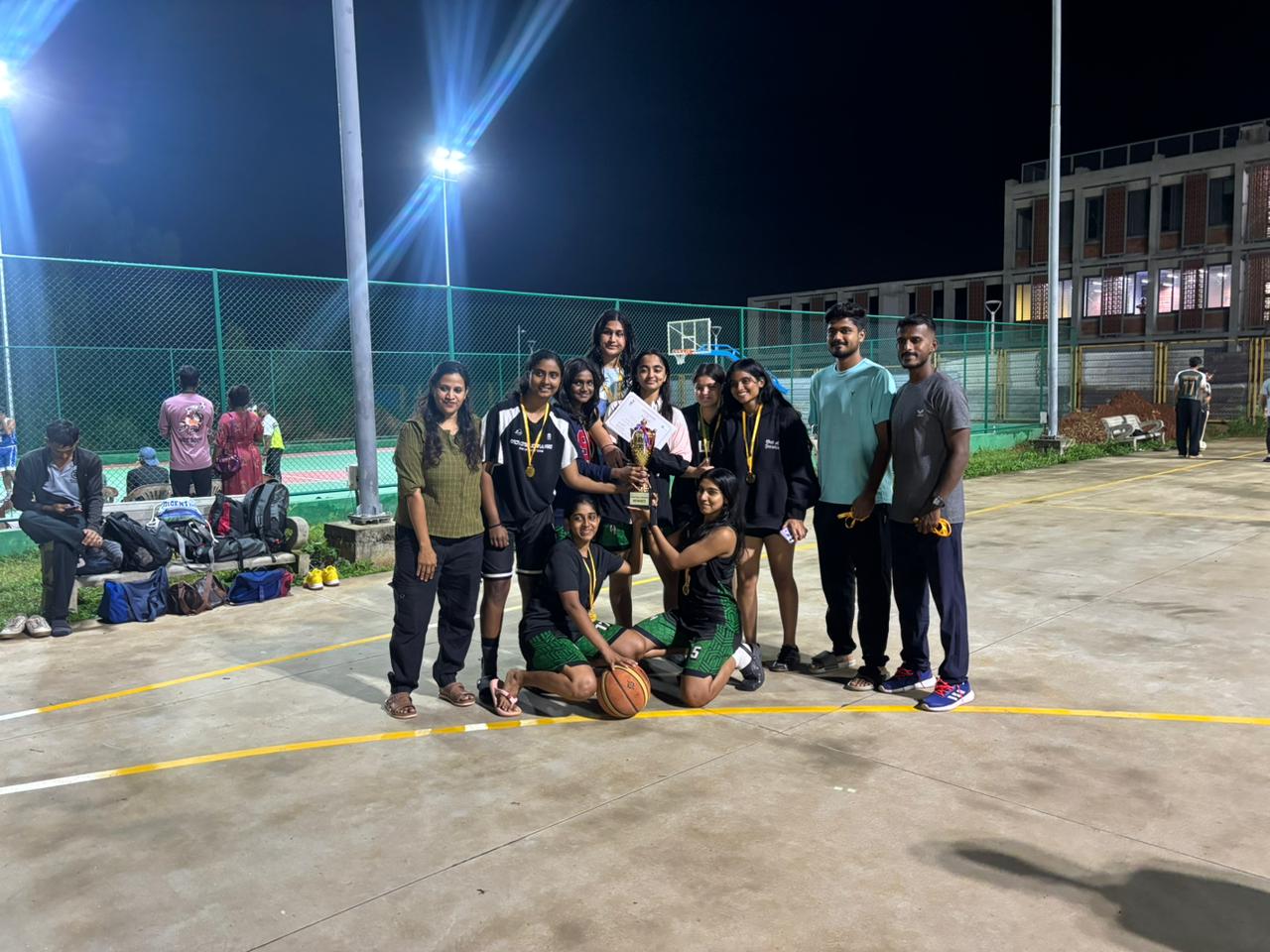
Azim Premji - Basketball Women
02

Battle Of Bands - Amrita University
03

IIIT-B Runners - Basketball Womens
04
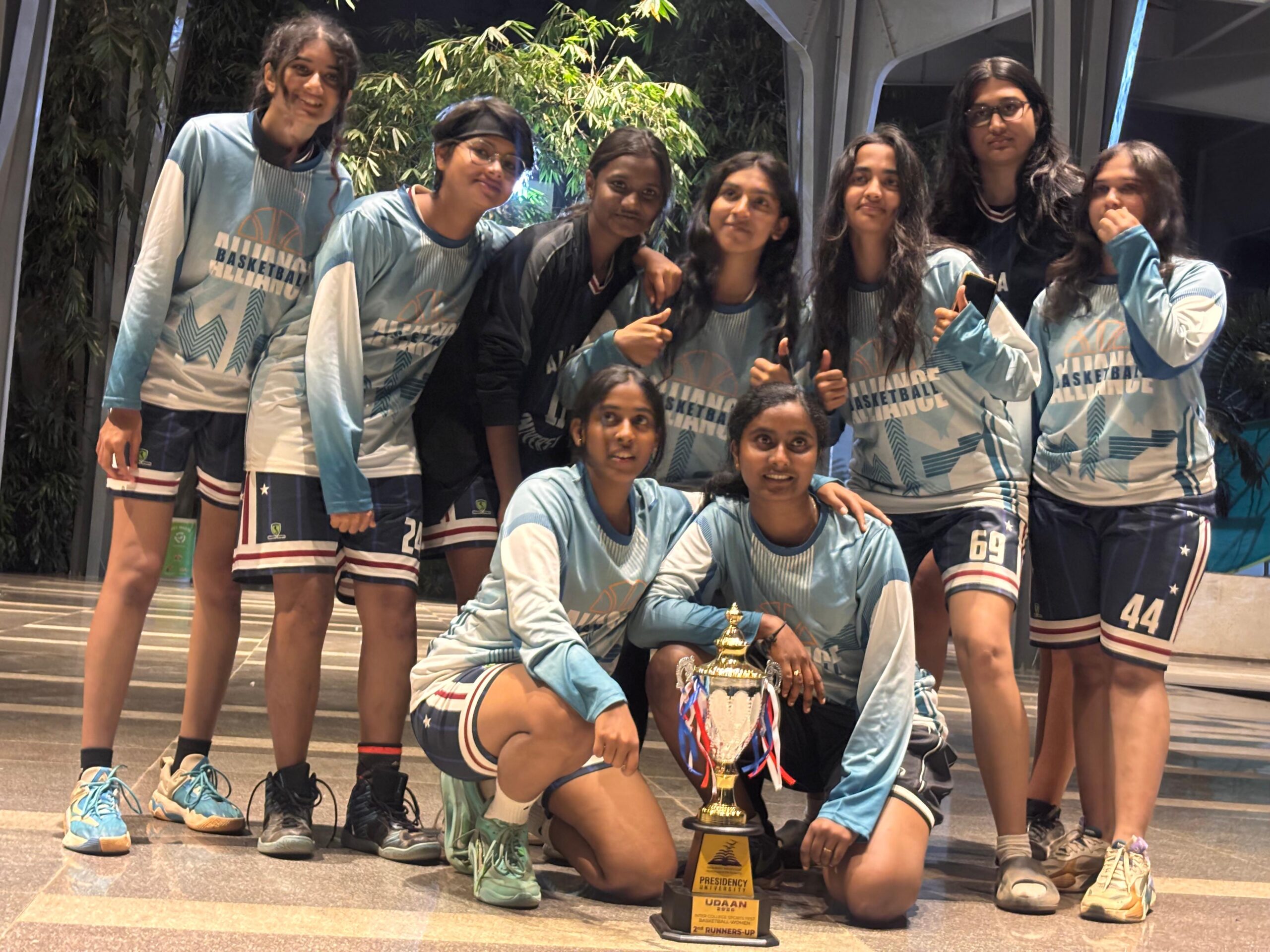
UDAAN presidency University _Women\\\\\\\'s basketball team secured 3rd place
05

ANIKETHANA 2026_MCC
| Category | Eligibility Criteria |
|---|---|
| General | Graduation in any discipline with minimum 45% marks (40% for SC / ST candidates) |
| Reserved Categories | 5% relaxation for SC / ST candidates |
Program duration
| Entry Level | Program Duration |
|---|---|
| Entry Level | One Year / Two Semesters |
ACCEPTED TEST SCORES
| Particulars | Indian Nationals | Foreign Nationals |
|---|---|---|
| Registration Fee As per admission cycle | ₹25,000 | $500 |
| 1st Installment | ₹2,50,000 | $3,150 |
| Total Program Fee | ₹3,00,000 | $4,150 |
| Category | Eligibility | Scholarship |
|---|---|---|
| Academic Excellence | Class X & XII ≥ 90% + UG ≥ 70% | 50% Tuition Fee Waiver |
| Special Merit | X & XII ≥ 80% + UG ≥ 70% | 30% Tuition Fee Waiver |
| Special Merit | X & XII ≥ 70% + UG ≥ 70% | 25% Tuition Fee Waiver |
| Program-Specific Merit | CLAT Score ≥ 80 + X & XII ≥ 60% | 35% Tuition Fee Waiver |
| Program-Specific Merit | CLAT Score 70–79.99 | 25% Tuition Fee Waiver |
| Program-Specific Merit | CLAT Score 60–69.99 | 15% Tuition Fee Waiver |
| Inclusion Support | SC / ST students with ≥ 40% marks | 20% Tuition Fee Waiver |
| Inclusion Support | Differently-Abled students ≥ 50% marks | 50% Tuition Fee Waiver |
| Inclusion Support | Defence / Paramilitary quota ≥ 70% marks | 15% Tuition Fee Waiver |
| Inclusion Support | International-Level Sportspersons ≥ 50% marks | 100% Tuition Fee Waiver |
| Inclusion Support | National-Level Sportspersons ≥ 50% marks | 50% Tuition Fee Waiver |
| Inclusion Support | Domicile students ≥ 70% marks | 5% Tuition Fee Waiver |
| Policy | Conditions | All scholarships are awarded subject to approval by the Scholarship Committee; freeships are limited and awarded on a first-come-first-served basis; eligibility must be fully documented with marksheets, certificates, and transcripts. |
| Steps | Description |
|---|---|
| Step 1 | Submit Online Application |
| Step 2 | Pay Application Fee — ₹25,000 (US$500 for foreign nationals) |
| Step 3 | Appear for ACLAT – Alliance Common Law Admission Test (where applicable) |
| Step 4 | Personal Interview assessment |
| Step 5 | Selection based on overall profile & performance |
Living Spaces That Inspire Belonging
EXPLORE OUR HOSTELS
Comfort, safety, and community form the foundation of campus living. Our residential halls are thoughtfully designed to create a sense of belonging—offering a welcoming environment where students can study, unwind, and build lifelong friendships.

Separate hostels
for boys and girls
Student-friendly
common areas
Spacious rooms
(single, double, or triple occupancy)
Dedicated wardens
and support teams

Industrial Collaborations
Lorem Ipsum is simply dummy text of the printing and typesetting industry. Lorem Ipsum has been the industry’s standard dummy text ever since the 1500s, when an unknown printer took a galley of type and scrambled it to make a type specimen book. It has survived not only five centuries, but also the leap into electronic typesetting, remaining essentially unchanged.
Real Stories, Real Impact
FACULTY
STUDENT





Everything You Need to Know
What is an LL. M.?
LL. M. (Legum Magister) is a 1-year master’s programme for law graduates that provides advanced knowledge in legal principles, justice, and governance. The curriculum at Alliance University focuses on domestic, international, and corporate law with strong emphasis on research and subject expertise.
How do I apply for the LL. M. programme?
Students can apply for the LL. M. programme at Alliance University by filling out the online Application Form.
Is there any age limit to apply for the LL. M. programme?
No, there is no age limit to apply for the LL. M. programme at Alliance University.
What are the admission requirements for LL. M. programmes?
Applicants must hold an LL.B., B.L., or equivalent law degree recognized by the Bar Council of India with a minimum of 45% marks (40% for SC/ST).
How many subjects are in LL. M.?
The LL. M. programme consists of core subjects and specialisations spread across two semesters.
What are the specialisations in LL. M.?
Specialisations include Corporate Law; Crime and Forensics Law; Constitutional and Human Rights Law; Intellectual Property Law; IT and Data Protection Law; Law, Climate Change and Sustainability; and Trade and Commercial Law.
Is 1 year LL. M. valid for Ph.D.?
Yes, a 1-year LL. M. degree is valid for pursuing a Ph.D.
What is an LL. M. programme and who is it designed for?
The LL. M. is an advanced postgraduate law degree designed for law graduates and practicing lawyers who want to specialise in specific areas of law through research, seminars, and academic training.
What career opportunities are available after completing an LL. M. degree?
Graduates can pursue careers in corporate law, policy-making, legal commissions, academia, arbitration, mediation, and legislative drafting, depending on their specialization and interests.
Is the LL. M. programme at Alliance University suitable for aspiring legal scholars?
Yes. The programme offers strong academic mentorship, research-driven coursework, internships, moot courts, and legal service clinics to support aspiring legal scholars.
Can I pursue the LL. M. at Alliance University alongside professional work?
No. The LL. M. programme is a full-time one-year course with mandatory attendance requirements and cannot be pursued alongside professional work.
What is the duration of the LL. M. programme at Alliance University?
The LL. M. programme is a one-year postgraduate degree recognised by UGC and governed by the Bar Council of India.
How long is LL. M. after LL. B.?
The LL. M. programme after LL. B. is a full-time one-year course.
How can I evaluate whether an LL. M. programme is good?
A good LL. M. programme can be evaluated based on curriculum, faculty, infrastructure, internships, and career opportunities.
Can I do LL. M. without LL. B.?
No, an LL. M. requires an LL. B. or equivalent law degree such as BA LL. B. or BBA LL. B.
What is the duration of the LL.M. program?
One year full-time
What is the eligibility criteria?
LL.B / B.L. or other recognized law degree with minimum 45% marks (40% for SC/ST)
Are internships part of the curriculum?
Yes, students gain practical exposure through legal clinics, workshops, and research programs
Are scholarships available?
Yes, multiple merit-based and category-based scholarships are available
What career paths are available?
Litigation, judiciary, policy, corporate law, research, academia
How does industry mentorship support students?
Faculty and industry experts mentor students through real-world legal practice, chamber training, and research projects