Brief Overview

Bachelor of Technology in Biotechnology – BTech Biotechnology

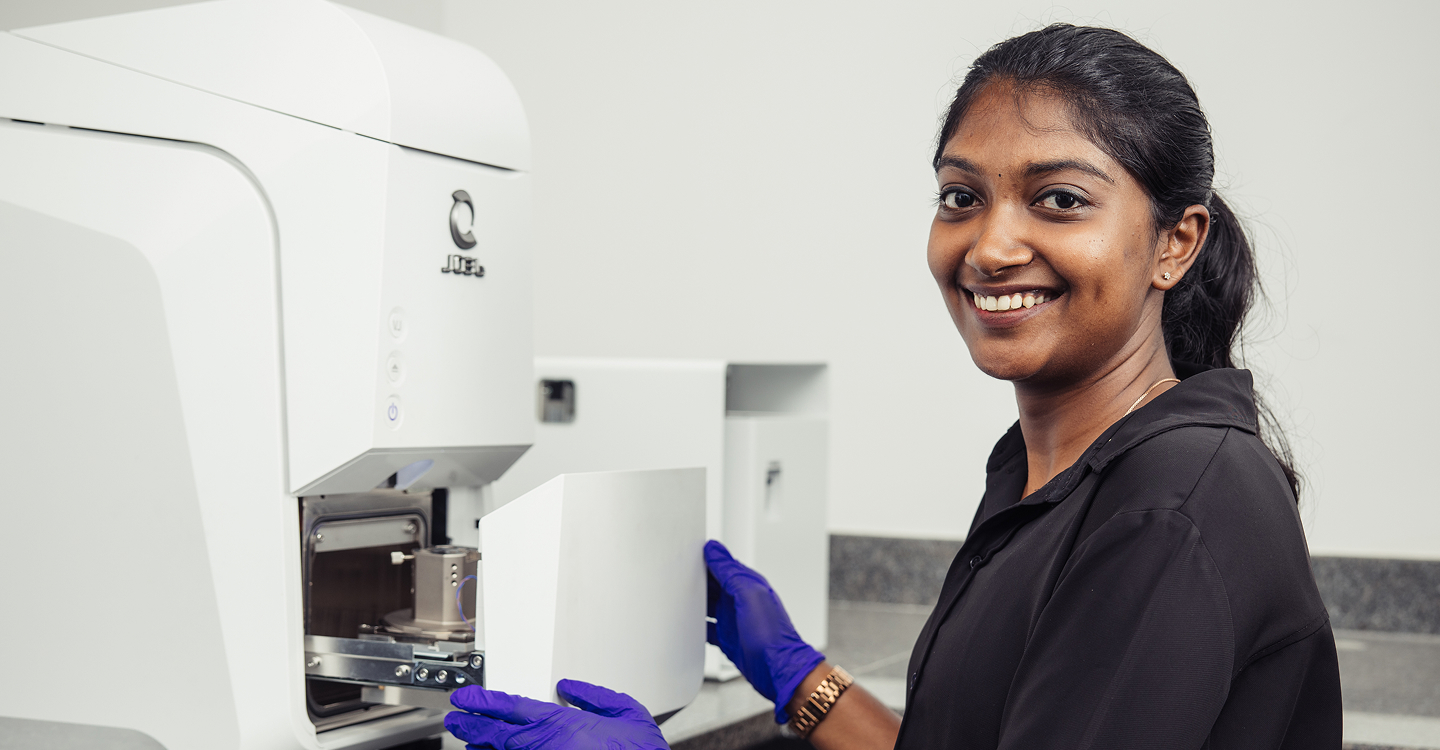
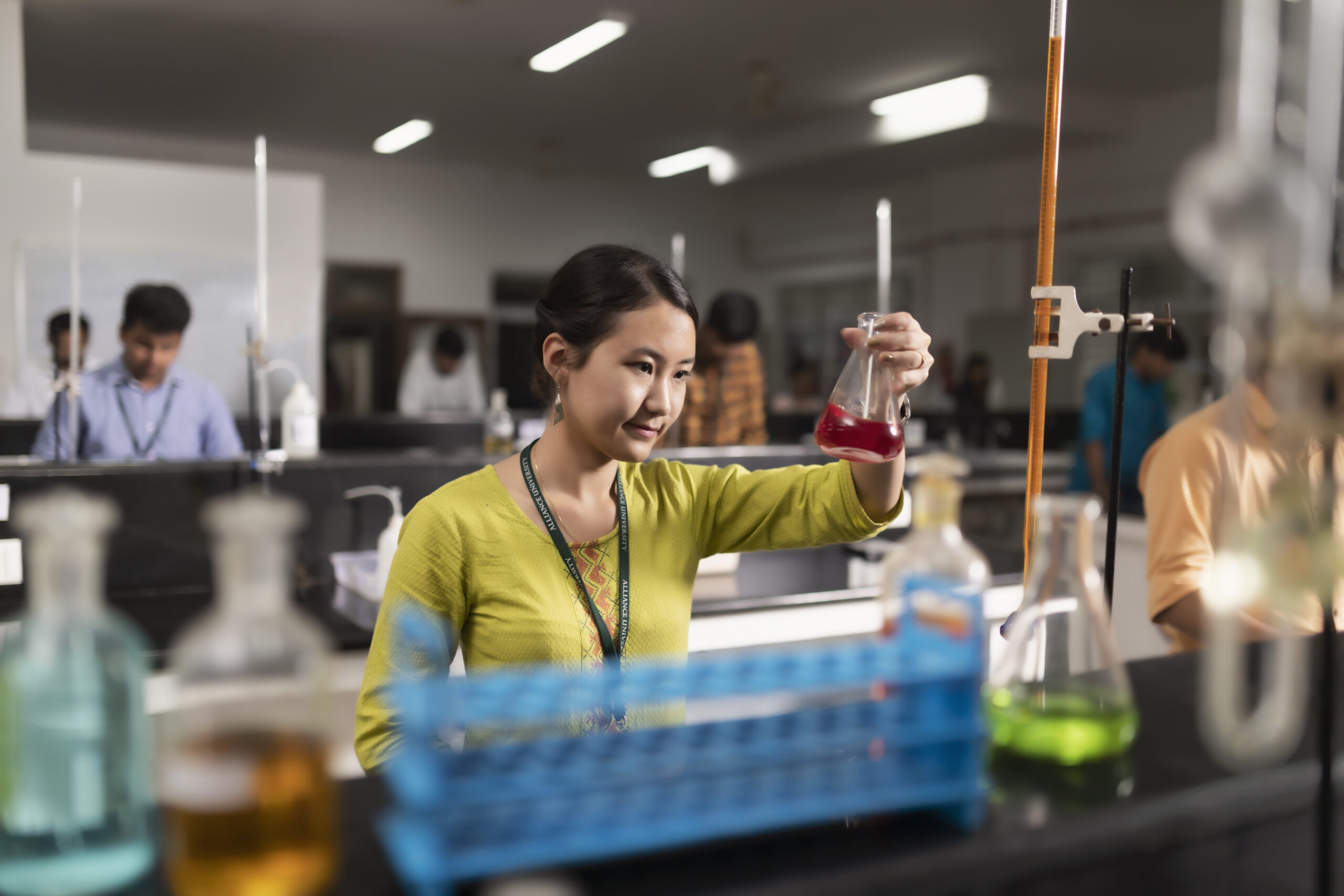
The programme offers a comprehensive academic foundation in molecular biology, genetics, biochemistry, and bioinformatics, combined with applied areas such as genetic engineering, bioprocess technology, and tissue culture. The programme is designed to address global challenges in healthcare, agriculture, and environmental sustainability by advancing biotechnological applications.The curriculum emphasises analytical thinking, research-based learning, and technical expertise, enabling students to contribute to innovation and development in biotechnology and related sectors.

Duration

B. Tech. (Regular): Four years (Full-time)

B. Tech. (Lateral): Three years (Full-time)

PEO (Program Educational Objectives)

PEO-1:
Provide theoretical and practical knowledge in Biotechnology and its allied fields.

PEO-2:
Apply their knowledge for the investigation of complex problems in the manufacture of biological products

PEO-3:
Develop biotechnologists with professional ethics to address global and societal issues for sustainable development.

PSO (Program Specific Outcomes)

PSO-1:
Integrate biology and engineering technology for application in industry and research

PSO-2:
Implement biotechnology concepts in applied biotechnology fields.

PSO-3:
Design and develop solutions using biotechnology concepts in applied biotechnology sectors

PO (Program Outcomes)

Engineering Knowledge:
Apply knowledge of mathematics, natural science, computing, engineering fundamentals and an engineering specialization as specified in WK1 to WK4 respectively to develop to the solution of complex engineering problems.

Problem Analysis:
Identify, formulate, review research literature and analyze complex engineering problems reaching substantiated conclusions with consideration for sustainable development. (WK1 to WK4)

Design/Development of Solutions:
Design creative solutions for complex engineering problems and design/develop systems/components/processes to meet identified needs with consideration for the public health and safety, whole-life cost, net zero carbon, culture, society and environment as required. (WK5)

Conduct Investigations of Complex Problems:
Conduct investigations of complex engineering problems using research-based knowledge including design of experiments, modelling, analysis & interpretation of data to provide valid conclusions. (WK8).

Engineering Tool Usage:
Create, select and apply appropriate techniques, resources and modern engineering & IT tools, including prediction and modelling recognizing their limitations to solve complex engineering problems. (WK2 and WK6)

The Engineer and The World:
Analyze and evaluate societal and environmental aspects while solving complex engineering problems for its impact on sustainability with reference to economy, health, safety, legal framework, culture and environment. (WK1, WK5, and WK7).

Ethics:
Apply ethical principles and commit to professional ethics, human values, diversity and inclusion; adhere to national & international laws. (WK9)

Individual and Collaborative Team work:
Function effectively as an individual, and as a member or leader in diverse/multi-disciplinary teams.

Communication:
Communicate effectively and inclusively within the engineering community and society at large, such as being able to comprehend and write effective reports and design documentation, make effective presentations considering cultural, language, and learning differences

Project Management and Finance:
Apply knowledge and understanding of engineering management principles and economic decision-making and apply these to one’s own work, as a member and leader in a team, and to manage projects and in multidisciplinary environments.

Life-Long Learning:
Recognize the need for, and have the preparation and ability for i) independent and life-long learning ii) adaptability to new and emerging technologies and iii) critical thinking in the broadest context of technological change. (WK8).

Curriculum Structure

Year 1
Semester-wise Syllabus
First Semester
  • Differential Equation
  • Advising Seminar
  • Engineering Graphics
  • Fundamental Physics
  • Logic building using C
  • Product Design and Realization
  • Professional Skills
  • Social Internship
  • Soft Skills - I
  • Universal Human Values and Professional Ethics
Second Semester
  • Bio Organic Chemistry
  • Basics of Electrical and Electronics Engineering
  • Cell Biology
  • Disaster Management
  • Integral Calculus and Linear Algebra
  • Linguistic skills
  • Logical Reasoning
  • Problem Solving with C
Year 2
Semester-wise Syllabus
Third Semester
  • Transforms and Partial Differential Equations
  • Analytical Skills
  • Verbal Ability - I
  • Process Calculations
  • Fluid Mechanics and Heat Transfer Operations
  • Microbiology Laboratory
  • Biochemistry Laboratory
  • Biochemistry
  • Microbiology
Fourth Semester
  • Design Project - I
  • Critical Thinking
  • Verbal Ability - II
  • Probability and Biostatistics
  • Enzyme Engineering
  • Bioprocess Principles
  • Molecular Biology
  • Molecular Biology Laboratory
  • Bioprocess Laboratory
Year 3
Semester-wise Syllabus
Fifth Semester
  • Design Project - II
  • Soft Skills - II
  • Leadership and Management Skills
  • Mass Transfer Operations
  • Analytical methods and Instrumentation
  • Numerical Methods using Python
  • Protein Engineering
  • Professional Elective - I
  • Analytical Methods and Instrumentation Lab
  • Bioinformatics
  • Bioinformatics Laboratory
Sixth Semester
  • Gender Studies
  • Computational Biology
  • Applied Chemical Reaction Engineering
  • Genetic Engineering
  • Professional Elective - II
  • Immunology
  • Immunology Techniques Laboratory
  • Genetic Engineering Laboratory
Year 4
Semester-wise Syllabus
Seventh Semester
  • Sustainable Development Goals
  • Capstone Project phase - I
  • Industry Internship Program
  • Total Quality Management for Biotechnologists
  • Downstream Processing
  • Downstream Process Laboratory
  • Professional Elective - III
  • Professional Elective - IV
Eighth Semester
  • Constitution of India
  • Environment Science
  • Capstone Project phase - II
  • Professional Elective - V
  • Professional Elective - VI
Electives
Semester-wise Syllabus
Professional Elective Medical Biotechnology Industrial Biotechnology Agricultural Biotechnology Environmental Biotechnology Bioinformatics
I

Epidemiology and Public Health

Hazard assessment and mitigation in bio processing industries

Plant Biotechnology

Microbial Biotechnology

Vector Biology and Gene Manipulation

II

Personalized Medicine

Process Equipment and Plant Design

Crop Production Technology

Bio-prospecting of molecules and genes

Protein Engineering

III

Vaccine Technology

Process Instrumentation Dynamics and Control

Fundamentals of crop protection

Molecular Ecology and Evolution

Epigenetics and Gene Regulation

IV

Cancer Biology

Bio-Industrial Entrepreneurship

Breeding of Field crops

Fundamentals of molecular pharming and biopharmaceuticals

Recombinant DNA Technology

V

Nanomedicine

Biopharmaceutical Technology

Green Biotechnology

Green Biotechnology

Molecular Genetics

VI

Bio-Mechatronics

Principles of Food Processing

Agri-Entrepreneurship

Biofuel production

Nanobiotechnology

Courses
Microbiology
Biochemistry
Molecular Biology
System Biology
Genetic Engineering
Bioprocess Technolog
Enzyme Engineering
Upstream and Downstream Processing
Immunology
Thermodynamics
Biosafety and Bioethics
The Department offers three specialized minors designed to enhance domain-specific knowledge and industry readiness.
Medical Biotechnology
Industrial Biotechnology
Computational and Systems Biotechnology
List the Open elective courses
Lorem ipsum
Lorem ipsum
Lorem ipsum
Lorem Ipsum

Capstone Project

The Capstone Project represents the culmination of the undergraduate academic journey, integrating theoretical knowledge, practical skills, and research aptitude acquired throughout the program. It provides students with an opportunity to address complex, real-world problems by applying scientific reasoning, engineering principles, and innovative thinking in a structured and outcome-oriented manner.

COURSE OF INDEPENDENT STUDY

Independent Study

Lorem Ipsum is simply dummy text of the printing and typesetting industry. Lorem Ipsum has been the industry's standard dummy text ever since the 1500s, when an unknown printer took a galley of type and scrambled it

View More
INDUSTRIAL COLLABORATIONS

Industrial Collaborations

Lorem Ipsum is simply dummy text of the printing and typesetting industry. Lorem Ipsum has been the industry’s standard dummy text ever since the 1500s, when an unknown printer took a galley of type and scrambled it

ACTIVITY POINTS

Activity Points

Activity Points form an integral part of the curriculum, designed to promote holistic student development beyond academic learning. These points encourage students to actively engage in co-curricular, extra-curricular, and socially relevant initiatives that strengthen leadership, teamwork, creativity, and professional readiness.

Student

Being a B.Tech. IT student at Alliance University has been a truly engaging experience. The program combines strong fundamentals with practical exposure through projects and hands-on learning, helping me understand real-world applications of technology. With supportive faculty and a collaborative environment, I’ve been able to grow in both skill and confidence, preparing me for a career in IT.

Aashish Kumar
Batch: 2022-26

My journey as a B.Tech CSE student at Alliance University has been both challenging and rewarding.The curriculum builds strong fundamentals while emphasising hands-on learning through projects and real-world applications. With approachable faculty and opportunities to collaborate and participate in technical events, learning goes beyond the classroom. Overall, the experience is shaping me into a confident engineer and problem-solver.

Nawneet Raj
Batch: 2022-26

My experience pursuing B.Tech in Computer Science Engineering at Alliance University has been highly rewarding. The program offers a well-balanced curriculum that combines strong theoretical foundations with practical exposure.The faculty members are knowledgeable and supportive, always encouraging us to explore beyond the classroom. Through projects, hackathons, and hands-on learning, I was able to develop both technical and problem-solving skills.The campus environment and infrastructure further enhance the learning experience. Overall, this journey has played a significant role in shaping my skills and preparing me for a career in the tech industry.

Anurag Kumar Prajapati
Batch: 2023-2027

As a final-year BBA student at Alliance University, my journey has been both enriching and transformative.The program strengthened my business fundamentals while giving me hands-on exposure through projects and discussions, building my confidence in decision making. With supportive faculty, collaborative peers, and opportunities beyond academics, I’ve grown both personally and professionally.
Alliance University has shaped me into a confident, career-ready individual.

ARYAN AGARAHARI
Batch: 2023-2026

What I’ve experienced at Alliance University is not just learning business, but learning how to think like one.
Through projects, presentations, and exposure to areas like marketing and finance, I’ve built both clarity in thought and confidence in expression.
The environment constantly encourages you to take initiative, and that has made all the difference in preparing me for the professional world.

Rajnandini Malewadi
Batch: 2025-2029

As a second-year B. Design student at Alliance University, my journey so far has been about learning to think beyond just creating.
The program has helped me move from focusing only on aesthetics to understanding users, context, and the purpose behind every design decision. The learning environment encourages us to question ideas, experiment freely, and develop our own design perspective, while also building discipline in how we execute and present our work.
In these two years, I’ve grown not just in skills, but in the way I approach problems  and that’s what makes studying design at Alliance University truly meaningful.

Anannya Jain
Batch: 2024-2029

Looking back, what stands out about my time at Alliance University is not just what I’ve learned, but how I’ve learned to think.
The shift from simply studying law to questioning, interpreting, and forming my own perspective has been gradual but meaningful. Through moots, discussions, and real-world context, learning has felt active and engaging.
Today, I find myself more confident in how I analyze, articulate, and respond — and that, more than anything else, defines my journey here.

Chelana Sanklecha
Batch: 2021- 2026

Somewhere along my journey at Alliance University, BBA LL.B. became less about subjects and more about understanding connections.
The blend of business and law, through case studies and practical exposure, has helped me think more holistically and respond with clarity.
What I take forward is not just knowledge, but confidence in how I analyse and approach situations.

Shreya Pragadh
Batch: 2023-2028

Studying B.A. LL.B. at Alliance University has changed how I think, more than anything else.
It’s not just about learning law  it’s about learning how to question it. From analysing cases to participating in moots, every experience pushes you to form your own perspective rather than rely on ready-made answers.
What makes this journey meaningful is the environment. The faculty guide without restricting, and the constant exchange of ideas keeps you engaged.Somewhere along the way, you realise you’re not just studying law you’re learning how to think with clarity, argue with purpose, and respond with responsibility.

ISHITA SHUKLA
Batch: B.A.LL.B.

My MBA experience at Alliance University has been highly enriching. The program combines strong academics with practical exposure, helping me develop critical thinking and leadership skills. Supportive faculty, industry-oriented curriculum, and various learning opportunities have prepared me well for a successful career.

Palak Jain
Batch: 2025-2027

My experience pursuing BCA in Artificial Intelligence and Machine Learning at Alliance University has been both challenging and enriching. The program has helped me build a strong foundation in programming, data science, and analytical thinking. Through projects, assignments, and practical exposure, I have gained valuable skills that prepare me for real-world technology and AI applications.

Anuska Ghosh
Batch: 2024-2028

Alliance University has helped me build a strong foundation in computer science and technology. The program combines theoretical knowledge with practical learning through projects and assignments. I have gained exposure to areas like programming, data structures, machine learning, NLP, and AI related concepts so far. The collaborative environment and supportive faculty encourage continuous learning and problem-solving. Overall, it has been a valuable step in developing my technical and analytical skills.

Vishesh Gurnani
Batch: 2024-2028
Program Eligibility Criteria

Eligibility Criteria

Candidates must have completed 10+2 (Class XII) with Physics, Chemistry, and Biology/Mathematics as core subjects.

A minimum aggregate of 60% (as per university norms) in qualifying examinations.

Admissions may be based on entrance exams

STUDY ABROAD OPTIONS

Learn Across Borders

Experience global education through our international study opportunities designed to broaden academic perspectives and cultural understanding. These programmes enable students to study at partner universities abroad, gain international exposure, and develop the global competencies needed to succeed in an interconnected world.
Learn More