Brief Overview

Bachelor of Science (Honours) - BSc (Honours) - Physics

The Programme unfolds a fascinating journey from exploring the minutest particles within an atom\\\\\\\\\\\\\\\\\\\\\\\\\\\\\\\\\\\\\\\\\\\\\\\\\\\\\\\\\\\\\\\\\\\\\\\\\\\\\\\\\\\\\\\\\\\\\\\\\\\\\\\\\\\\\\\\\\\\\\\\\\\\\\\\\\\\\\\\\\\\\\\\\\\\\\\\\\\\\\\\\\\\\\\\\\\\\\\\\\\\\\\\\\\\\\\\\\\\\\\\\\\\\\\\\\\\\\\\\\\\\\\\\\\\\\\\\\\\\\\\\\\\\\\\\\\\\\\\\\\\\\\\\\\\\\\\\\\\\\\\\\\\\\\\\\\\\\\\\\\\\\\\\\\\\\\\\\\\\\\\\\\\\\\\\\\\\\\\\\\\\\\\\\\\\\\\\\\\\\\\\\\\\\\\\\\\\\\\\\\\\\\\\\\\\\\\\\\\\\\\\\\\\\\\\\\\\\\\\\\\\\\\\\\\\\\\\\\\\\\\\\\\\\\\\\\\\\\\\\\\\\\\\\\\\\\\\\\\\\\\\\\\\\\\\\\\\\\\\\\\\\\\\\\\\\\'s nucleus to understanding the grandeur of galaxies with billions of stars. Students are drawn to Physics for its excitement and intellectual stimulation, and the subject offers a vast spectrum of career options encompassing academia, industry, and finance. Physics education equips individuals with a unique perspective for tackling real-world problems, making them highly valued by employers. Possessing a Physics degree signals to prospective employers that individuals are well-equipped with the background, knowledge, and determination to excel in various scientific and technical fields. Career opportunities span Radiation Physics, Biophysics, Materials Science, Chemical Physics, Computer Science, Data Analysis, Geophysics, Mathematics, Medicine, and Teaching.

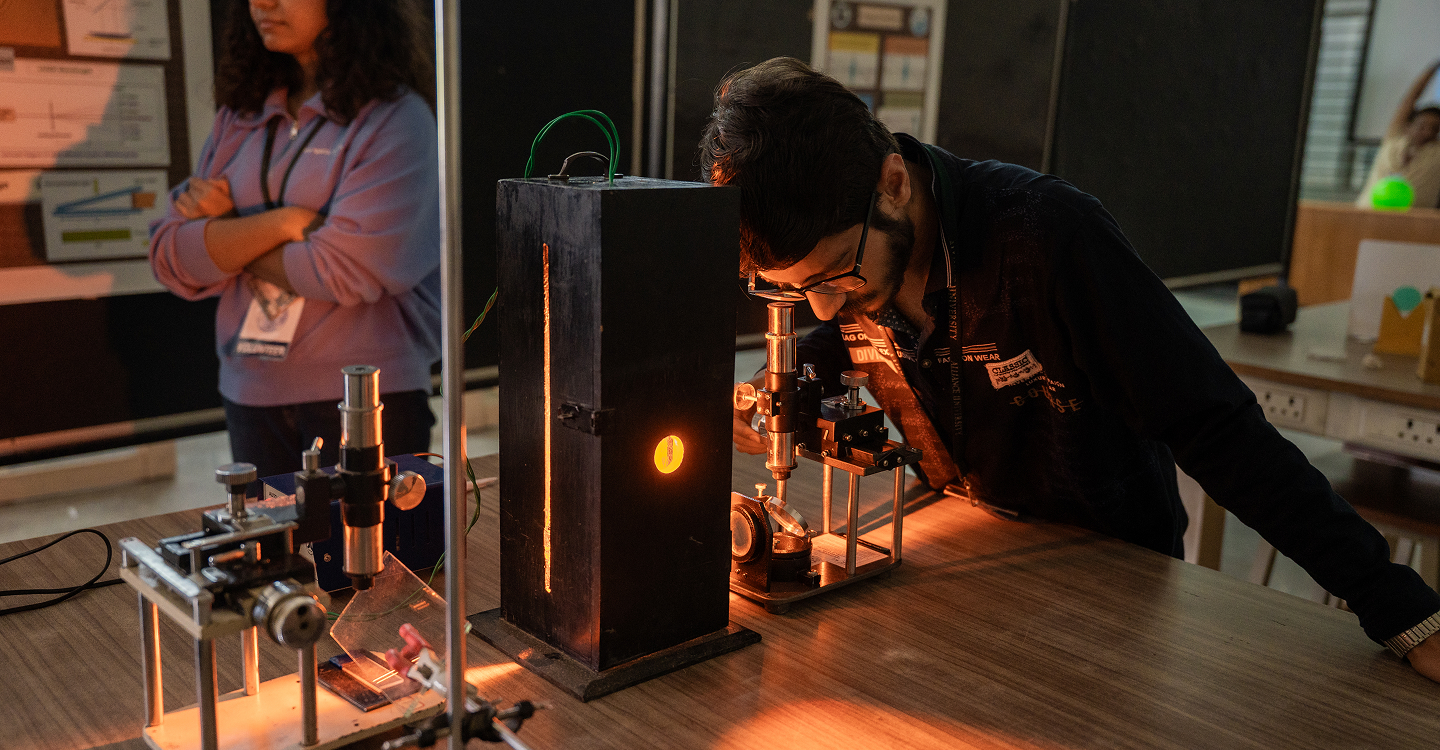
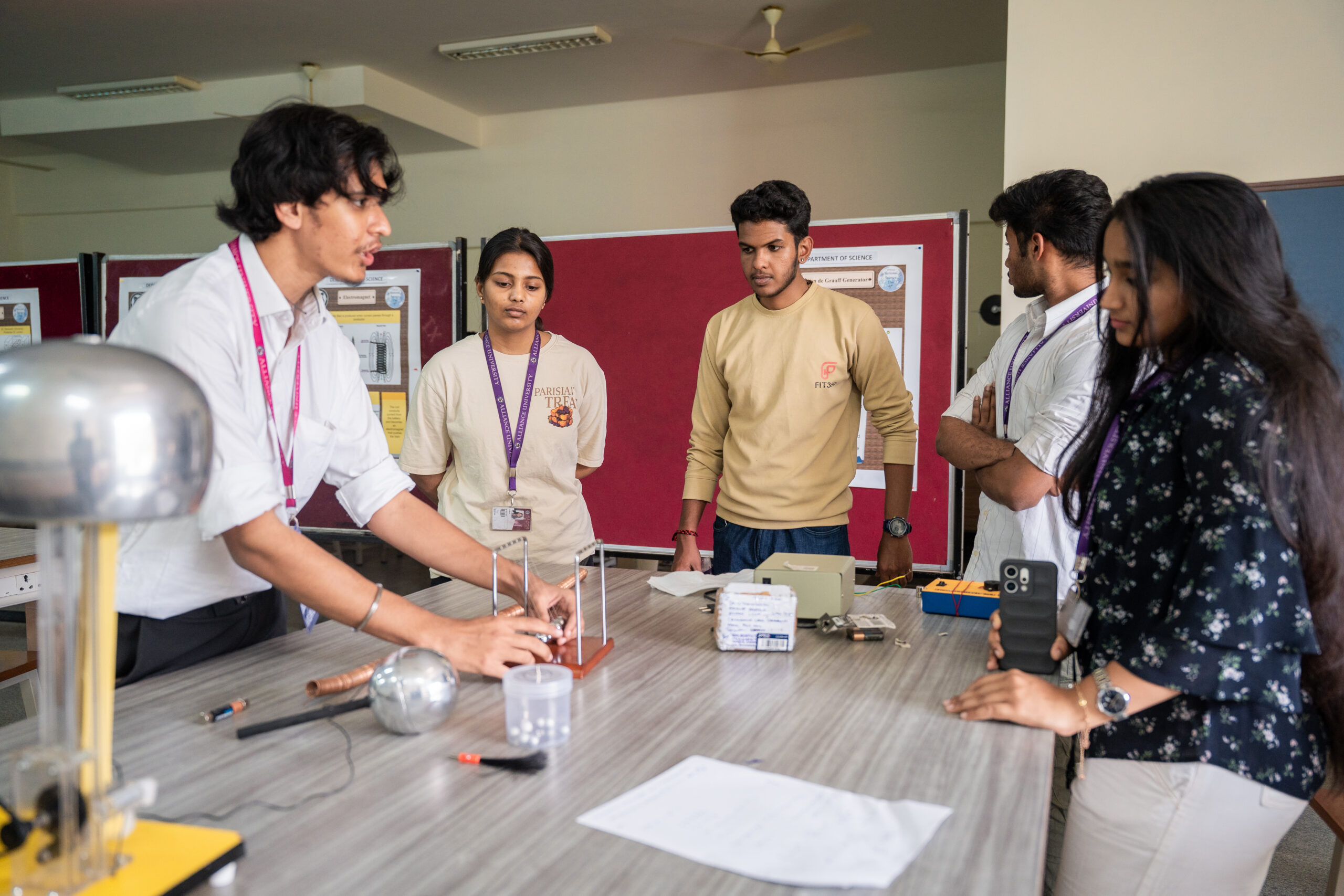
The programme is meticulously crafted to provide students with a robust foundation for emerging as future physicists. Beyond the broad syllabus, interested students can explore diverse areas, gaining exposure to fundamental Physics courses and elective courses in Condensed Matter Physics, Materials Science, Optics, Nuclear Physics, Particle Physics, and Astrophysics. The programme also nurtures interdisciplinary expertise by incorporating a strong foundation in Mathematics and Computer Science. With a pedagogy blending classroom lectures, experiential learning, extensive laboratory courses, and tutorials, the programme prepares students for a holistic understanding of Physics, fostering a spirit of inquiry and discovery.

Duration

Four Years / Eight Semesters

PEO (Program Educational Objectives)

PEO1. Academic Excellence: 

Graduates of the program will possess a strong foundation in the core principles of physics, including classical mechanics, quantum mechanics, electromagnetism, and statistical mechanics. They will demonstrate proficiency in both theoretical concepts and practical applications through laboratory work, projects, and coursework.

PEO2.Professional Competence:

Upon completion of the program, graduates will be equipped with the necessary skills and knowledge to pursue careers in various fields related to physics, such as research, academia, industry, and technology. They will demonstrate competence in problem-solving, critical thinking, and analytical reasoning, enabling them to adapt to diverse professional environments and contribute effectively to the advancement of science and technology.

PEO3. Interdisciplinary Integration: 

Graduates will recognize the interdisciplinary nature of physics and its interconnectedness with other scientific disciplines and societal challenges.  They will be capable of applying their physics knowledge and skills to address complex problems across different domains, fostering innovation and collaboration in interdisciplinary research and development.

PEO4. Ethical and Social Responsibility: 

Graduates will uphold ethical standards and professional integrity in their practice of physics, demonstrating a commitment to responsible conduct, environmental sustainability, and societal well-being. They will engage ethically and responsibly in scientific inquiry, communication, and decision-making, recognizing the broader implications of their work on individuals, communities, and the global society.

PEO5. Lifelong Learning and Professional Development: 

Graduates will embrace a commitment to lifelong learning and continuous professional development, recognizing the dynamic nature of scientific knowledge and technological advancements. They will pursue opportunities for further education, training, and professional growth, staying abreast of emerging trends and innovations in physics and related fields to remain competitive and contribute to the advancement of knowledge and society.

PSO (Program Specific Outcomes)

PSO1:

Foundational Competence in Physics Graduates will demonstrate a strong and comprehensive understanding of major domains of physics and apply these principles to analyze and interpret physical systems and phenomena.

PSO2:

Experimental Competence & Scientific Investigation Graduates will design and conduct physics experiments using modern laboratory instruments, analyze data with appropriate mathematical and statistical tools, and interpret results to draw meaningful scientific conclusions.

PSO3:

Mathematical Modeling & Computational Skills Graduates will effectively use mathematical techniques and computational tools to model physical systems, solve physics-based problems, and predict real-world phenomena.

PSO4:

Interdisciplinary Application & Technological Relevance Graduates will apply physics principles to interdisciplinary domains emerging technologies, contributing to innovative solutions for scientific and societal challenges.

PSO5:

Ethical, Sustainable, and Societal Engagement in Physics Graduates will recognize the societal impact of physics, practice ethical scientific conduct, and apply physics knowledge to promote environmental sustainability, responsible research, and effective communication of scientific ideas.

PO (Program Outcomes)

PO1: 

Understand the fundamental principles of physics, including mechanics, electromagnetism, thermodynamics, optics, modern physics, quantum mechanics, solid state physics and nuclear physics.

PO2:

Understand how the fundamental principles of Physics are used in a wide range of applications.

PO3: 

Understand and appreciate the recent developments in Physics.

PO4: 

Apply physics knowledge across topic boundaries without prior practice.

PO5:

Apply mathematics to model, describe and predict phenomena in the real world.

PO6:

Apply advanced problem-solving skills, enabling them to apply theoretical concepts to practical situations and analyze complex physical phenomena.

PO7: 

Analyse experimental data by conducting experiments using a variety of laboratory equipment and techniques, fostering a strong foundation in experimental physics.

PO8: 

Understand the importance of sustainability and the environment.

PO9: 

Understand the role of science in society, ethical or moral considerations in scientific research and how science can be used and misused in society.

PO10: 

Communicate scientific concepts, theories, and experimental results effectively.

Curriculum Structure

Year 1
Semester-wise Syllabus
Semester Domain Subject Title

Semester I

Program Core

Mechanics and Properties of Matter

Mathematical Physics – 1

Basics of Electricity and Electronics

University Core

Universal Human Values

Environmental Science

Introduction to AI Tools

Ability Enhancement Course

Principles of Critical Thinking

Communicative English

Semester II

Program Core

Waves and Oscillations

Astrophysics

Physics Lab - 1

General Chemistry

Open Elective

Open Elective

University Core

Stress Management

Personal Finance

Ability Enhancement Course

Beyond Binaries: Gender and Society

Managing Emotions

Year 2
Semester-wise Syllabus
Semester Domain Subject Title

Semester III


Program Core

Electrodynamics

Heat and Thermodynamics

Mathematical Physics - 2

Open Elective (Language)

Open Elective (Language)

Open Elective

Open Elective

University Core

Legal Awareness and IPR

Excel and PowerPoint

Ability Enhancement Course

Academic Writing

Media and Information Literacy

Semester IV


Program Core

Modern Physics

Advanced Electronics

Physics Lab - 2

Open Elective (Language)

Open Elective (Language)

Program Elective

Program Elective

University Core

Social media and Internet Governance

Ability Enhancement Course

Communicating with Data

Decision Making and Entrepreneurial Mindset

Year 3
Semester-wise Syllabus
Semester Domain Subject Title

Semester V

Program Core

Optics and Spectroscopy

Solid State Physics

Nuclear and Particle Physics

Program Elective

Program Elective -1

Program Elective -2

Ability Enhancement Course

Professional Development and Career Preparation

University Core

Sustainable Development Goals

Social Internship

Semester VI

Program Core

Internship

Program Elective

Program Elective

Program Elective

Program Elective

Skill Enhancement course

Digital Tools for Research and Industry

Leading with Impact: Skills for the 21st Century Leader

Year 4
Semester-wise Syllabus
Semester Domain Subject Title

Semester VII

Capstone Project

Capstone Project

Program Core

Classical Mechanics

Computational Physics

Mathematical Physics - 3

Physics Lab - 3

Program Elective

Program Elective

Semester VIII

Capstone Project

Capstone Project

Program Core

Statistical Mechanics

Quantum Mechanics

Program Elective

Program Elective

ACTIVITY POINTS

Activity Points

As directed by DOSSS

FACULTY


Program Eligibility Criteria

Eligibility of Admission

10+2 from recognized Board / Council with minimum 50% aggregate marks with Physics or Mathematics or Chemistry as a compulsory subject. A relaxation of 5% marks or its equivalent grade may be allowed for those belonging to SC / ST.

FAQS

Everything You Need to Know

Physics provides the framework to understand natural phenomena and underpins advancements in technology, engineering, medicine, and data science. A grounding in physics develops analytical rigour and problem-solving skills that are essential for both research and professional careers.
You need to have completed 10+2 with Physics, Chemistry, and Mathematics, meeting the University’s minimum marks or entrance requirements. For more details you can refer to the B. Sc. (Hons.) Physics Page.
It is a 4-year programme, spread across 8 semesters.
Honours students dive deeper, with advanced topics, research projects, and sometimes even master ’s-level papers. A general B. Sc. covers the basics only.
Yes, the 4-year Honours route includes advanced coursework and research, which makes it ideal for students aiming for direct Ph. D. admission or research-based careers.
Yes. As per the UGC guidelines of 2025, students with a 4-year bachelor’s (Honours/Research) degree and at least 75% marks (or equivalent grade) can directly apply for a Ph. D. without a master’s degree.
The curriculum covers all the essentials like Mechanics, Electricity, Thermodynamics, Electrodynamics, Quantum Mechanics, Modern Physics, Nuclear Physics, Astrophysics, Particle Physics, Solid-State Physics, Electronics, Spectroscopy, and Mathematical Physics. Advanced electives are also available in areas like Astrophysics, Particle Physics, and Solid-State Physics.
Yes, labs are an integral part of the programme. You’ll get plenty of hands-on experience to connect theory with real experiments.
Yes, both internships and project work are part of the curriculum.
Absolutely. Students can join clubs such as the Astronomy Club or Mathematics Club, and also take part in seminars, workshops, and competitions to learn beyond the classroom.
The fee details are provided in the official fee structure of the University.
You can pursue an M. Sc. in Physics, M. Tech. in related fields, or explore interdisciplinary areas such as Astrophysics, Geophysics, Nanotechnology, or even opt for an MBA.
Yes, the strong foundation in Physics prepares students for exams like GATE, JAM, JEST, and integrated Ph. D. entrance tests.
Yes, many U.S. universities and some international institutions admit students directly into Ph. D. programmes after a 4-year B. Sc. degree.
The faculty are highly qualified, with strong research and teaching experience. They specialise in areas such as machine learning, edge computing, data analytics, software engineering, and advanced fields in Physics ensuring students get both theoretical grounding and practical insights.