Brief Overview

Bachelor of Science (Honours) - BSc (Honours) - Computer Science

The B. Sc. in Computer Science focuses on the concepts and techniques used in designing and developing advanced software systems. The programme enables the student to develop the conceptual underpinnings of computer science, including its fundamental algorithms, programming languages, operating systems, and software engineering techniques.

Computer Science is a professional field associated with computer technology (hardware and software). It has sub-disciplines such as computer theory, hardware systems, software systems, and scientific computing. It studies processes enabling algorithms to manipulate, store, and communicate digital information. In a nutshell, Computer Science deals with the theoretical foundations of information and computation and takes a scientific and practical approach to computational applications.

The Bachelor of Computer Science will be your steppingstone to develop a career in the world of computers. Here, you will get acquainted with various technologies and systems that develop computer software and hardware. Computer Science, an evolving field, demands a diverse skill set to solve real-life problems. Pursuing the degree will help one navigate the required skills to solve practical problems and keep up with upcoming trends.

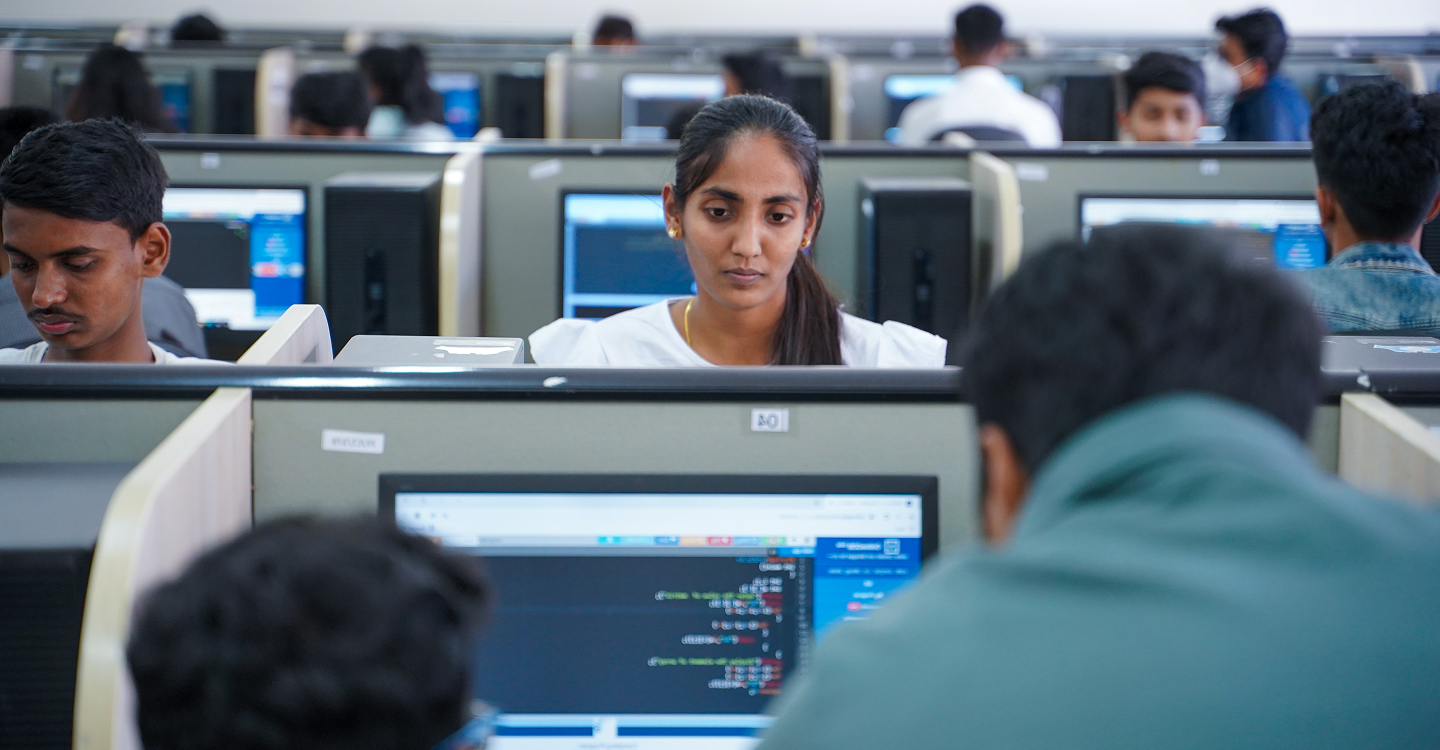
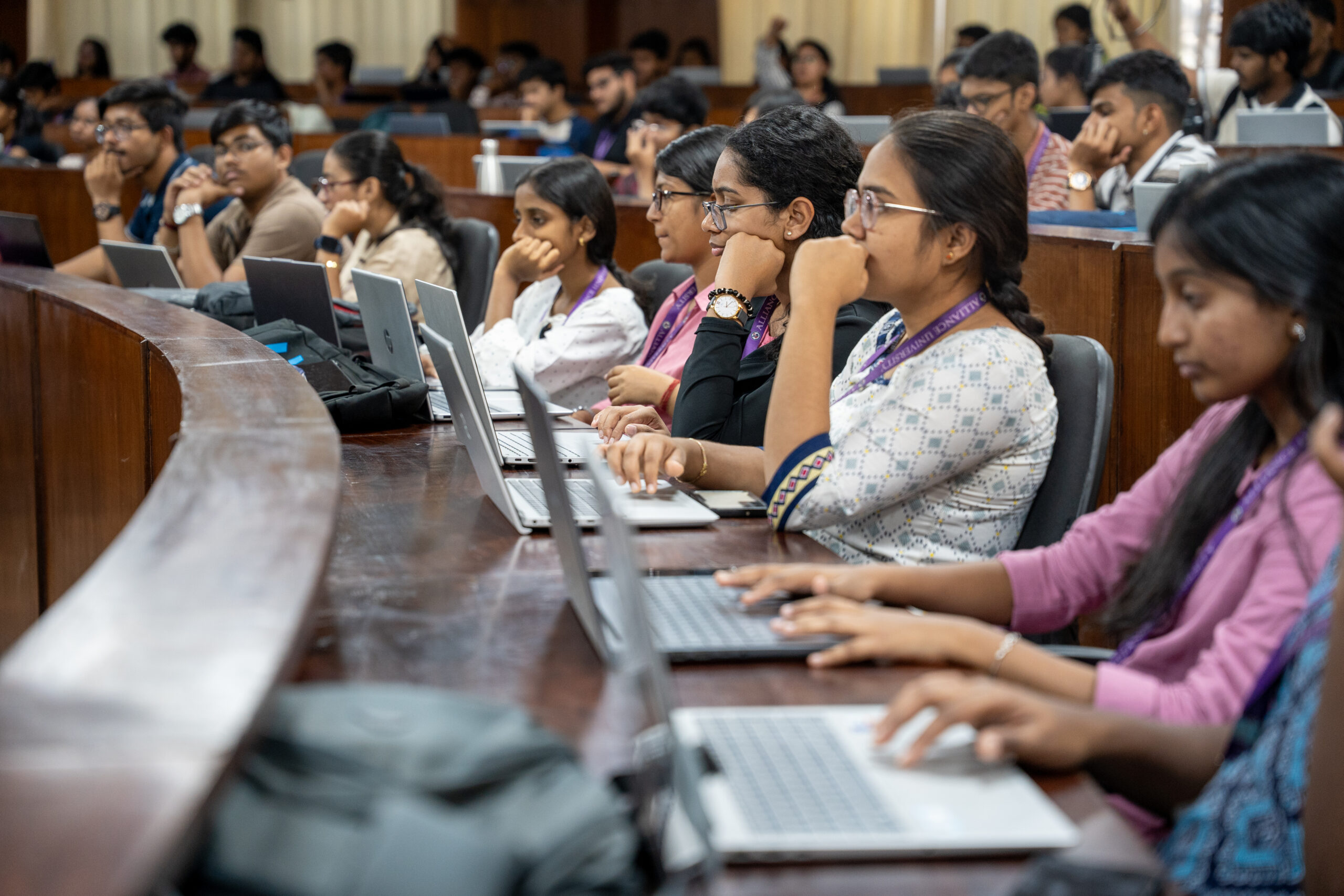
Our students benefit from the Department\\\\\\\\\\\\\\\\\\\\\\\\\\\\\\\\\\\\\\\\\\\\\\\\\\\\\\\\\\\\\\\\\\\\\\\\\\\\\\\\\\\\\\\\\\\\\\\\\\\\\\\\\\\\\\\\\\\\\\\\\\\\\\\'s cutting-edge research and extensive facilities. The Department of Computer Science and Technology has the latest software, advanced lecture theatres, and dedicated practical rooms. The faculty is world-class with expertise spanning multiple disciplines within computer science such as Algorithms, Machine Learning, Mobile Computing, Cyber Security, and Software Engineering. Students post-project deliver a product to a client and acquire relevant industrial experience.

PEO (Program Educational Objectives)

PEO 1: Professional Excellence & Innovation

Graduates will establish themselves as successful professionals who integrate disciplinary depth, modern analytical and digital tools, and interdisciplinary perspectives to solve complex, real-world problems and deliver evidence-based, context-sensitive solutions in interconnected professional environments.

PEO 2: Leadership & Effective Communication

Graduates will be advance into leadership or influential collaborative roles, demonstrating the versatility to work in diverse, multicultural, and interdisciplinary teams, and the ability to communicate, negotiate, and persuade effectively across audiences, platforms, and contexts.

PEO 3: Ethical Practice & Societal Impact

Graduates will act with professional integrity, applying ethical reasoning, social responsibility, and sustainability-oriented thinking to champion inclusive, community-engaged, and socially responsive initiatives that create measurable and meaningful impact at local, national, and global levels.

PEO 4: Lifelong Learning & Career Adaptability

Graduates will proactively adapt to the evolving global, technological, and socio-political landscapes by pursuing continuous learning, advanced education, and skill enhancement, enabling career mobility, resilience, and long-term professional relevance.

PSO (Program Specific Outcomes)

Lorem Ipsum
is simply dummy text of the printing and typesetting industry. Lorem Ipsum has been the industry's standard dummy text ever since the 1500s,

Lorem Ipsum
is simply dummy text of the printing and typesetting industry. Lorem Ipsum has been the industry's standard dummy text ever since the 1500s,

Lorem Ipsum
is simply dummy text of the printing and typesetting industry. Lorem Ipsum has been the industry's standard dummy text ever since the 1500s,

PO (Program Outcomes)

PO1: Interdisciplinary & Multidimensional Understanding

Integrate knowledge, theories, and methodologies from multiple disciplines, cultural contexts, and analytical traditions to interpret, connect, and critically analyze complex local, national, and global phenomena in an interconnected world.

PO2: Critical Thinking, Analysis & Problem Framing/Solving

Critically evaluate diverse perspectives, question assumptions and power relations, synthesize complex information, and apply robust analytical frameworks to frame and solve problems effectively and develop innovative, evidence-based responses to real-world challenges.

PO3: Research Design, Methods & Ethical Inquiry

Design and conduct rigorous, independent, and collaborative research using qualitative, quantitative, and mixed methods, demonstrating the ability to collect, interpret, and ethically assess evidence to generate meaningful academic and applied knowledge.

PO4: Application, Practice & Experiential Learning

Apply theoretical knowledge to real-world contexts through internships, fieldwork, simulations, labs, and experiential projects that connect academic learning with industry, governance, and civil society.

PO5: Ethical Reasoning, Justice & Responsibility

Demonstrate ethical judgment by critically assessing the social, political, and moral implications of actions and decisions, and by upholding values of integrity, inclusivity, justice, sustainability, and responsible citizenship in personal and professional life.

PO6: Strategic, Digital & Multimodal Communication

Communicate complex ideas clearly, persuasively, and responsibly across written, oral, visual, and digital formats, tailoring messages effectively for diverse, interdisciplinary, and global audiences.

PO7: Innovation, Initiative & Entrepreneurial Thinking

Exhibit creativity, adaptability, and initiative by identifying opportunities, navigating uncertainty, and designing innovative social, cultural, policy, or entrepreneurial solutions in dynamic socioeconomic environments.

PO8: Collaboration, Leadership & Autonomous Practice

Work effectively as ethical collaborators and reflective leaders in diverse, multidisciplinary, and multicultural teams, while demonstrating self-directed learning, accountability, and autonomy in individual work.

PO9: India in a Global & Comparative Perspective

Critically examine India’s historical, cultural, political, and socio-economic realities within comparative and global frameworks, applying contextual understanding to contemporary national and international debates.

PO10: Civic Engagement, Democracy & Public Action

Participate actively and responsibly in civic and democratic life, demonstrating a sustained commitment to pluralism, dialogue, participation, and the advancement of the public good at local, national, and global levels.

PO11: Self-Reflection, Well-Being & Personal Development

Develop self-awareness, emotional intelligence, and reflective capacity, balancing intellectual ambition with mental, emotional, and physical well-being to support resilient, ethical, and purposeful personal growth.

PO12: Lifelong Learning & Intellectual Adaptability

Demonstrate intellectual curiosity and adaptability by embracing continuous learning, re-skilling, and reflective self-renewal, recognizing the evolving nature of knowledge, society, and professional life.

Curriculum Structure

Foundation Level Courses
Semester-wise Syllabus
  • Introduction to Python Programming
  • Fundamentals of Computers
  • Fundamentals of Microcontrollers and Applications
Core
Semester-wise Syllabus
  • Computer Networks
  • Computer Organization
  • Data Structures
  • Web Technology
  • Data Mining
  • Database Systems
  • Software Engineering
  • Java Programming
  • Mobile Application Development
  • Computer Security
Minor Electives
Semester-wise Syllabus
  • Data Visualization in Python
  • Data Preparation
  • Data Analysis using Python
  • Fundamentals of Machine Learning
  • Natural Language Processing
  • Sentiment Analysis
  • Computer Algorithms
  • Designing Algorithms
  • GNU Octave for Scientific Computations
  • Web Designing
  • Server-Side Programming
  • Node JS/ React JS
Cross Electives
Semester-wise Syllabus
  • Data Warehousing
  • Visual Programming
  • Designing Software
  • Fundamentals of Cyber Security
  • Digital Media
  • Web Development Frameworks
  • Data Analysis Using R
  • Server Side Programming in PHP
  • Content Management Systems
  • Human Computer Interaction
All Majors will also be offered as minors in addition to:
International Relations
Philosophy
Mathematics
Physics
Chemistry
List of Open elective courses (with Brief wirte up)
Governing the Metaverse: Digital Sovereignty and Virtual Politics
Experimental Drawing: Beyond Traditional Boundaries
The Art of Seeing: Fundamental of Visual Perception
Branding and Identity Design: Logos & Beyond
Digital illustration & Vector Art
Visual storytelling and Media Entrepreneurship
Podcasting and Immersive Audio Storytelling
Science Technology and Society (STS)
Community Engagement
Communicative English for the Workplace
Reading Popular Culture: Cinema, Comics, and Contemporary Media
Foundation of Economic Analysis
Indian Economy
Everyday mind: psychology in daily life
Psychology of interpersonal relationships
Human-computer interaction
Practical Ethics
Philosophy: An Introduction
Capstone Project

Capstone Project

Undergraduate students in their fourth year may choose to pursue either a capstone project or a research dissertation for upto 12 credits. The key differentiator between the two will be that in the capstone project, students will be expected to :

Associate with an industry/organisation during the winter break,

Identify a real-world problem in consultation with the host organisation, and

Develop and implement solutions as part of the Capstone project.

COURSE OF INDEPENDENT STUDY

Independent Study

Course of Independent study is an avenue where students may take-up a real-world problem and propose solutions to the same through rigourous research and/or experimentation. Those who opt for a CIS credit will be expected to ready a publication-worthy research finding through the guidance of a faculty supervisor. The School will publish their list of projects/topics annually and students may opt for one of these.

View More
INDUSTRIAL COLLABORATIONS

Industrial Collaborations

Lorem Ipsum is simply dummy text of the printing and typesetting industry. Lorem Ipsum has been the industry’s standard dummy text ever since the 1500s, when an unknown printer took a galley of type and scrambled it to make a type specimen book. It has survived not only five centuries,

STUDENT

Alliance university has been a great contribution to the development of my personality. I have established my leadership, time management, and team skills and have also been able to advance these skills.

Bivesh J
Branch: Computer Science/
Batch: 2022-26
Program Eligibility Criteria

Details of Program Eligibility Criteria

Alliance School of Liberal Arts follows a holistic admissions process. In addition to meeting the eligibility criteria, you should be a curious risk-taker and prepared to explore new fields of study, creative, empathetic and have a socio-cultural and environmental conscience (responsibility). You should have varied interests.

Eligibility:

Pre-University/Higher Secondary/10+2 Examination from any recognized Board or Council in any discipline

Obtained at least 50% marks in the relevant subjects taken in standard 12

Valid entrance test score. The tests accepted are AUSAT, SAT, ACT and Pearson Undergraduate Entrance Exam

You may visit our website for more information: Liberal Arts Undergraduate Programme, Alliance School of Liberal Ats, Alliance University.

STUDY ABROAD OPTIONS

Study Abroad

We have multiple partners internationally who offer semester exchanges, short-term immersion programs, higher education pathways, and so on. Most recently we have our students taking up these opportunities in US, , UK, Hong Kong, and Russia.

Learn More