Admissions Open 2026-2027. Apply Now Admissions Open 2026-2027. Apply Now Admissions Open 2026-2027. Apply Now Admissions Open 2026-2027. Apply Now Admissions Open 2026-2027. Apply Now Admissions Open 2026-2027. Apply Now

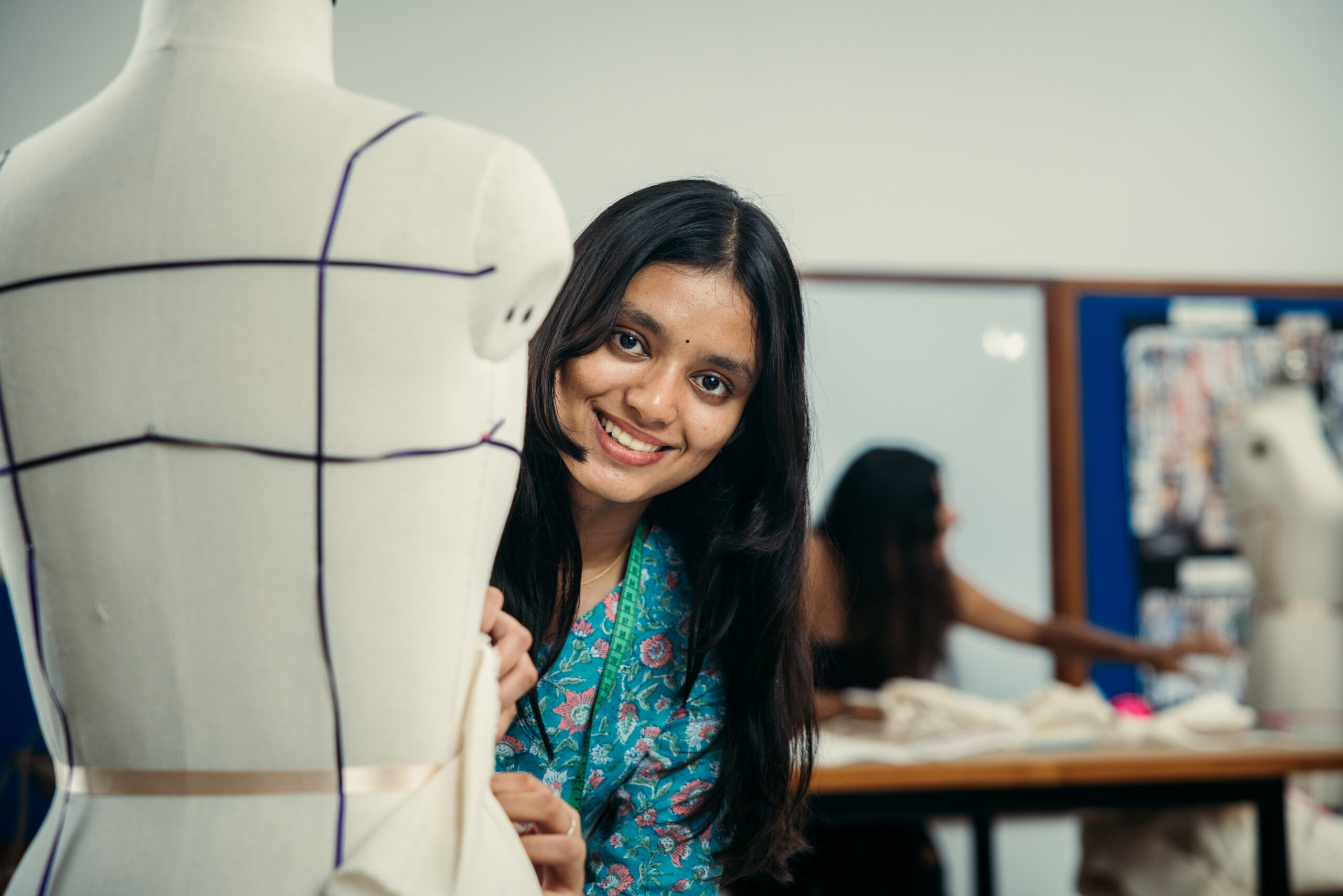
Ignite your passion for fashion and design with our four-year programme, blending design, craft and technology to shape your future in fashion. This comprehensive course nurtures aesthetics, creativity and originality, preparing students for the dynamic global fashion industry. It focuses on developing technical, conceptual, and managerial skills, combining industry knowledge with the latest technologies.

The curriculum covers aspects of fashion creation and representation, while developing awareness of fashion culture, international trends, styling, photography, fashion communication, global standards, and entrepreneurship.

Through immersive studio learning, industry projects, and rigorous training, students are encouraged to question, analyse, reflect, and experiment, refining their design sensibilities and discovering their unique creative voice. Exposure to live industry events, prominent fashion professionals and Atelier style labs provide abundant opportunities to gain proficiency as an industry ready fashion designer.

Duration

Four Years / Eight Semesters

Why Choose
B. Des. - Fashion Design
at Alliance University?
Lorem Ipsum is simply dummy
Creative and Technical Proficiency
The curriculum merges creativity with technical skills. Students learn design software and techniques, emphasizing originality in their work.
Industry-Relevant Knowledge
The program covers contemporary issues such as sustainability and ethical practices. This focus prepares students to address modern challenges in the fashion sector.
Hands-On Experience
Practical learning through projects and internships provides students with real-world exposure. Working with industry professionals enhances their understanding of market dynamics.
Cultural Awareness
Students explore international trends and cultural influences on fashion. This understanding helps them create designs that resonate with diverse audiences.
Collaboration Opportunities
The program encourages teamwork among students from different backgrounds. Collaborative projects stimulate creativity and allow for the exchange of ideas.
Entrepreneurial Skills Development
Emphasis on business acumen equips students to navigate the fashion industry. Courses on branding, marketing, and management prepare graduates for various roles, including starting their own ventures.

Course Category
Design Drawing PC
Geometric Construction - I PC
Fundamentals of Design PC
Material Studies - I PC
Design Workshop PC
Introduction to Design PE
Sustainable Design Goals PC
Indian Constitution PC
French Language - I OEL
German Language - I OEL
Hindi Language - I OEL
Kannada Nudi - I OEL
Kannada Language - I OEL
Spanish Language - I OEL

Course Category
Visualisation & Representation PC
Geometric Construction - II PC
Space Form & Structure PC
Design Process PC
Digital Tools - II SEC
Material Studies - II PE
Social Internship UC
Presentation Skills PE
Basics of Communication PE
French Language - II OEL
German Language - II OEL
Hindi Language - II OEL
Kannada Nudi - II OEL
Kannada Language - II OEL
Spanish Language - II OEL

Course Category
Human Factors PC
Interaction Design - I PC
History of Design PC
Basic CAD - I PC
Design Project - I DP
Photography PC
Typography PC
Storytelling PE
Narrative Design PE

Course Category
Behavior & Emotional Design PC
Design Research & Analysis PC
Interaction Design - II PC
Design Project - II (IxD) DP
Basic CAD – IxD - Figma, OptimalSort, UserTesting.com SEC
Semiotics PE
Visual Culture PE
Environmental Studies UC

Course Category
Universal Design and Accessibility PC
Interaction Design - III PC
Usability Testing Methods PC
Basic CAD - III PC
Design Project - III DP
Craft Documentation PC
Open Elective - I OE
Material Exploration - I PE
Material Exploration - II PE

Course Category
Phygital Design PC
Immersive Media PC
Interaction Design IV PC
Design Project - IV (IxD) DP
Research Methodology AEC
Professional Practices UC
World Building PE
Environment Design PE

Course Category
Systems Thinking and Service Design PC
Contemporary HCI PC
Product Strategy and Design Management PC
Design Project - V DP
Dissertation DI
Summer Internship IIP
Legal Awareness and IPR UC
Design for Constraints PE
Frugal Design PE

Course Category
Graduation Research Project RP

Course Categories:

UC : University Core || PC : Program Core || PT : Practice Track || FT : Functional Track || SEC : Skill Enhancement Course || AEC : Ability Enhancement Course || LBC : Learning Beyond Classroom || OE : Open Elective || OEL : Open Elective Language || VAC : Value Added Courses

University Core

University Core courses provide interdisciplinary and value-based education common to all undergraduate students across disciplines. These courses promote constitutional values, Indian knowledge systems, sustainability, critical thinking, entrepreneurship, and social responsibility as envisaged under NEP and UGCF guidelines.

Minors

The Minor Pathways are designed to provide students with focused specialization beyond their core discipline, enabling them to build domain depth in emerging and high-demand technology areas. Introduced as a structured academic pathway from the second year onwards, minors allow learners to align their academic journey with career aspirations, industry trends, and interdisciplinary interests.

A key highlight of this framework is the flexibility offered to students to choose any minor track based on their interests and career goals, empowering them to personalize their learning journey and explore interdisciplinary domains without constraints.

The Minors framework emphasizes:

  • Specialized skill development in cutting-edge domains

  • Hands-on learning through labs, projects, and industry-aligned tools

  • Integration of certifications and real-world applications

  • Enhanced employability through domain-focused expertise

By complementing the Program Core with targeted specialization, the Minor Pathways empower students to graduate with multi-dimensional competencies, making them adaptable, future-ready professionals capable of thriving in dynamic and technology-driven environments.

Minors List

  • Aeronautics

  • Astronautics

  • Unmanned Aerial Vehicles (UAV)

  • Avionics

  • Structural Engineering

  • Geoenvironmental & Infrastructure Engineering

  • Nature Based Solutions

  • Sustainable Technology

  • Smart Systems

  • Game Development

  • Business Systems

  • Quantum Computing

  • Data Science

  • Software Product Development

  • Artificial Intelligence & Futuristic Technologies

  • Artificial Intelligence & Machine Learning

  • Cyber Security

  • iOS Application Development

  • Data Engineering

  • Full Stack Development

  • Cloud Computing

  • Natural Language Processing and Text Analytics Systems

  • Computer Vision and Image Analysis

  • AI in Autonomous Systems

  • Blockchain Technologies

  • Internet of Things

  • DevOps

  • Immersive Technology

  • Advanced AI and Blockchain

  • AI for Healthcare and Life Sciences

  • AI for Robotics and Automation

  • Cybersecurity and Privacy in AI

  • Data Analytics

  • Embedded System and IoT

  • Next Generation Wireless Communication Systems

  • VLSI Design

  • Bio Medical Engineering

  • Automotive Electronics

  • Semiconductor Technology

  • Electric Vehicle Technology

  • Energy Management and Audit

  • Smart Grid and E-Mobility

  • Green Technology

  • Robotics and Automation

  • Smart Manufacturing Technology

  • Performing Arts and Creative Technologies

  • Business Studies

  • Computer Science

  • Data Science

  • Economics

  • Fine Arts

  • Literary & Cultural Studies

  • Media & Film Studies

  • Political Science

  • Psychology

  • Sociology

  • Chemistry

  • International Relations

  • Mathematics

  • Philosophy

  • Physics

  • Public Policy

Open Electives

Open Elective courses enable students to study subjects outside their primary discipline to encourage multidisciplinary learning and broader academic exposure. These courses help students acquire cross-functional knowledge, entrepreneurial understanding, and emerging industry-oriented competencies.

OE List:

  • Financial Decision Making

  • HR Metrics and Benchmarking

  • Entrepreneurial Ventures

  • Personal Finance

  • Sustainability & Resource Optimization

  • Stock Market Investing

  • Global Governance

  • Entrepreneurial Marketing

  • Branding Strategies

  • Supply Chain Management

  • Bharatanatyam

  • Kuchipudi

  • Carnatic Music

  • Kathak

  • Introduction to Constitution of India

  • Data Protection and Privacy Laws

  • Global Internet Governance

  • Technology and E-Commerce Laws

  • Media & Entertainment Law

  • A Primer on Consumer Protection Law

  • Introduction to Human Rights Law

  • Right to Information - Law & Practice

  • Basics of Competition Law

  • Educational Policy, Planning, and Administration

  • Happiness Engineering

  • Qualitative Research for Social Sciences

  • Climate Finance

  • Disaster Risk Reduction

  • Design Thinking

  • Design for Social Good

  • Adobe Creative Suite – I (Photoshop)

  • Adobe Creative Suite – II (Illustrator, InDesign)

  • Digital Literacy and Emerging Technologies

  • Genrative AI Concepts, Tools, and Creative Applications

  • Cybersecurity Awareness and Ethical Hacking Basics

  • Emerging Technologies and Their Societal Impact

  • Governing the Metaverse: Digital Sovereignty and Virtual Politics

  • Experimental Drawing: Beyond Traditional Boundaries

  • The Art of Seeing: Fundamental of Visual Perception

  • Branding and Identity Design: Logos & Beyond

  • Community Engagement

  • Communicative English for the Workplace

  • Reading Popular Culture: Cinema, Comics, and Contemporary Media

  • Indian Economy

  • Psychology of Interpersonal Relationships

  • Human-Computer Interaction

  • Practical Ethics

  • Technology, Culture and Society

  • Global Minds, Local Hearts: Cultural Intelligence for the 21st Century

  • Introduction to Quantum Computing

  • Ethics of Artificial Intelligence

  • Philosophy for Beginners

  • Indian Writings in English

  • Green Chemistry

  • Audio-Visual Recording and Editing

  • Film Appreciation

  • The Art of Storytelling

  • Writing for the Contemporary: Communication in the Age of AI

  • Leadership Lessons from Literature, Theatre, and Cinema

  • Introduction to Drawing and Sketching

  • Calligraphy and Typography in Art

  • Conceptual and Contemporary Painting

  • Renewable Energy Sources

  • Technology Diplomacy

  • Automation in Daily Lives

  • Automotive Basics

  • Drone Applications

  • Building Interiors and Landscaping

  • Waste to Energy

  • Nature Based Solutions

  • Solving for Bharat

PEO (Program Educational Objectives)

PEO1 - Graduates will be capable of applying creative problem-solving skills to address
challenges in the fashion industry, such as designing for sustainability, meeting diverse
consumer needs, and adapting to changing trends.

PEO2 - Graduates will have the skills and knowledge necessary to pursue entrepreneurial
opportunities in the fashion industry, including the ability to develop business plans,
market products, and manage projects effectively.

PEO3 - Graduates will possess a global perspective on fashion design, including an
understanding of diverse cultural influences, international markets, and global supply
chains.

PEO4 - Graduates will recognize the importance of lifelong learning and professional
development and will be committed to continuing their education and staying abreast of
advancements in the fashion field throughout their careers.

PEO5 - Graduates will understand the ethical considerations and responsibilities of
fashion designers, including issues related to cultural appropriation, sustainability, fair
labor practices, and intellectual property rights, and will integrate ethical principles into
their design practice.

PSO (Program Specific Outcomes)

PSO1 - Students will develop proficiency in fashion illustration techniques, including figure drawing, rendering fabrics, and creating fashion sketches and croquis, to create mood boards , story boards to effectively communicate their design concepts visually.

PSO2 - Students will acquire technical skills in Draping , Pattern making and garment construction enabling them to translate design concepts into wearable garments with precision and craftsmanship.

PSO3 - Students will gain an understanding of textile properties and surface design techniques, allowing them to make informed decisions about material selection and manipulation in their designs.

PSO4 - Students will learn to use industry-standard software applications for fashion design, such as Adobe Illustrator, Photoshop, and related CAD software, to create digital designs, patterns, and presentations.

PSO4 - Students will develop the ability to research, analyze, and forecast fashion trends, including color, silhouette, fabric, and style trends, to inform their design decisions and stay ahead of market demands.

PSO5 - Students will compile a professional portfolio showcasing their design projects, technical skills, and creative abilities, which demonstrates their readiness for entry into the fashion industry or advanced study in fashion design.

PSO6 - Students will engage in collaborative design projects and interdisciplinary teamwork, learning to communicate effectively, negotiate ideas, and work collaboratively with professionals from diverse backgrounds.

PO (Program Outcomes)

PO 1:

Disciplinary/Interdisciplinary Knowledge: Apply the knowledge of design principles, technical proficiency, creative problem-solving research aptitude, and portfolio development
to address complex design challenges, foster innovation, and adapt to rapidly evolving
world.

PO 2:

Complex Problem Solving: Ability to resolve complex design problems using various methods and tools of design process, critical analysis and synthesis, creative thinking, user centered design, design research, prototyping and reflection.

PO 3:

Critical Thinking: Ability to independently and deeply - analyze design problems, research, examine and evaluate concepts, provide constructive critique, consider contexts,
debate contrarian views, prioritize, base decisions on evidence, to create and develop well considered design outcomes.

PO 4:

Creativity: Ability to generate new innovative ideas, experiment with new techniques, refine and creatively reframe design concepts, and problems and develop creative solutions
and outcomes.

PO 5:

Communication Skills:

Ability to communicate visually and aesthetically, deliver engaging presentations, articulate clearly, participate in constructive critique, communicate with clients and teams, and navigate cross-cultural contexts.

PO 6:

Analytical Reasoning / Thinking:

Ability to break down complex problems, analyze information, think broadly and critically, and use evidence to validate concepts and make informed decisions.

PO 7:

Research skills:

Ability to conduct research effectively using various methodologies, prioritize user-centeredness and contextual understanding, and validate design problems to create solutions informed by evidence and trends.

PO 8:

Coordinating and collaborating:

Exhibit adeptness in collaborating with diverse teams, negotiating coordinated efforts, taking tasks, and efficiently working as part of a group towards a common creative goal.

PO 9:

Leadership readiness/qualities:

Demonstrate skills and qualities required to proactively engage, autonomously self-direct, creatively lead, take risks, seek-out knowledge and provide solutions, develop vision and direction and excel as design leaders in the industry.

PO 10:

Learning Skills:

Ability to acquire new skills and knowledge adaptively and independently throughout their careers.

PO 11:

Digital and Technological Skills:

Equip graduates with proficiency in contemporary digital tools and technologies to stay relevant and drive creativity, industry excellence and innovation.

PO 12:

Multi-cultural competence & inclusive spirit:

Ability apply universal design principles. design with sensitivity, empathy, and respect, for diverse cultures and
communities across various geographies.

PO 13:

Value Inculcation:

Cultivating designers with a strong ethical foundation, fostering responsible creativity, and promoting socially conscious practices within the design industry.

PO 14:

Authority, responsibility & accountability:

Ability to effectively navigate authority, embrace responsibility, and uphold accountability in their creative processes,

PO 15:

Environmental Awareness and Action:

Exhibit acquired knowledge, skills, attitudes and values to proactively address environmental challenges, including mitigating degradation, climate change, and pollution, implementing effective waste management, and promoting sustainable development and living.

PO 16:

Community Engagement and Service:

Ability to actively engage in community service and activities, leveraging their skills to contribute to the well-being and enhancement of society at large.

PO 17:

Empathy:

Ability to empathize with and comprehend the perspectives, experiences, and emotions of individuals or groups within the design context.


Program Core

This is a future-forward program that centers on the relationship between humans and digital products. The program core is designed to move students from understanding human psychology to mastering the technical tools required to build seamless, intuitive digital interfaces.

Open Electives Languages (OEL)

Open Elective Language courses offer students the opportunity to learn additional languages and improve linguistic competence, communication effectiveness, cultural understanding, and professional interaction skills. These courses support multilingual learning and global employability.

OEL List:

OEL–I: Language Foundations

  • French Language – I

  • German Language – I

  • Hindi Language – I

  • Kannada Nudi – I

  • Kannada Kaushala – I

  • Spanish Language – I

OEL–II: Language Proficiency Enhancement

  • French Language – II

  • German Language – II

  • Hindi Language – II

  • Kannada Nudi – II

  • Kannada Kaushala – II

  • Spanish Language – II

Ability Enhancement Courses (AEC)

Ability Enhancement Courses are designed to improve students’ language proficiency, communication skills, environmental awareness, digital literacy, professional ethics, and personality development. These courses enhance employability, soft skills, and holistic development in alignment with multidisciplinary education objectives.

Skill Enhancement Courses (SEC)

Skill Enhancement Courses focus on practical, hands-on, and application-oriented learning aimed at developing industry-relevant competencies, technical skills, vocational abilities, and professional readiness. These courses emphasize experiential learning, tools, software applications, internships, and problem-solving capabilities.

Learning Beyond Classroom

Learning Beyond Classroom components include experiential and participative learning activities conducted outside the traditional classroom environment. These may include internships, field visits, community engagement, projects, industry interaction, workshops, seminars, certifications, MOOCs, club activities, and extension programmes that contribute to holistic student development and outcome-based education.

The Dissertation component is an advanced academic and industry-oriented research initiative that enables students to investigate emerging trends, challenges, innovations, and strategic opportunities within the fintech ecosystem. Students undertake independent research under faculty guidance in areas such as AI in finance, blockchain applications, digital banking, cybersecurity, financial inclusion, ESG and sustainable finance, financial analytics, embedded finance, open banking, and decentralized finance (DeFi).
The dissertation process involves problem identification, literature review, research design, data collection and analysis, interpretation of findings, and development of strategic recommendations aligned with industry relevance and innovation.

The dissertation component develops:

Research and analytical thinking capabilities
Data interpretation and evidence-based decision-making skills
Strategic problem-solving and innovation orientation
Technical report writing and presentation competencies
Ability to evaluate emerging financial technologies and business models

The research experience equips students with intellectual depth, domain specialization, and analytical maturity required for leadership roles, consulting, research careers, entrepreneurial ventures, and technology-driven financial decision-making in the evolving global fintech landscape.

The Course of Independent Study (CIS) is a distinctive 3-credit academic pathway that offers students a valuable opportunity to engage in research-oriented learning through a faculty-mentored project in place of one course within their curriculum. Designed to nurture intellectual curiosity, innovation, and critical thinking, the course enables students to immerse themselves in hands-on research through laboratories, field-based work, or Centres of Excellence. Under close faculty guidance, students identify research problems, pursue structured inquiry, and develop meaningful academic outcomes. Credits are earned through consistent progress, active participation in review milestones, successful completion of the project, and the preparation and submission of a research paper to a Scopus-indexed journal, conference, or other approved scholarly platform—positioning students for early exposure to high-quality research and scholarly contribution.

The Research Project in the B. Des. (Interaction & User Experience) program at Alliance University is a rigorous academic and analytical endeavor that precedes or runs parallel to the final design execution. It shifts the focus from how to build to why we build, ensuring that every design decision is backed by empirical data and psychological theory.

The Design Project in the B. Des. (Interaction & User Experience) program at Alliance University serves as the experiential heart of the curriculum. It moves students away from theoretical exercises and into the role of a professional designer tasked with solving "wicked problems" in the digital and physical space.

The Social Internship is a cornerstone of the undergraduate experience, designed to cultivate a deep sense of civic responsibility and empathetic leadership. By moving beyond the classroom, students engage directly with grassroots realities, bridging the gap between academic theory and the practical challenges faced by marginalized communities.

Core Objectives:

The program aims to transform students from passive learners into active contributors to society. Key objectives include:
Empathy & Value Creation: Developing a firsthand understanding of social disparities and building personal value systems rooted in service and respect.
Grassroots Exposure: Gaining insight into the complexities of rural and urban social issues, including inequality, environmental sustainability, and human rights.
Professional Skill Integration: Applying communication, problem-solving, and organizational skills in a non-corporate, mission-driven environment.

During the internship, students engage in:

  • Live business proajects
  • Data-driven problem solving
  • Process analysis
  • Digital transformation initiatives
  • Financial modelling
  • Customer analytics
  • Compliance frameworks
  • Fintech product applications under industry mentorship

The internship enables students to apply concepts learned in finance, analytics, AI, cybersecurity, blockchain, digital payments, and business strategy to practical organizational challenges.

The programme significantly enhances industry readiness by developing:

  • Practical exposure to fintech ecosystems and digital business models
  • Analytical and problem-solving capabilities using real-time business data
  • Professional communication, teamwork, and workplace adaptability
  • Understanding of industry tools, platforms, and regulatory environments
  • Decision-making abilities in technology-driven financial environments

The internship experience helps students build strong professional networks, industry confidence, and career readiness while aligning academic learning with evolving fintech industry expectations.

STUDY ABROAD OPTIONS

International Mobility

Experience global education through our international study opportunities designed to broaden academic perspectives and cultural understanding. These programmes enable students to study at partner universities abroad, gain international exposure, and develop the global competencies needed to succeed in an interconnected world.

Learn More

An opportunity that lets students begin their degree at Alliance University (1 or 2 years) and then transfer to a foreign university to complete and earn their degree internationally.

Explore the World: Study a semester abroad, earn transferable credits, and gain global insights while experiencing a new culture and expanding your skills.

An exciting immersion opportunity for Alliance University students to engage with leading multinational companies and innovative startups, offering a unique blend of global learning and practical work exposure abroad, all within just 7 to 14 days.
Short-term programmes lasting 2 to 4 weeks offer students an ideal opportunity to gain international exposure without disrupting their academic schedule.

Learn More

Alliance University welcomes students from across the world to study, collaborate, and thrive in a truly global learning ecosystem. We combine academic rigour with industry exposure, modern infrastructure with personalised support, and global perspectives with Indian values.

Learn More

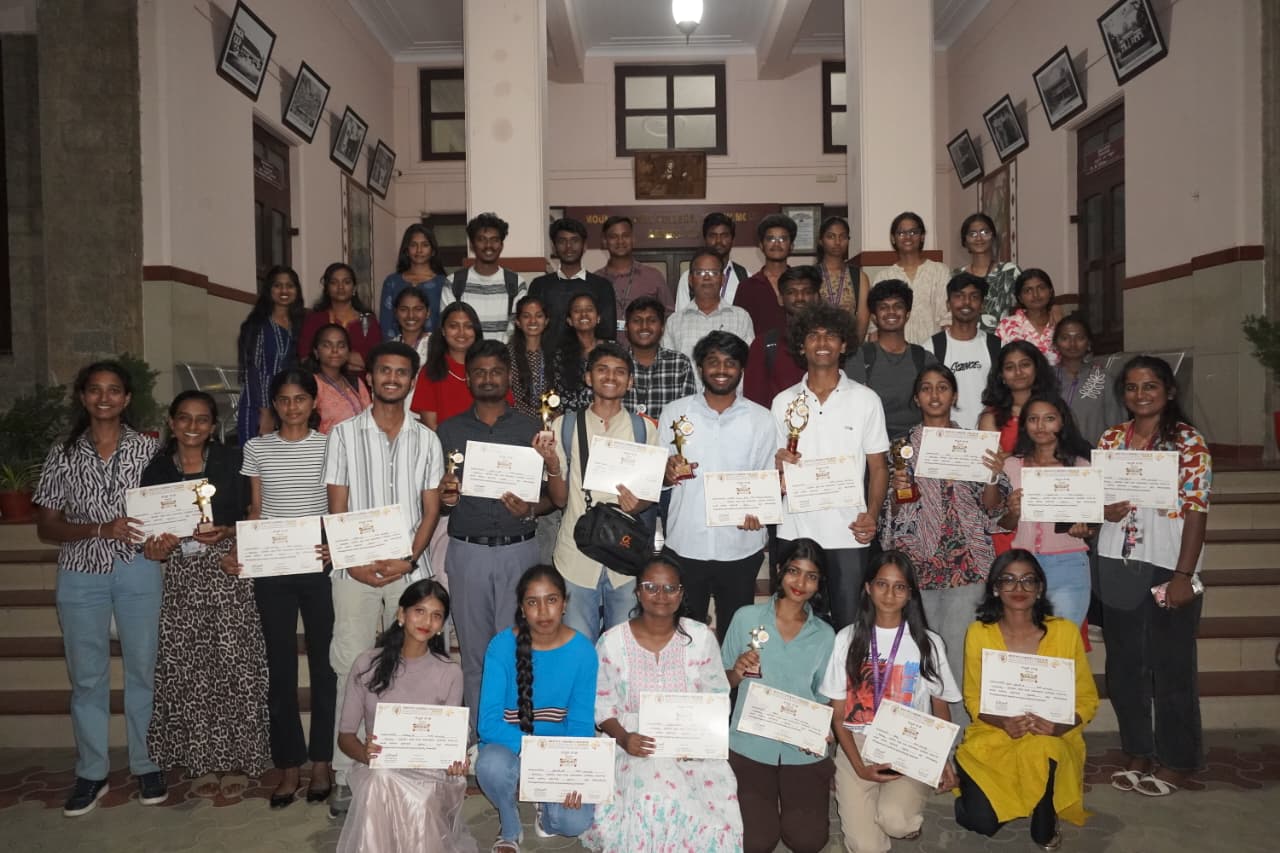
Recognising Effort, Celebrating Success

Category Eligibility Criteria
General 10+2 from a recognized Board / Council with a minimum of 50% marks
Reserved Categories 5% relaxation for SC / ST candidates

Program duration
Entry Level Program Duration
Regular Level Four Years / Eight Semesters
Lateral Level Three Years / Six Semesters

ACCEPTED TEST SCORES
UCEED
NIFT
NID DAT
AUSAT
UCEED
NIFT
NID DAT
AUSAT
UCEED
NIFT
NID DAT
AUSAT
UCEED
NIFT
NID DAT
AUSAT
Particulars Indian Nationals Foreign Nationals
Registration Fee (As per admission cycle) ₹25,000 US$500
1st Installment (As per provisional admission offer) ₹4,00,000 US$4,975
2nd Installment ₹4,00,000 US$5,475
3rd Installment ₹4,00,000 US$5,475
4th Installment ₹4,00,000 US$5,475
Total Program Fee (Includes registration + all installments) ₹16,00,000 US$21,900

Category Eligibility Scholarship
Academic Excellence Class X & XII ≥ 95% 50% Tuition Fee Waiver
AUSAT Scholarship AUSAT ≥ 90% + X & XII ≥ 75% 50% Tuition Fee Waiver
AUSAT Scholarship AUSAT ≥ 85% + X & XII ≥ 75% 35% Tuition Fee Waiver
AUSAT Scholarship AUSAT ≥ 70% + X & XII ≥ 75% 25% Tuition Fee Waiver
AUSAT Freeship AUSAT ≥ 90% + X & XII ≥ 60% ₹50,000 One-time
AUSAT Freeship AUSAT 80–89.99% + X & XII ≥ 60% ₹25,000 One-time
CUET Scholarship CUET ≥ 90% 30% Tuition Fee Waiver
CUET Scholarship CUET 80–89.9% 20% Tuition Fee Waiver
CUET Scholarship CUET 70–79.9% 15% Tuition Fee Waiver
Program-Specific Merit UCEED Score ≥ 200 + X & XII ≥ 70% 35% Tuition Fee Waiver
Program-Specific Merit UCEED Score ≥ 150 + X & XII ≥ 70% 25% Tuition Fee Waiver
Program-Specific Merit NIFT Rank 1–3000 + X & XII ≥ 65% 35% Tuition Fee Waiver
Program-Specific Merit NIFT Rank 3001–6000 + X & XII ≥ 65% 25% Tuition Fee Waiver
Program-Specific Merit NIFT Rank 6001–7500 + X & XII ≥ 65% 15% Tuition Fee Waiver
Program-Specific Merit NID DAT Percentile ≥ 90 + X & XII ≥ 70% 50% Tuition Fee Waiver
Program-Specific Merit NID DAT Percentile 85–89.99 + X & XII ≥ 70% 35% Tuition Fee Waiver
Program-Specific Merit NID DAT Percentile 80–84.99 + X & XII ≥ 70% 25% Tuition Fee Waiver
Special Merit X & XII ≥ 90% 50% Tuition Fee Waiver
Special Merit X & XII ≥ 80% 30% Tuition Fee Waiver
Special Merit X & XII ≥ 70% 25% Tuition Fee Waiver
Category-Based SC / ST ≥ 70% 20% Tuition Fee Waiver
Category-Based Differently-Abled ≥ 50% 50% Tuition Fee Waiver
Category-Based Defence / Paramilitary ≥ 70% 15% Tuition Fee Waiver
Category-Based International-Level Player ≥ 50% 100% Tuition Fee Waiver
Category-Based National-Level Player ≥ 50% 50% Tuition Fee Waiver
Category-Based Domicile ≥ 70% 5% Tuition Fee Waiver
Learn more


Steps Description
Step 1 Submit Online Application
Step 2 Pay Application Fee — ₹1000 (US$50 for foreign nationals)
Step 3 Appear for ADAT (Alliance Design Aptitude Test)
Step 4 Personal Interview assessment
Step 5 Selection based on overall profile & performance
Start your application now

Living Spaces That Inspire Belonging

EXPLORE OUR HOSTELS

Comfort, safety, and community form the foundation of campus living. Our residential halls are thoughtfully designed to create a sense of belonging—offering a welcoming environment where students can study, unwind, and build lifelong friendships.

Separate hostels
for boys and girls

Student-friendly
common areas

Spacious rooms
(single, double, or triple occupancy)

Dedicated wardens
and support teams

residential-image-update

Real Stories, Real Impact

FACULTY


Everything You Need to Know

What is the admission procedure for fashion design courses at Alliance University?
Applicants must have successfully completed 10+2 (Class XII) or an equivalent examination from a recognised Board or Council with a minimum aggregate of 50% marks (45% for SC/ST candidates). The application process involves registering on the University’s admission portal, completing the online form, and submitting required documents, including mark sheets, a creative portfolio, and a passport-sized photograph. Following payment of the application fee, candidates are assessed through the Alliance Design Aptitude Test (ADAT), a portfolio review, and a personal interview, collectively evaluating design aptitude, creativity, and potential.
Does Alliance University have placement assistance for the fashion design course?
Yes. The Alliance School of Design offers dedicated placement support through its Placement Cell, industry partnerships, and the Centre for Industry Interface (CII). Students receive guidance, professional networking opportunities, and placement support to facilitate successful career outcomes in fashion and allied industries.
What is B. Des. in Fashion Designing?
B. Des. in Fashion Designing is an undergraduate programme that cultivates creativity, technical skills, and industry awareness in apparel, textiles, and fashion communication. The course equips students with the ability to conceptualise, design, and develop innovative clothing collections, while integrating design thinking, sustainability, and emerging fashion technologies.
What is the syllabus of the fashion designing course?
The syllabus encompasses core design principles, textile studies, garment construction, pattern making, fashion illustration, draping techniques, digital fashion design, trend forecasting, fashion marketing, and portfolio development. Students also engage in workshops, live projects, and fashion shows to contextualise learning within real-world applications.
What lab facilities and infrastructure are available for B. Des. (Fashion) students at Alliance University?
Students have access to state-of-the-art design studios, textile and garment labs, CAD-based fashion labs, sewing and draping facilities, digital printing units, and material libraries. These resources provide hands-on experience and replicate professional fashion design environments.
Are students trained in digital design tools and fashion technologies?
Yes. The programme integrates training in industry-standard digital tools such as Adobe Illustrator, Photoshop, CLO 3D, and other fashion technologies. Students develop proficiency in digital pattern-making, 3D garment visualisation, and computer-aided design, enhancing employability and contemporary design skills.
Does the programme provide opportunities to showcase collections in fashion shows and exhibitions?
Yes. Students are encouraged to present their work through exhibitions, portfolio reviews, and participation in design festivals. Alliance University annually hosts a Design Jury, where students showcase their collections to industry leaders and experienced faculty, receiving constructive feedback and exposure to professional perspectives.
Can students participate in national and international design competitions?
Yes. Alliance University actively encourages students to engage in design competitions globally. Participation allows students to showcase creativity, receive expert evaluation, build professional portfolios, and develop critical thinking, problem-solving, and presentation skills essential for a successful career in fashion design.
What kind of industry internships, hands-on training, and live projects are offered during the course?
Students gain exposure through structured internships with fashion brands, textile manufacturers, and retail companies. Hands-on training and live projects enable learners to apply classroom concepts in practical scenarios, including designing collections, collaborating on campaigns, and engaging in market research and merchandising.
Does Alliance University collaborate with fashion brands, textile industries, or retail companies for training and placements?
Yes. The University collaborates with leading fashion brands, textile manufacturers, and retail companies to facilitate industry-relevant training, mentorship, and placement opportunities for students. These collaborations ensure exposure to current market practices and professional workflows. Alliance University has collaborations with ABFRL, Titan & The Collective.
How does the programme encourage sustainable fashion and innovative design thinking?
The curriculum emphasises eco-friendly materials, sustainable production processes, and socially responsible fashion practices. Students are encouraged to integrate innovation, ethical considerations, and sustainable design thinking into their projects, preparing them to address contemporary challenges in the fashion industry.
What are the career opportunities after completing B. Des. in Fashion Design?
Graduates can pursue careers as Fashion Designers, Textile Designers, Apparel Merchandisers, Fashion Illustrators, Trend Analysts, Costume Designers, Fashion Stylists, Fashion Entrepreneurs, or work in Fashion Marketing and Branding. Opportunities span design studios, manufacturing houses, retail brands, media agencies, and freelance ventures.
How does a B. Des. in Fashion Design support global career opportunities in fashion?
The programme equips students with internationally relevant skills, professional portfolios, and exposure to global trends. Graduates are prepared to work in fashion capitals worldwide, collaborate with international brands, or pursue entrepreneurial ventures in global fashion markets.
What kind of placement support is provided for B. Des. Fashion Design students at Alliance University?
Through the Career Advancement and Networking (CAN) office, industry partnerships, and faculty mentorship, students receive guidance for internships, live projects, and job placements. The University supports networking with fashion houses, brands, and media agencies to facilitate successful career transitions.
Are scholarships available for B. Des. Fashion Design students at Alliance University?
Yes. Alliance University provides a wide range of scholarships and financial aid opportunities for deserving and meritorious students. These are awarded on the basis of academic performance, national entrance exam scores, and other achievements such as excellence in sports or cultural activities, as well as on need-based considerations.

AUSAT: Students scoring 75% or above in Class 10 and 12 may receive 25%, 35%, or 50% tuition fee waivers.
UCEED: Scores ? 200 qualify for a 35% waiver; scores ? 150 qualify for 25%.
NID DAT: Percentiles ? 90 receive 50%; 85–89.99 receive 35%; 80–84.99 receive 25%.
What is the B. Des. – Fashion Design program? +

A four-year undergraduate programme in Fashion Design focusing on creativity, technical skills, fashion communication, styling, entrepreneurship, and industry exposure through studio projects, internships, and portfolio development.

What is the course duration? +

Four years (Eight Semesters)

What is the eligibility criteria? +

10+2 from recognized Board / Council with minimum 50% marks; 5% relaxation for SC / ST candidates

What entrance requirements are there? +

ADAT (Alliance Design Aptitude Test), Portfolio Submission, and Personal Interview

Are experiential learning opportunities included? +

Yes, including studio projects, internships, live industry projects, fashion shows, and portfolio development

What software and technical skills are taught? +

Fashion design software, CAD, styling, textile design, fashion photography, and applied design for apparel and accessories

Are scholarships available? +

Yes, merit-based, program-specific, and category-based scholarships are offered

What career paths are available after B. Des. – Fashion Design? +

Careers as fashion designers, stylists, fashion illustrators, fashion photographers, fashion entrepreneurs, brand managers, and creative professionals in global fashion and apparel industries

Can international students apply? +

Yes, with ADAT, portfolio submission, interview, and applicable fee payment

How are students evaluated? +

Through coursework, studio projects, portfolios, fashion shows, assignments, and practical demonstrations

Are extracurricular activities included? +

Yes, including participation in fashion exhibitions, workshops, shows, and collaborative projects

Is mentorship provided? +

Yes, personalized faculty guidance, mentorship from industry professionals, and portfolio support throughout the programme

AU