Brief Overview

Bachelor of Design – BDes

Design refers to a set of theoretical and practical approaches that focus on the interaction between users and their environments. Designers approach all kinds of problems with the goal of providing meaningful and relevant experiences to users who are treated holistically, as individuals with material and emotional needs. By expressing, reflecting, and even forming cultural norms, design instils meaning in our daily lives rather than simply creating functional objects. Its disruptive thinking is essential for driving innovation in areas such as developing business strategies, creating virtual environments, crafting digital interfaces, improving manufacturing quality and sustainability, and building service systems.

Informed by this idea of design as a ground-breaking discipline directed at innovation, the Bachelor of Design at Alliance University will help students develop creative and critical thinking skills. Students will accomplish this by producing work that reflects on human experience and responds to global challenges. With a wide range of courses available at Alliance School of Liberal Arts — from social sciences and liberal arts to media and management — and guided by expert faculty, you will elevate your design mindset.

By emphasising humanity and culture, the Bachelor of Design contributes to Alliance University’s mission of serving society and promoting global outlook. Students will be focusing on and engaging with critical contemporary issues while being challenged by project-based learning. Students will benefit from extensive collaboration with leading national and international companies in building a better world.

Duration

B. Des. (Regular): Four Years / Eight Semesters

B. Des. (Lateral): Three Years / Six Semesters

PEO (Program Educational Objectives)

PEO 1:
Graduates will be able to act as freethinkers and creative solution providers by incorporating a comprehensive understanding of the core concepts and theories in animation design.

PEO 2:
Graduates will learn how to articulate feasible and viable design solutions to user
problems through animation.

PEO 3:
Graduates will be able to stay on the cutting edge by effectively adopting and
adapting emergent technologies of image making.

PEO 4:
Graduates will be able to develop into pioneering professionals in their chosen
animation domains.

PSO (Program Specific Outcomes)

PSO 1:
Graduates will be agile with the ability to conceptualise and develop characters, narratives and storytelling techniques through animation.

PSO 2:
Graduates will be able to establish a diverse and comprehensive portfolio comprising of animation projects representing their skills and creativity.

PSO 3:
Graduates will be able to develop an intense understanding of animation principles in different mediums with proficiency in industry standard animation software.

PO (Program Outcomes)

PO 1:
Disciplinary/Interdisciplinary Knowledge: Apply the knowledge of design principles, technical proficiency, creative problem-solving research aptitude, and portfolio development to address complex design challenges, foster innovation, and adapt to rapidly evolving world.

PO 2:
Complex Problem Solving: Ability to resolve complex design problems using various methods and tools of design process, critical analysis and synthesis, creative thinking, usercentered design, design research, prototyping and reflection.

PO 3:
Critical Thinking: Ability to independently and deeply - analyze design problems, research, examine and evaluate concepts, provide constructive critique, consider contexts, debate contrarian views, prioritize, base decisions on evidence, to create and develop well considered design outcomes.

PO 4: Creativity: Ability to generate new innovative ideas, experiment with new techniques, refine and creatively reframe design concepts, and problems and develop creative solutions and outcomes.

PO 5: Communication Skills: Ability to communicate visually and aesthetically, deliver engaging presentations, articulate clearly, participate in constructive critique, communicate with clients and teams, and navigate cross-cultural contexts.

PO 6: Analytical Reasoning / Thinking: Ability to break down complex problems, analyze information, think broadly and critically, and use evidence to validate concepts and make informed decisions.

PO 7:
Research skills: Ability to conduct research effectively using various methodologies, prioritize user-centeredness and contextual understanding, and validate design problems to create solutions informed by evidence and trends.

PO 8:
Coordinating and collaborating: Exhibit adeptness in collaborating with diverse teams, negotiating coordinated efforts, taking tasks, and efficiently working as part of a group towards a common creative goal.

PO 9:
Leadership readiness/qualities: demonstrate skills and qualities required to proactively engage, autonomously self-direct, creatively lead, take risks, seek-out knowledge and provide solutions, develop vision and direction and excel as design leaders in the industry.

PO 10:
Learning Skills: Ability to acquire new skills and knowledge adaptively and independently throughout their careers.

PO 11:
Digital and Technological Skills: Equip graduates with proficiency in contemporary digital tools and technologies to stay relevant and drive creativity, industry excellence and innovation.

PO 12:
Multi-cultural competence & inclusive spirit: Ability apply universal design principles. design with sensitivity, empathy, and respect, for diverse cultures and communities across various geographies.

PO 13:
Value Inculcation: Cultivating designers with a strong ethical foundation, fostering responsible creativity, and promoting socially conscious practices within the design industry.

PO 14:
Authority, responsibility & accountability: Ability to effectively navigate authority, embrace responsibility, and uphold accountability in their creative processes.

PO 15:
Environmental Awareness and Action: Exhibit acquired knowledge, skills, attitudes, and values to proactively address environmental challenges, including mitigating degradation, climate change, and pollution, implementing effective waste management, and promoting sustainable development and living.

PO 16:
Community Engagement and Service: Ability to actively engage in community service and activities, leveraging their skills to contribute to the well-being and enhancement of society at large.

PO 17:
Empathy: Ability to empathize with and comprehend the perspectives, experiences, and emotions of individuals or groups within the design context.


Curriculum Structure

Year 1
Semester-wise Syllabus

The programme spans 4 years (B. Des.) in duration, with a foundation first year for learning the fundamentals of design and creation in Semesters One and Two.

Subject Credits

Depending on the relevance, intensity and content covered, different subjects have the following duration:

Course Type No. of Courses per Semester
Common Foundation Courses 2
Elective Foundation Courses 3
Language Electives 1
Creative Writing 1
Total 7
List of Foundation Courses
Common Foundation Courses
No. Name of the Course Semester
1 History of Art and Design I
2 Drawing Tools, Lines and Forms I
3 Graphics and Visual Reality II
4 Basic Photography II


Elective Foundation Courses
Semester-wise Syllabus

The programme spans 4 years (B. Des.) in duration, with a foundation first year for learning the fundamentals of design and creation in Semesters One and Two.

Semester I
No. Name of the Course Majors Counted Towards
1

Design Sketching and Visualization

Design Foundation

2

Design Heritage

Design Foundation

3

Computer Aided Design

Design Foundation

4

Painting: Nature and Design

Painting and Sculpture

5

English Literature: From Beowulf to Milton

English/LCS
6

Beauty Across the Ages

LCS/Philosophy
7 Evolution of Economic Thought Economics/History/Pol. Sci.
8 History of Political Thought Pol. Sci./History/Pub. Pol.
9 The Evolution of Media: Beyond Speech to Internet Media Studies/History/LCS
10 The Idea of Governance Pub. Pol./Philosophy/Sociology
11 Mind, Brain, and the Self Psychology/Philosophy
12 War, Violence, and Ideology History/Pol. Sci./Sociology
13 Concepts of Artificial Intelligence Computer Science/Philosophy
14 Art and Money Economics/History/LCS
15 Art v Science: Ways of World making Philosophy/LCS/English
Semester II
No. Name of the Course Majors Counted Towards
16 Design Thinking and Need Identification

Design Foundation

17 Design Research

Design Foundation

18 Digital Modelling and Animation

Design Foundation

19 Graphics and Virtual Reality

Visual Arts

20 Craft of Writing and Reading English/LCS
21 From Logic to Computers Computer Science/Philosophy
22 From Freud to Psychometry Psychology/Sociology
23 The Art of Communication Media Studies/English/LCS
24 The New Global Order: Post-Cold War Geopolitics Pol. Sci./History
25 Religion, Nation, and Identity LCS/Philosophy/History
26 The Birth of Modern Democracy History/Pol. Sci.
27 English Literature: From Pope to Eliot English/LCS
28 Understanding Indian Society Sociology/Pol. Sci.
29 The Economy of Disease Economics/Pub. Pol.
30 Great Ideas Across Ages Philosophy/LCS/History
Language Electives
Semester-wise Syllabus

The programme spans 4 years (B. Des.) in duration, with a foundation first year for learning the fundamentals of design and creation in Semesters One and Two.

No. Name of the Course Language
1 Russian Language and Culture Russian
2 French Language and Culture French
3 Spanish Language and Culture Spanish
4 Kannada Language and Culture Kannada
5 Hindi Language and Culture Hindi
6 Italian Language and Culture Italian
7 German Language German
B. Des. in ANIMATION AND FILM DESIGN
NA
Creative Thinking
Designed for students across disciplines, the elective strengthens innovation skills, spatial thinking, and visual communication—empowering learners to confidently translate concepts into clear, professional design outcomes suitable for academic, entrepreneurial, and industry contexts.
 
 
CAD
School of Design offers an interdisciplinary open elective that blends imagination with precision, The course introduces students to creative problem-solving methods, design thinking, and visual ideation, alongside hands-on training in Computer-Aided Design (CAD), Learners explore how abstract ideas can be transformed into structured digital models using industry-relevant tools.
Lorem Ipsum

Capstone Project

Capstone Project
The Capstone Project is a culmination of the design specialization, integrating research, critical thinking, and creative practice to address a real-world problem. It involves identifying a contextual design challenge, conducting user and stakeholder research, developing conceptual frameworks, and translating insights into innovative, socially responsive design solutions. The project demonstrates proficiency in design methodology, experimentation, visual communication, and reflective practice, while showcasing the ability to synthesize theory with practice.

Animation Film Design – Capstone Project

The Animation Film Design Capstone Project involves the conceptualization, development, and production of an original animated film. Students undertake end-to-end processes including research, scriptwriting, storyboarding, character and environment design, animation, sound, and post-production. The project emphasizes visual storytelling, narrative structure, motion principles, and technical proficiency, culminating in a cohesive film that reflects creative vision, critical thinking, and professional animation practice.

COURSE OF INDEPENDENT STUDY

Independent Study

Lorem Ipsum is simply dummy text of the printing and typesetting industry. Lorem Ipsum has been the industry's standard dummy text ever since the 1500s, when an unknown printer took a galley of type and scrambled it to make a type specimen book. It has survived not only five centuries,

View More
STUDENT

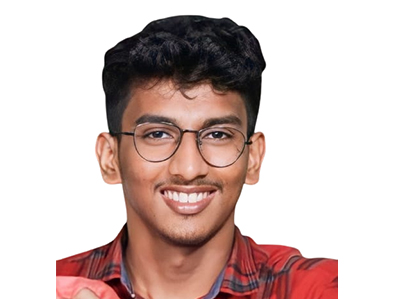
As I am an International student, I would like to express my sincere thanks to my professor of the University and their guidance, insightful suggestions and comments of my study. The administration staffs are very friendly and helpful and their passion and expertise were truly inspiring, and the hands-on learning opportunities were invaluable.

Josefin Balan
Batch: 2024-28

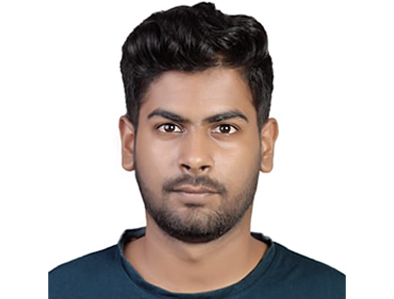
Like every fresher, I was apprehensive to start my journey within the University premises, but I was able to quickly adapt with the help of supportive professors, friendly peers, an eye-catching library, and amazing food. I look forward to developing into a stronger, more intelligent and refined version of myself during my journey at Alliance.

Anjana Krishnan
Batch: 2023 - 2027

Being a part of Alliance University is the best decision I have made. The faculty are friendly and encouraging. Alliance has helped me build my skills and realize my potential. The beautiful campus and state-of-the-art infrastructure serves as an inspiration to evoke a  designer mindset within, and I look forward to fulfilling my dream as a fashion designer.

Harshitha
Batch: 2023 - 2027

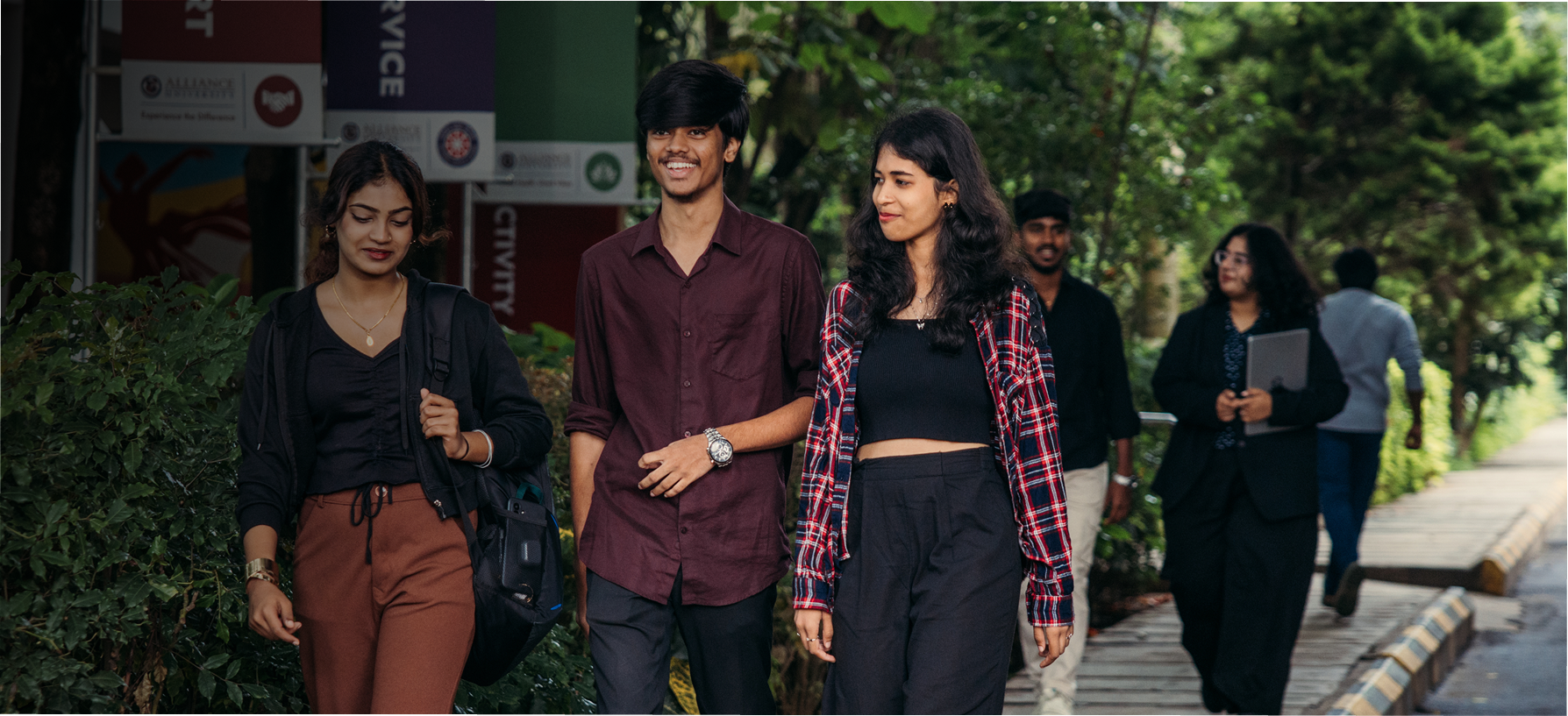
It is said that your environment has a significant impact on what you become. The first thing that caught my attention on this campus was the lush greenery and the breathtaking infrastructure. I am sure that I can reach greater heights with the holistic development and beauty this campus radiates, serving as inspiration to many.

Manusree M M
Batch: 2023 - 2027

I am loving and living my best life at Alliance University. The faculty are great and inspire me to take the road less traveled. I know Alliance University will help me achieve my dreams as a recognizable fashion designer.

Rohitha Robin
Batch: 2023 - 2027

I really enjoyed my time as a B. Design student specializing in Graphic Design. The faculties helped me gain valuable knowledge, and guided me towards improving my skills. I have benefited from my previous projects by developing my skills, research, and analysis.

Deva Nandan
Batch: 2023 - 2027

Graphic Design programme at Alliance University is the artistic freedom and flexibility we get to incorporate and practice what we learned though our projects and continuously improve without any restrictions. We were able to learn various software tools within a short period, without the need for prior knowledge. I am grateful for my wonderful experience at the University.

Xavier Rajesh Nunes
Batch: 2023 - 2027


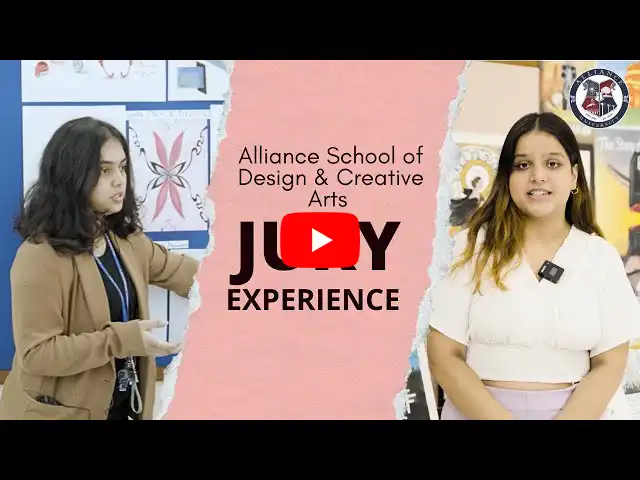
Jury Experience | Alliance School of Design & Creative Arts
LL.B.
Program Eligibility Criteria

Eligibility Criteria

Lorem Ipsum is simply dummy text of the printing and typesetting industry. Lorem Ipsum has been the industry\’s standard dummy text ever since the 1500s, when an unknown printer took a galley of type and scrambled it to make a type specimen book. It has survived not only five centuries,

Available in ASOD brochure

Lorem Ipsum is simply dummy text of the printing and typesetting industry. Lorem Ipsum has been the industry\’s standard dummy text ever since the 1500s, when an unknown printer took a galley of type and scrambled it to make a type specimen book. It has survived not only five centuries,

STUDY ABROAD OPTIONS

Learn Across Borders

Experience global education through our international study opportunities designed to broaden academic perspectives and cultural understanding. These programmes enable students to study at partner universities abroad, gain international exposure, and develop the global competencies needed to succeed in an interconnected world.
Learn More
FAQS

Everything You Need to Know

Yes. B. Des. is an excellent career choice for those passionate about design, creativity, and innovation, offering opportunities to work across multiple industries and disciplines.
The average annual salary for fresh B. Des. (Bachelor of Design) graduates in India typically ranges between INR 3 Lakh to INR 6 Lakh per annum. Salaries may vary depending on the specialisation, industry, and location.
B. Des. offers a broad scope across fields such as product design, graphic design, fashion, UI/UX, animation, interior design, and digital media. Graduates can pursue roles in diverse industries, including creative agencies, technology, entertainment, and consultancy.
Subjects vary depending on the chosen specialisation but generally include Design Principles, Visual Communication, Typography, Illustration, 3D Modelling, Interaction Design, Product Design, Animation, UX/UI, Fashion and Textile Design, Interior Design, and Design Research. Students also engage in hands-on projects, workshops, and portfolio development.
A B. Des. (Bachelor of Design) is an undergraduate programme focused on creative design principles and practical skills. It differs from other design degrees by its broader emphasis on interdisciplinary innovation, covering multiple design fields rather than specialising narrowly from the outset.
Applicants must have completed 10+2 from a recognised Board or Council with a minimum aggregate of 50% marks (45% for SC/ST candidates). The selection process may include a design aptitude test, portfolio evaluation, and personal interview, ensuring assessment of creativity and potential.
Specialisations include Fashion Design, Graphic Design, Interior Design, Product Design, Animation, Textile Design, and User Experience (UX) Design.
Graduates can pursue careers as graphic designers, fashion designers, UX/UI designers, product designers, interior designers, animators, or design consultants. They may also explore freelance work, start-ups, or higher studies in specialised design domains.
A B. Des. equips students with versatile design skills, a strong portfolio, and exposure to industry-standard tools and methodologies, enabling them to compete for global careers in creative and technology-driven industries.
The B. Des. programme at Alliance University is distinguished by its industry-aligned curriculum, state-of-the-art infrastructure, and emphasis on holistic development. It nurtures creativity, innovation, and design thinking while providing hands-on experience through workshops, live projects, and internships. The programme also encourages interdisciplinary learning and prepares students to meet global industry standards.
Yes. Alliance University offers scholarships and financial aid for meritorious and deserving students. These are awarded based on academic performance, national entrance exam scores, achievements in sports or cultural activities, and need-based considerations. Examples include: • AUSAT: Students scoring 75% or above in Class 10 and 12 may receive 25%, 35%, or 50% tuition fee waivers. • UCEED: Scores ? 200 qualify for a 35% waiver; scores ? 150 qualify for 25%. • NID DAT: Percentiles ? 90 receive 50%; 85–89.99 receive 35%; 80–84.99 receive 25%.
The programme offers extensive practical learning, including: • Hands-on Workshops and Jury Presentations: Students engage in workshops and present work to juries, simulating real-world design evaluations. • Industry Internships and Live Projects: Through the Career Advancement and Networking (CAN) office, students participate in internships, live projects, and industry visits, gaining exposure to current industry practices.
The curriculum integrates real-world design tools through industry collaboration, hands-on learning, and state-of-the-art facilities, enabling students to master software and technologies relevant to contemporary design practice.
Through the CAN office, students receive guidance and access to internships, live projects, and industry visits, facilitating successful transitions into professional roles in the design sector.
Yes. The flexible curriculum and practical focus allow students to undertake freelance design work alongside their studies, enabling portfolio development and real-world experience prior to graduation.