


The Course of Independent Study (CIS) is a distinctive 3-credit academic pathway that offers students a valuable opportunity to engage in research-oriented learning through a faculty-mentored project in place of one course within their curriculum. Designed to nurture intellectual curiosity, innovation, and critical thinking, the course enables students to immerse themselves in hands-on research through laboratories, field-based work, or Centres of Excellence. Under close faculty guidance, students identify research problems, pursue structured inquiry, and develop meaningful academic outcomes. Credits are earned through consistent progress, active participation in review milestones, successful completion of the project, and the preparation and submission of a research paper to a Scopus-indexed journal, conference, or other approved scholarly platform—positioning students for early exposure to high-quality research and scholarly contribution.

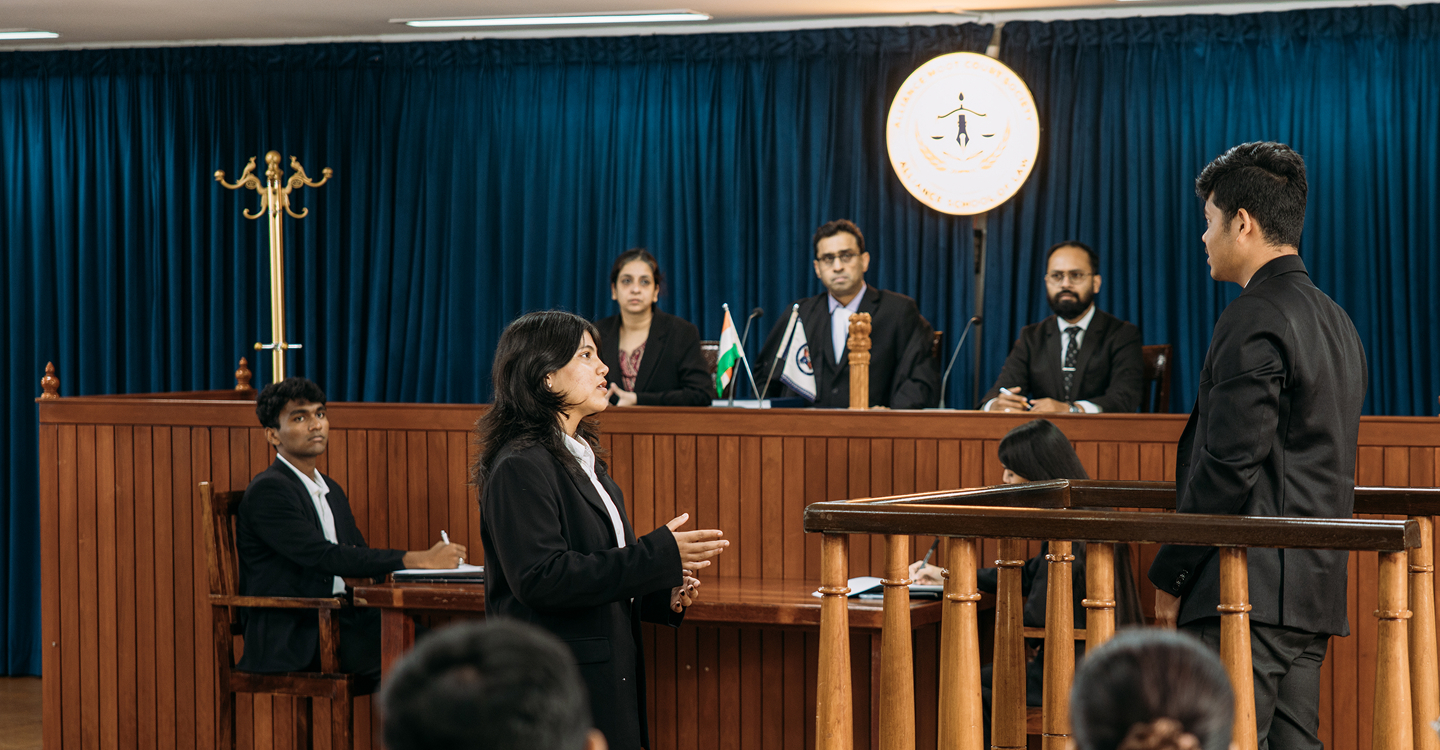
Law students today have diverse career paths beyond litigation, with enticing opportunities in the corporate sector. Roles such as legal associate in law firms and in-house counsels in companies are increasingly prevalent. To excel in corporate legal practice, an understanding of business and management practices is crucial. Recognising this, the Alliance School of Law offers the B.B.A. LL. B. (Hons.) programme.
This programme uniquely trains students in subjects like Management, Finance, and Languages, ensuring a balanced blend of legal and management expertise. The curriculum is meticulously designed to provide students with a distinct advantage in their professional careers by combining legal acumen with business administration knowledge.


Why Choose
B.B.A. LL. B. (Hons.)
at Alliance University?
B.B.A. LL. B. (Hons.)
at Alliance University?
Supporting Features
Corporate-Legal Fusion
Master the intersection of business management and legal frameworks. This program integrates core management principles—such as Marketing, Finance, and Human Resources—with rigorous legal training to produce corporate-ready legal professionals.
Business Advocacy & Strategy
Develop the unique ability to navigate complex commercial landscapes, focusing on corporate governance, mergers and acquisitions, and commercial arbitration.
Practical Corporate Immersion
Engage in simulated boardrooms and corporate moot courts that mirror real-world business challenges. Students learn to draft contracts and manage legal risks within a corporate environment.
Strategic Industry Networking
Gain an edge through internships at top-tier law firms and corporate legal departments, building a professional network while still in school.
Leadership in Global Commerce
Prepare for high-stakes roles as corporate counsel, legal consultants, or business entrepreneurs with a global perspective on trade and regulation.
| Course | Category |
|---|---|
| English I (Law and Language) | PC |
| Legal Methods and Legal Systems | PC |
| General Principles of Contract | PC |
| Principles and Practices of Management | PC |
| Managerial Economics | PC |
| Principles and Practices of Financial Accounting | PC |
| Introduction to Political Science | BC |
| Design Thinking | SEC |
| Activity Points-I | LBC |
| Course | Category |
|---|---|
| English II (Law and Literature) | PC |
| Specific Contracts | PC |
| Law of Tort, MV Accident and Consumer Protection Laws | PC |
| Fundamentals of Marketing Management | PC |
| Managerial Psychology | PC |
| Cost and Management Accounting | PC |
| Introduction to Sociology | BC |
| Open Elective | OE |
| Activity Points-II | LBC |
| Course | Category |
|---|---|
| Constitutional Law - I | PC |
| Law of Crimes - I | PC |
| Family Law - I | PC |
| Human Resource Management | PC |
| Strategic Management | PC |
| Corporate Accounting | PC |
| Introduction to Psychology | BC |
| Kannada Kali - I | OEL |
| Kanunu Kannada - I | OEL |
| Hindi - I | OEL |
| German - I | OEL |
| French - I | OEL |
| Spanish - I | OEL |
| Activity Points-III | LBC |
| Course | Category |
|---|---|
| Constitutional Law II | PC |
| Family Law II | PC |
| Property Law | PC |
| Jurisprudence | PC |
| Law of Crimes – II | PC |
| Mass Communication I - Optional | MCE |
| Financial Institutions and Financial Markets (Management Major-I) | MI |
| Financial Management (Finance Major-I) | MI |
| Kannada Kali - II | OEL |
| Kanunu Kannada - II | OEL |
| Hindi - II | OEL |
| German - II | OEL |
| French - II | OEL |
| Spanish - II | OEL |
| Open Elective | OEL |
| Activity Points-IV | LBC |
| Course | Category |
|---|---|
| Law Of Criminal Procedure (BNSS), Probation Of Offenders Act And Juvenile Justice Act | PC |
| Intellectual Property Law | PC |
| Public International Law | PC |
| Company Law | PC |
| Administrative Law | PC |
| Mass Communication II- Optional | MCE |
| Business Environment (Management Major-II) | MII |
| Mergers, Acquisitions and Business Restructuring (Finance Major-II) | MII |
| Excel and Power point | UC |
| Personal Finance | UC |
| Activity Points-V | LBC |
| Course | Category |
|---|---|
| Law of Evidence | PC |
| Civil Procedure Code and Limitation Act | PC |
| Taxation Law | PC |
| Law of Corporate Finance | SE |
| Banking Law | SE |
| Copyright and Drafting | SE |
| Trade Marks and Drafting | SE |
| Criminology, Penology and Victimology | SE |
| Crime and Forensic Science | SE |
| Law of International Organization | SE |
| International Trade Law | SE |
| Democracy by Design: The Founding of India’s Constitution | SE |
| Constitutional Theory and Constitutionalism | SE |
| Mass Communication III - Optional | MCE |
| Entrepreneurship and Leadership (Management Major III) | MIII |
| Financial Reporting and Corporate Governance (Finance Major-III) | MIII |
| IKS: Indian Legal Thought | UC |
| Data Analytics in Power BI | UC |
| Activity Points-VI | LBC |
| Course | Category |
|---|---|
| Labour and Industrial Laws-I | PC |
| Environmental Law | PC |
| Professional Ethics and Professional Accounting System (Clinical Paper I) | CP |
| Alternative Dispute Resolution (Clinical Paper II) | CP |
| Securities Regulations | SE |
| Patent and Drafting | SE |
| Crimes Against Women and The Elderly | SE |
| Private International Law | SE |
| Indian Federalism | SE |
| Emerging Technologies and Their Societal Impact | SEC |
| Disaster Management | UC |
| UHV | UC |
| Activity Points-VII | LBC |
| Course | Category |
|---|---|
| Labour and Industrial Laws-II | PC |
| Interpretation of Statutes | PC |
| Drafting, Pleading and Conveyance - I (Clinical Paper III) | CP |
| Moot Court (Clinical Paper IV) | CP |
| Law and Leadership | SEC |
| Law of Insurance | SE |
| Mergers and Acquisitions | SE |
| Geographical Indication, Seeds and Plants varieties | SE |
| Designs and Trade Secretes | SE |
| Juvenile justice | SE |
| Corporate Offences | SE |
| International Humanitarian and Refugee Law | SE |
| Air and Space Law | SE |
| Comparative Constitutional Law | SE |
| Human Rights and Constitution of India | SE |
| Activity Points-VIII | LBC |
| Course | Category |
|---|---|
| Competition Law | PC |
| Law of Insolvency | SE |
| Corporate Governance | SE |
| Biotechnology and Technology Transfers | SE |
| IPR Litigation and Contemporary Issues | SE |
| International Criminal Law | SE |
| Transnational Organized Crimes | SE |
| International Criminal Law | SE |
| Maritime Law and Law of the Sea | SE |
| Affirmative Action and Discriminative Justice | SE |
| Local Self Governments | SE |
| Law on Natural Resources | AEC |
| Law relating to AI, IoT and Data Protection | AEC |
| Gender Justice and Feminist Jurisprudence | AEC |
| Sports Law and Governance | AEC |
| Traditional Knowledge and Tribal Rights | AEC |
| White Collar Crimes | AEC |
| UNCITRAL Model Codes | AEC |
| Climate Change and Policy | AEC |
| Global Internet Governance | AEC |
| Legal Philosophy and Justice Education | AEC |
| Law and Medicine | AEC |
| Standard Essential Patents: Law and Practice | AEC |
| Cyber Forensics Law | AEC |
| Law, Economics and Start-ups | AEC |
| Stress Management | UC |
| Course | Category |
|---|---|
| Internship | Internship |
| Commercial Arbitration | SE |
| IPR Transactions, Valuations and Management | SE |
| Comparative Criminal Procedure | SE |
| International Investment Law | SE |
| Law Governing Civil Services | SE |
| Animal Laws | AEC |
| Technology and E-Commerce Law | AEC |
| Rural Development and Governance | AEC |
| Media and Entertainment Law | AEC |
| Creative Rights | AEC |
| Hate Crimes and the Law | AEC |
| Project Finance | AEC |
| Sustainable Development Goals (SDG): Law and Policy | AEC |
| Telecommunications Law | AEC |
| Law and Religion | AEC |
| Infrastructure Law | AEC |
| Arbitration and Mediation under WIPO | AEC |
| National Security Law | AEC |
| Contract Drafting | AEC |
Course Categories:
UC : University Core || PC : Program Core || PC-BS : Program Core - Basic Sciences || PC-ES : Program Core - Engineering Sciences || OE : Open Elective || OEL : Open Elective Languages || AEC : Ability Enhancement Courses || SEC : Skill Enhancement Courses || LBC : Learning Beyond Classroom || ME : Minor Electives || BC : Bridge Course || MCE : Mass Communication Elective || CP : Clinical Paper || SE : Specialization Electives || ME (I,II,III) - Major Electives
‹ PREV
NEXT ›
University Core
The University Core is an integral component of the curriculum designed to provide students with a holistic, value-based, and interdisciplinary education beyond their core technical domain. It reflects Alliance University’s commitment to developing well-rounded graduates equipped with ethical awareness, social responsibility, and a global outlook.
The University Core emphasizes:
a) Ethical decision-making and professional responsibility
b) Sustainability and environmental consciousness
c) Cultural awareness and societal engagement
d) Legal literacy and intellectual property awareness
By integrating these dimensions, the University Core ensures that graduates are not only technically proficient but also socially conscious, ethically grounded, and globally competent professionals.
The University Core emphasizes:
a) Ethical decision-making and professional responsibility
b) Sustainability and environmental consciousness
c) Cultural awareness and societal engagement
d) Legal literacy and intellectual property awareness
By integrating these dimensions, the University Core ensures that graduates are not only technically proficient but also socially conscious, ethically grounded, and globally competent professionals.
Majors
The BBA LLB (Hons.) program at Alliance University is a five-year integrated course that uniquely bridges the world of business management with the legal profession. While the curriculum covers foundational law, the Majors section is designed to provide students with a "dual advantage"—mastering the commercial mindset alongside statutory expertise.
The BBA LLB Majors are distinctive because they integrate Management and Finance with professional legal studies. This prepares graduates for high-stakes roles in corporate boardrooms and top-tier law firms. Students can choose to specialize in the following high-demand legal domains Majors List:Management Financial Institutions and Financial Markets Business Environment Entrepreneurship and Leadership
Finance Financial Management Mergers, Acquisitions and Business Restructuring Financial Reporting and Corporate Governance
Minors
The Minor Pathways in the B.Tech Computer Science and Engineering curriculum are designed to provide students with focused specialization beyond their core discipline, enabling them to build domain depth in emerging and high-demand technology areas. Introduced as a structured academic pathway from the second year onwards, minors allow learners to align their academic journey with career aspirations, industry trends, and interdisciplinary interests .
A key highlight of this framework is the flexibility offered to students to choose any minor track based on their interests and career goals, empowering them to personalize their learning journey and explore interdisciplinary domains without constraints.
The Minors framework emphasizes:
a) Specialized skill development in cutting-edge domains
b) Hands-on learning through labs, projects, and industry-aligned tools
c) Integration of certifications and real-world applications
d) Enhanced employability through domain-focused expertise
By complementing the Program Core with targeted specialization, the Minor Pathways empower students to graduate with multi-dimensional competencies, making them adaptable, future-ready professionals capable of thriving in dynamic and technology-driven environments.
Minors List:
- Aeronautics
- Astronautics
- Unmanned Aerial Vehicles (UAV)
- Avionics
- Structural Engineering
- Geoenvironmental & Infrastructure Engineering
- Nature Based Solutions
- Sustainable Technology
- Smart Systems
- Game Development
- Business Systems
- Quantum Computing
- Data Science
- Software Product Development
- Artificial Intelligence & Futuristic Technologies
- Artificial Intelligence & Machine Learning
- Cyber Security
- iOS Application Development
- Data Engineering
- Full Stack Development
- Cloud Computing
- Natural Language Processing and Text Analytics Systems
- Computer Vision and Image Analysis
- AI in Autonomous Systems
- Blockchain Technologies
- Internet of Things
- DevOps
- Immersive Technology
- Advanced AI and Blockchain
- AI for Healthcare and Life Sciences
- AI for Robotics and Automation
- Cybersecurity and Privacy in AI
- Data Analytics
- Embedded System and IoT
- Next Generation Wireless Communication Systems
- VLSI Design
- Bio Medical Engineering
- Automotive Electronics
- Semiconductor Technology
- Electric Vehicle Technology
- Energy Management and Audit
- Smart Grid and E-Mobility
- Green Technology
- Robotics and Automation
- Smart Manufacturing Technology
- Performing Arts and Creative Technologies
- Business Studies
- Computer Science
- Data Science
- Economics
- Fine Arts
- Literary & Cultural Studies
- Media & Film Studies
- Political Science
- Psychology
- Sociology
- Chemistry
- International Relations
- Mathematics
- Philosophy
- Physics
- Public Policy
Specializations
Specializations helps to concentrate on the application of a vertical skill set in a specific ecosystem. These specializations are structured to cultivate applied competencies and domain-specific expertise through an integration of experiential and outcome-based learning.
Specializations List:
Business Law Honors
Law of Corporate Finance
Banking Law
Securities Regulations
Law of Insurance
Mergers and Acquisitions
Law of Insolvency
Corporate Governance
Commercial Arbitration
Intellectual Property Law Honors
Copyright and Drafting
Trade Marks and Drafting
Patent and Drafting
Geographical Indication, Seeds and Plants varieties
Designs and Trade Secretes
Biotechnology and Technology Transfers
IPR Litigation and Contemporary Issues
IPR Transactions, Valuations and Management
Criminal Law Honors
Criminology, Penology and Victimology
Crime and Forensic Science
Crimes Against Women and The Elderly
Juvenile justice
Corporate Offences
International Criminal Law
Transnational Organized Crimes
Comparative Criminal Procedure
International Law Honors
Law of International Organization
International Trade Law
Private International Law
International Humanitarian and Refugee Law
Air and Space Law
International Criminal Law
Maritime Law and Law of the Sea
International Investment Law
Constitutional Law Honors
Democracy by Design: The Founding of India’s Constitution
Constitutional Theory and Constitutionalism
Indian Federalism
Comparative Constitutional Law
Human Rights and Constitution of India
Affirmative Action and Discriminative Justice
Local Self Governments
Law Governing Civil Services
Open Electives
Alliance University offers a flexible and forward-looking Open Elective framework that enables students to broaden their academic horizons beyond their core and minor disciplines. Designed to promote interdisciplinary learning, global exposure, and holistic skill development, this framework empowers students to explore diverse domains aligned with their personal interests and career aspirations.
The Open Electives are structured into two distinct categories, providing students with the flexibility to choose courses across disciplines or develop language and cultural proficiency.
Interdisciplinary Open Electives (Across Schools):
Students have the opportunity to enroll in Open Elective courses offered by various Schools within Alliance University, including Business, Law, Liberal Arts, and Performing Arts.
These courses expose learners to diverse perspectives and enable the development of complementary competencies such as:
a) Managerial and entrepreneurial thinking
b) Legal and ethical awareness
c) Creative and critical expression
d) Effective communication and collaboration skills
This interdisciplinary exposure fosters well-rounded graduates capable of addressing complex, real-world challenges.
OE List:
- Financial Decision Making
- HR Metrics and Benchmarking
- Entrepreneurial Ventures
- Personal Finance
- Sustainability & Resource Optimization
- Stock Market Investing
- Global Governance
- Entrepreneurial Marketing
- Branding Strategies
- Supply Chain Management
- Bharatanatyam
- Kuchipudi
- Carnatic Music
- Kathak
- Introduction to Constitution of India
- Data Protection and Privacy Laws
- Global Internet Governance
- Technology and E-Commerce Laws
- Media & Entertainment Law
- A primer on Consumer Protection Law
- Introduction to Human Rights Law
- Right to Information - Law & Practice
- Basics of Competition Law
- Educational Policy, Planning, and Administration
- Happiness Engineering
- Qualitative Research for Social Sciences
- Climate Finance
- Disaster risk reduction
- Design Thinking
- Design for Social Good
- Adobe Creative Suite – I (Photoshop) {computer lab with windows and adobe software will be required}
- Adobe Creative Suite – II (Illustrator, InDesign) {computer lab with windows and adobe software will be required}
- Digital Literacy and Emerging Technologies
- Genrative AI Concepts, Tools, and Creative Applications
- Cybersecurity Awareness and Ethical Hacking Basics
- Emerging Technologies and Their Societal Impact
- Governing the Metaverse: Digital Sovereignty and Virtual Politics
- Experimental Drawing: Beyond Traditional Boundaries
- The Art of Seeing: Fundamental of Visual Perception
- Branding and Identity Design: Logos & Beyond
- Community Engagement
- Communicative English for the Workplace
- Reading Popular Culture: Cinema, Comics, and Contemporary Media
- Indian Economy
- Psychology of interpersonal relationships
- Human-computer interaction
- Practical Ethics
- Technology, Culture and Society
- Governing the Metaverse: Digital Sovereignty and Virtual Politics
- Global Minds, Local Hearts Cultural intelligence for the 21st Century
- Introduction to Quantum Computing
- Ethics of Artificial Intelligence
- Philosophy for Beginners
- Indian Writings in English
- Green Chemistry
- Audio-Visual Recording and Editing
- Film Appreciation
- The Art of Storytelling
- Writing for the Contemporary: Communication in the Age of AI
- Leadership Lessons from Literature, Theatre, and Cinema
- Introduction to Drawing and Sketching
- Calligraphy and Typography in Art
- Conceptual and Contemporary Painting
- Renewable Energy Sources
- Technology Diplomacy
- Automation in Daily Lives
- Automotive Basics
- Drone Applications
- Building Interiors and Landscaping
- Waste to Energy
- Nature based Solutions
- Solving for Bharat
PEO (Program Educational Objectives)
PEO1 : Graduates will demonstrate sound knowledge of substantive and procedural laws and their application to real-world legal problems.
PEO2 : Graduates will be equipped with strong research, drafting, negotiation, and dispute resolution skills to thrive in legal, corporate, and regulatory environments
PEO3 : Graduates will act as socially responsible legal professionals, promoting justice, fairness, and sustainable development.
PEO4 : Graduates will be adept in legal technology, data-driven decision-making, and cross-border legal practice.
PEO5 : Graduates will engage in ongoing professional development and be adaptable to evolving legal, societal, and technological landscapes.
PSO (Program Specific Outcomes)
PSO1 : Integrate legal knowledge with managerial, economic, and corporate frameworks in commercial and compliance contexts.
PSO 2 : Formulate innovative solutions in the domains of fintech, corporate governance, and business regulation.
PO (Program Outcomes)
PO1 : Demonstrate understanding of legal concepts, constitutional values, statutes, case laws, and international legal frameworks. (K1, K2)
PO2 : Analyze and interpret legal problems using logical reasoning, doctrinal tools, and comparative frameworks. (K4, K5)
PO3 : Employ doctrinal, empirical, and digital research methods to explore, interpret, and solve complex legal issues. (K3, K4, K5)
PO4 : Communicate persuasively in legal contexts through structured arguments, reports, drafting, and oral advocacy. (K3, K6)
PO5 : Utilize legal tech tools and digital platforms for research, compliance, advocacy, and practice management. (K3, K4)
PO6 : Develop practical solutions to societal challenges using legal knowledge, ethics, and policy insights. (K5, K6)
PO7 : Apply professional codes of conduct and demonstrate integrity, confidentiality, and accountability. (K2, K5)
PO8 : Function effectively in diverse teams, understanding roles in adversarial and collaborative legal settings. (K2, K3)
PO9 : Demonstrate initiative, vision, and leadership in legal, civic, and entrepreneurial contexts. (K5, K6)
PO10 : Contribute to community legal empowerment, access to justice, and policy reforms. (K3, K5)
PO11 : Integrate legal thinking with insights from business, technology, politics, and social sciences. (K4, K5)
PO12 : Understand and respond to global legal developments, including cross-border practice and international human rights. (K2, K4)
Activity Points
The Activity Points Program is designed to encourage student involvement in co-curricular, extracurricular, and community activities beyond academics. It helps students develop valuable life skills, explore their interests, and make the most of their time at the institute. Students are required to earn a minimum of 100 Activity Points per semester from Semester 1 to Semester 6 by participating in approved activities such as clubs, cultural events, sports, and community service. Maintaining a qualifying grade in Activity Points is mandatory for the successful completion of the academic program, with a total requirement of 600 Activity Points.
Program Core
The Program Core for the BBA LLB (Hons.) at Alliance University is a five-year integrated curriculum approved by the Bar Council of India. It seamlessly blends professional legal education with foundational minor subjects— Management/Finance for BBA LLB. Practical competency is built through integrated Clinical Papers covering Moot Courts, Drafting, Pleading, and Conveyance. Students also engage in rigorous research and expert sessions with eminent legal practitioners to bridge the gap between theory and real-world advocacy. This structure ensures graduates possess both a specialized legal identity and the cross-disciplinary mindset needed for diverse roles in litigation, corporate firms, or the judiciary.
Open Electives Languages (OEL)
The Language Open Electives (OEL) are designed to develop global communication skills and cultural literacy, essential for success in international and multicultural environments. These courses are offered in two progressive levels, enabling students to build both foundational and intermediate proficiency. These courses enhance linguistic abilities, cultural awareness, and global employability, preparing students to engage effectively in diverse professional environments.
OEL List:
- OEL–I: Language Foundations
- Spanish Language and Culture I
- German Language and Culture I
- French Language and Culture I
- Japanese Language and Culture I
- Chinese Language and Culture I
- Korean Language and Culture I
- Hindi Language and Culture I
- Kannada Kali Language and Culture I
- Kannada Kaushala Language and Culture I
- Kanoni Kannada Language and Culture I
- English Language and Culture I
- OEL–II: Language Proficiency Enhancement
- Spanish Language and Culture II
- German Language and Culture II
- French Language and Culture II
- Japanese Language and Culture II
- Chinese Language and Culture II
- Korean Language and Culture II
- Hindi Language and Culture II
- Kannada Kali Language and Culture II
- Kannada Kaushala Language and Culture II
- Kanoni Kannada Language and Culture II
- English Language and Culture II
Ability Enhancement Courses (AEC)
The Ability Enhancement Courses (AEC) are designed to equip students with essential professional, cognitive, and life skills that complement their technical education. This component focuses on developing competencies that are critical for academic success, career readiness, and personal growth in a dynamic and competitive global environment.
AECs encompass a wide range of skill-oriented modules such as communication and verbal ability, analytical and critical thinking, data interpretation, digital proficiency, industry-relevant tools, and emerging areas like prompt engineering and Industry 4.0. These courses are delivered through interactive, application-oriented learning approaches, ensuring practical skill development.
The AEC framework emphasizes:
a) Effective communication and interpersonal skills
b) Analytical reasoning and problem-solving abilities
c) Digital literacy and tool-based competencies
d) Career readiness and professional development
By integrating these capabilities into the curriculum, AECs ensure that students graduate as well-rounded professionals with strong cognitive abilities, adaptability, and the confidence to excel in diverse professional environments.
Skill Enhancement Courses (SEC)
Skill Enhancement Courses (SEC) are a critical component of the undergraduate curriculum, designed to bridge the gap between theoretical academic knowledge and the practical competencies required in the modern workforce. These courses focus on ""learning by doing"" and providing students with measurable, transferable skills.
Core Objectives of SEC:
The primary goal of SEC is to improve the employability of graduates by providing them with specialized training that may fall outside their main disciplinary focus. This ensures that students are not just subject-matter experts but are also digitally literate, professionally capable, and industry-ready.
Key Domains of SEC:
Undergraduate programs typically offer a diverse menu of SEC options, categorized into several high-impact areas:
- Digital & Technical Proficiency: This includes courses in Data Analytics, Advanced Excel, Python programming, Digital Marketing, and AI-assisted tools. These skills are essential across all sectors, from humanities to engineering.
- Communication & Soft Skills: Focuses on professional writing, public speaking, leadership, and emotional intelligence. Training often involves mock interviews and group discussions to prepare students for corporate environments.
- Financial & Legal Literacy: Practical courses on Personal Finance, Investment Planning, Taxation, or Cyber Laws, ensuring students understand the regulatory and financial frameworks of their future careers.
- Creative & Media Arts: Options such as Content Creation, Video Editing, Podcasting, and Graphic Design for students interested in the creative economy.
Optional Program
The Optional Program (comprising Electives and Specialized Seminar Groups) within the BBA LLB (Hons.) curriculum at Alliance University provides the final layer of personalization for a student's professional identity. While the "Majors" establish a concentrated field of expertise, the Optional Program offers a multi-tiered framework of choices that allows students to broaden their scope or sharply refine a niche skillset.
Optional Program List:
Mass Communication I
Mass Communication II
Mass Communication III
Optional Program List:
Mass Communication I
Mass Communication II
Mass Communication III
Warning: Undefined variable $word_limit in /home/mkavnn8oi4g7/public_html/alliance-university/wp-content/themes/alliance_child/academics/core-components-tab.php on line 239
Warning: Undefined variable $word_limit in /home/mkavnn8oi4g7/public_html/alliance-university/wp-content/themes/alliance_child/academics/core-components-tab.php on line 243
Warning: Undefined variable $word_limit in /home/mkavnn8oi4g7/public_html/alliance-university/wp-content/themes/alliance_child/academics/core-components-tab.php on line 244
Deprecated: array_slice(): Passing null to parameter #2 ($offset) of type int is deprecated in /home/mkavnn8oi4g7/public_html/alliance-university/wp-content/themes/alliance_child/academics/core-components-tab.php on line 244
Warning: Undefined variable $word_limit in /home/mkavnn8oi4g7/public_html/alliance-university/wp-content/themes/alliance_child/academics/core-components-tab.php on line 459
Warning: Undefined variable $word_limit in /home/mkavnn8oi4g7/public_html/alliance-university/wp-content/themes/alliance_child/academics/core-components-tab.php on line 463
Warning: Undefined variable $word_limit in /home/mkavnn8oi4g7/public_html/alliance-university/wp-content/themes/alliance_child/academics/core-components-tab.php on line 464
Deprecated: array_slice(): Passing null to parameter #2 ($offset) of type int is deprecated in /home/mkavnn8oi4g7/public_html/alliance-university/wp-content/themes/alliance_child/academics/core-components-tab.php on line 464
The course on Internship will be assessed over the duration of the programme and the marks for the course will be added in Semester X. Students shall be required to undergo an internship of not less than 20 weeks of internship after the completion of course requirements of Semesters II, IV, VI, VIII and X. The report of each of these internships are to be submitted in the format that may be prescribed by the internship rules of Alliance School of Law. Students will undergo internship in the months of December, June and July. The students will also undergo a Viva Voce after their return from internship. Each internship will carry a total mark of 20 leading to a total of 100 marks in Semester X.
STUDY ABROAD OPTIONS
International Mobility
Experience global education through our international study opportunities designed to broaden academic perspectives and cultural understanding. These programmes enable students to study at partner universities abroad, gain international exposure, and develop the global competencies needed to succeed in an interconnected world.
An exciting immersion opportunity for Alliance University students to engage with leading multinational companies and innovative startups, offering a unique blend of global learning and practical work exposure abroad, all within just 7 to 14 days.
Short-term programmes lasting 2 to 4 weeks offer students an ideal opportunity to gain international exposure without disrupting their academic schedule.







Alliance University welcomes students from across the world to study, collaborate, and thrive in a truly global learning ecosystem. We combine academic rigour with industry exposure, modern infrastructure with personalised support, and global perspectives with Indian values.
Recognising Effort, Celebrating Success
01
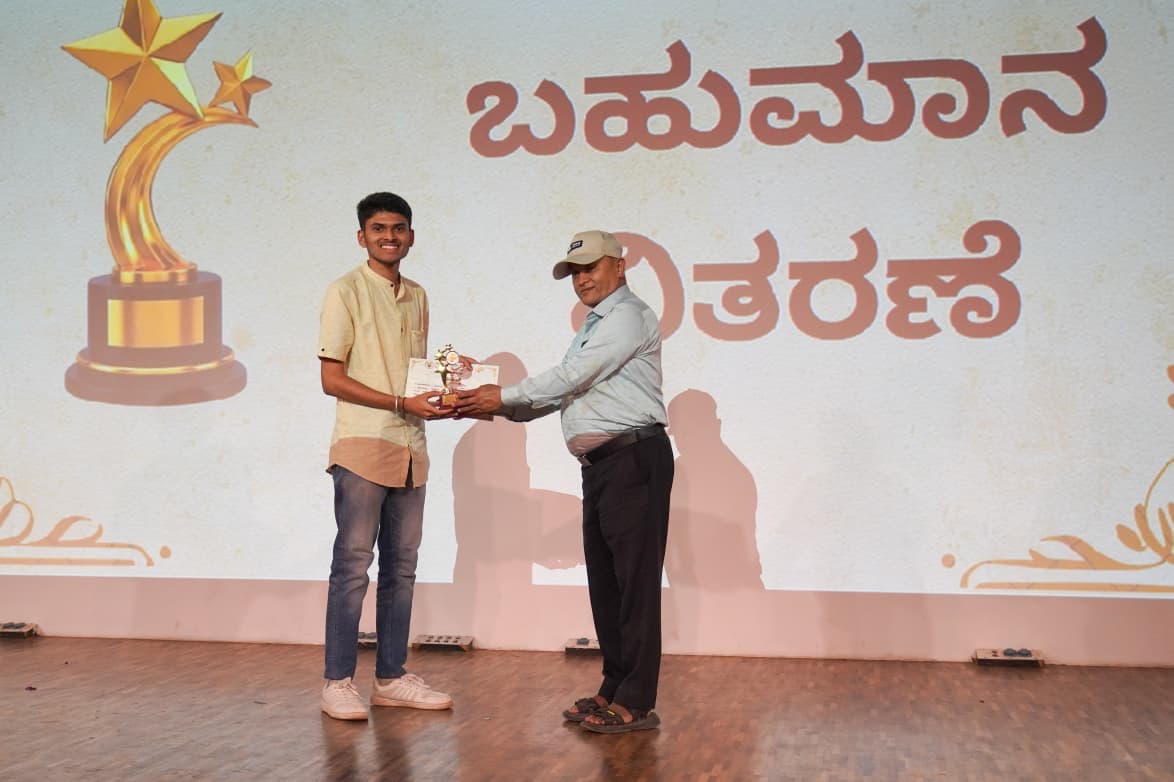
ANIKETHANA 2026_MCC
02
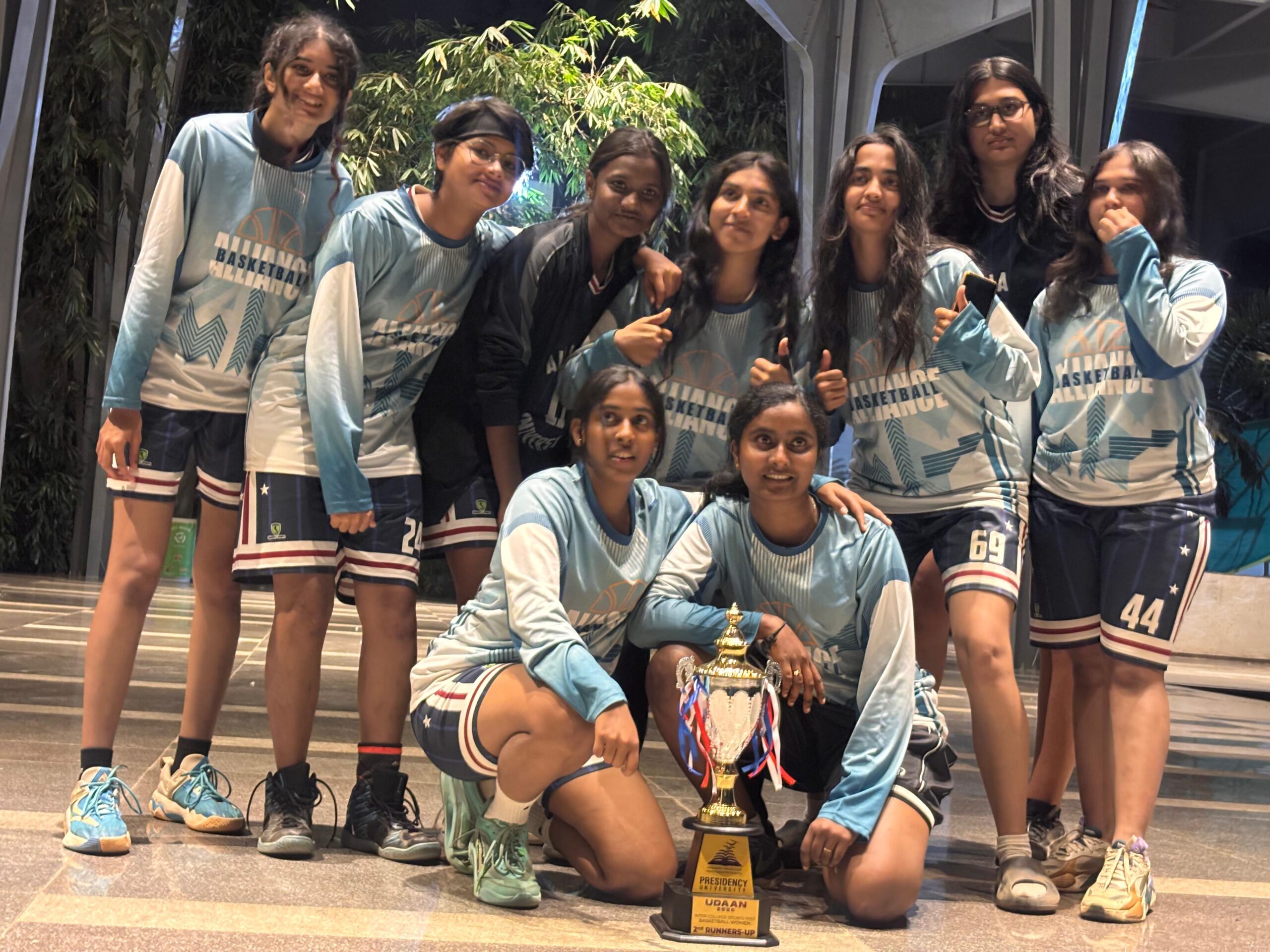
UDAAN Presidency University Womens Basketball team
03

IIIT-B-Runners-Basketball-Womens
04

Battle-Of-Bands-Amrita-University
05
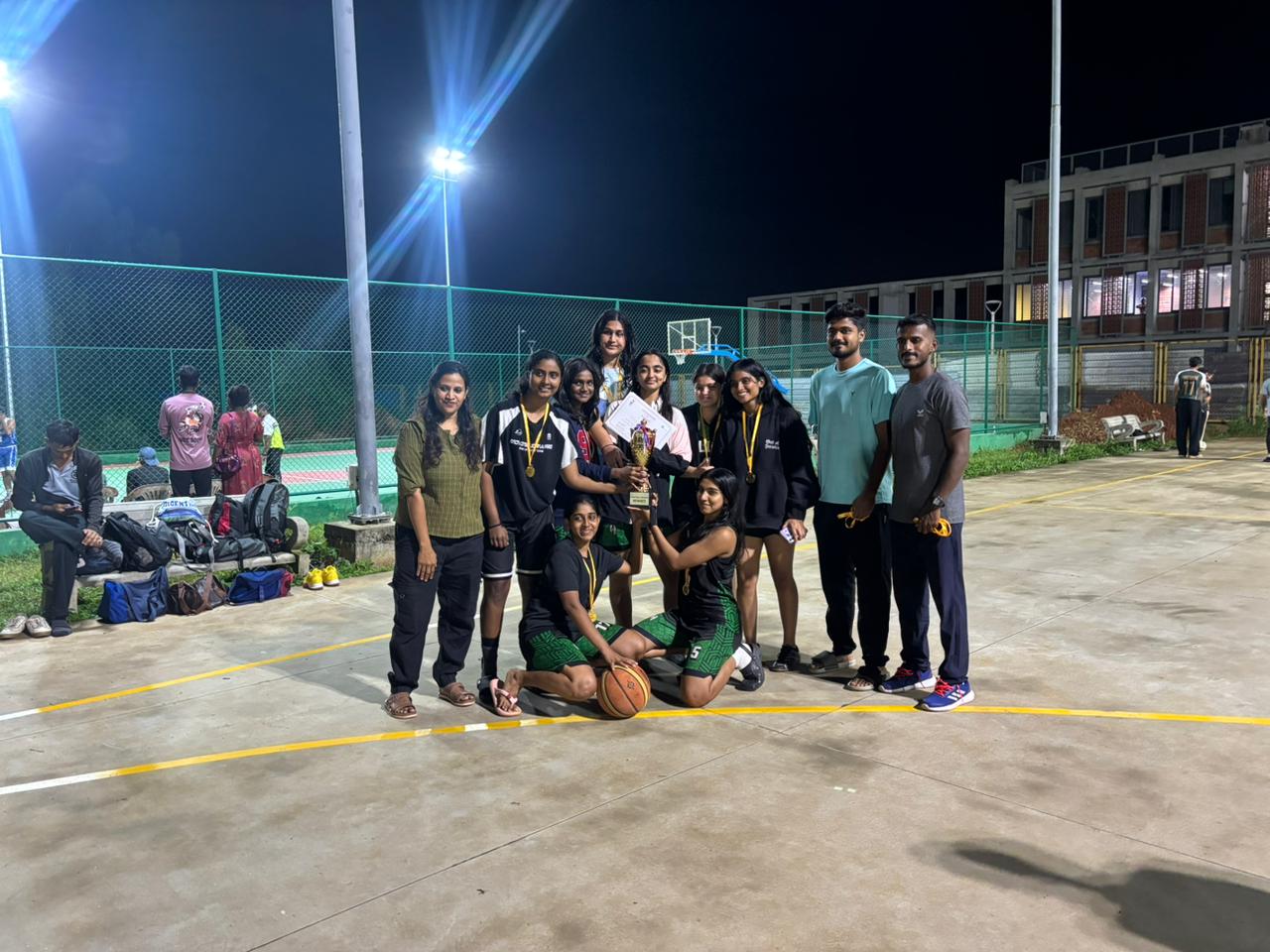
Azim-Premji-Basketball-Women
| Category | Eligibility Criteria |
|---|---|
| General | 10+2 or equivalent with minimum 50% marks OR Diploma with minimum 50% marks |
| Reserved Categories | 5% relaxation for SC / ST candidates |
Program duration
| Entry Level | Program Duration |
|---|---|
| Entry Level | Five Years / Ten Semesters |
ACCEPTED TEST SCORES
| Particulars | Indian Nationals | Foreign Nationals |
|---|---|---|
| Registration Fee | ₹25,000 | US$500 |
| 1st Installment | ₹3,25,000 | US$4,300 |
| 2nd Installment | ₹3,50,000 | US$4,800 |
| 3rd Installment | ₹3,50,000 | US$4,800 |
| 4th Installment | ₹3,50,000 | US$4,800 |
| 5th Installment | ₹3,50,000 | US$4,800 |
| Total Program Fee (Registration + All Installments) | ₹17,50,000 | US$24,000 |
| Category | Eligibility | Scholarship |
|---|---|---|
| Academic Excellence | Class X & XII ≥ 95% | 50% Tuition Fee Waiver |
| AUSAT Scholarship | AUSAT ≥ 90% + X & XII ≥ 75% | 50% Tuition Fee Waiver |
| AUSAT Scholarship | AUSAT ≥ 85% + X & XII ≥ 75% | 35% Tuition Fee Waiver |
| AUSAT Scholarship | AUSAT ≥ 70% + X & XII ≥ 75% | 25% Tuition Fee Waiver |
| AUSAT Freeship | AUSAT ≥ 90% + X & XII ≥ 60% | ₹50,000 One-time |
| AUSAT Freeship | AUSAT 80–89.99% + X & XII ≥ 60% | ₹25,000 One-time |
| CUET Scholarship | CUET ≥ 90% | 30% Tuition Fee Waiver |
| CUET Scholarship | CUET 80–89.9% | 20% Tuition Fee Waiver |
| CUET Scholarship | CUET 70–79.9% | 15% Tuition Fee Waiver |
| Program-Specific Merit | UCEED Score ≥ 200 + X & XII ≥ 70% | 35% Tuition Fee Waiver |
| Program-Specific Merit | UCEED Score ≥ 150 + X & XII ≥ 70% | 25% Tuition Fee Waiver |
| Program-Specific Merit | NIFT Rank 1–3000 + X & XII ≥ 65% | 35% Tuition Fee Waiver |
| Program-Specific Merit | NIFT Rank 3001–6000 + X & XII ≥ 65% | 25% Tuition Fee Waiver |
| Program-Specific Merit | NIFT Rank 6001–7500 + X & XII ≥ 65% | 15% Tuition Fee Waiver |
| Program-Specific Merit | NID DAT Percentile ≥ 90 + X & XII ≥ 70% | 50% Tuition Fee Waiver |
| Program-Specific Merit | NID DAT Percentile 85–89.99 + X & XII ≥ 70% | 35% Tuition Fee Waiver |
| Program-Specific Merit | NID DAT Percentile 80–84.99 + X & XII ≥ 70% | 25% Tuition Fee Waiver |
| Special Merit | X & XII ≥ 90% | 50% Tuition Fee Waiver |
| Special Merit | X & XII ≥ 80% | 30% Tuition Fee Waiver |
| Special Merit | X & XII ≥ 70% | 25% Tuition Fee Waiver |
| Category-Based | SC / ST ≥ 70% | 20% Tuition Fee Waiver |
| Category-Based | Differently-Abled ≥ 50% | 50% Tuition Fee Waiver |
| Category-Based | Defence / Paramilitary ≥ 70% | 15% Tuition Fee Waiver |
| Category-Based | International-Level Player ≥ 50% | 100% Tuition Fee Waiver |
| Category-Based | National-Level Player ≥ 50% | 50% Tuition Fee Waiver |
| Category-Based | Domicile ≥ 70% | 5% Tuition Fee Waiver |
| Steps | Description |
|---|---|
| Step 1 | Submit Online Application |
| Step 2 | Pay Application Fee — ₹1000 (US$50 for foreign nationals) |
| Step 3 | Appear for AUSAT – Alliance University Scholastic Aptitude Test |
| Step 4 | Personal Interview assessment |
| Step 5 | Selection based on overall profile & performance |
Living Spaces That Inspire Belonging
EXPLORE OUR HOSTELS
Comfort, safety, and community form the foundation of campus living. Our residential halls are thoughtfully designed to create a sense of belonging—offering a welcoming environment where students can study, unwind, and build lifelong friendships.

Separate hostels
for boys and girls
Student-friendly
common areas
Spacious rooms
(single, double, or triple occupancy)
Dedicated wardens
and support teams

Industrial Collaborations
Lorem ipsum dolor sit amet, consectetur adipiscing elit. Fusce sapien risus, gravida vitae ornare vel, interdum sed orci. Aenean hendrerit ipsum semper mi ultricies facilisis. Fusce iaculis, mauris sed imperdiet cursus, orci ipsum sagittis leo, sed vehicula velit ante bibendum tellus. Mauris tincidunt venenatis diam sed fringilla.
Real Stories, Real Impact
FACULTY
STUDENT
Alliance is a great place to learn because of its professional approach in educational as well as other activities likes sports. There is a great friendly and calm atmosphere helping individuals perform at their full potentials.

Abhijit Roy
Branch: Bachelor of Business Administration Bachelor of Law (Honors)
Batch: 2017-22
Alliance University is the right choice if you’re looking for an amazing environment with interesting study options. The professors here believe in practical learning and right from the very first year, students are encouraged to join internship programmes and participate in various extracurricular activities. Alliance University encourages its students to participate in sports events and other cultural events.

Pritee Dey
Branch: B.B.A. LL. B. (Hons.)
Batch: 2017-22
My five years at Alliance School of Law, have taught me things that goes beyond the books and helped me imbibe knowledge and broadened my horizons in terms of vocational learning and research training. Moreover, the dedication of the Office of Career Advancement and Networking (CAN) in building corporate relationships facilitates a lot of reputed organizations to recruit students for internships and placements. The immense support and guidance that I received from the faculty and Office of CAN during studies helped me to turn into a true professional and secure a job as an Officer (Legal) at one of the most well-known private sector banks of India.

Saumil Nigam
Branch: B.B.A. LL. B. (Hons.)
Batch: 2014-19
Alliance University is the best university, and I have had a great experience here. It gives me a lot of theory and experience learning. I hope I will learn more and more from this university in the coming days.

Kanika Singh Solanki
Branch: Bachelor of Business Administration Bachelor of Law (Honors)
Batch: 2022-27

Mahak Mishra
Branch: Bachelor of Business Administration Bachelor of Law (Honors)
Batch: 2022-27
Alliance School of Law is one of the best law colleges currently in India. It has been approved by the Bar Council of India, which is a testimony to its authenticity and standard of education.

Baggi Sri Kamal
Branch: Bachelor of Business Administration Bachelor of Law (Honors)
Batch: 2021-2026
After a lot of research and personal reflection I decided to pursue a career in law and serve the country. After appearing for the LSAT exam, I was selected in multiple renounced institutions including Alliance University. The state-of-the-art infrastructure, students from various diverse backgrounds, high quality accommodation and excellent teaching quality are the reasons I chose Alliance education. The faculty are extremely approachable. The care each member has shown towards my well-being is what makes Alliance a home away from home.

Krishna Chaitanya
Branch: B.B.A. LL. B. (Hons.)
Batch: 2021-26
Alliance University is best in terms of studies as well as other activities. The faculties here are highly experienced in their respective areas. The competitive environment is very encouraging. The course pattern is uniquely designed to ensure all subjects are accommodated in a comfortable way. The faculty encourages student participation in various activities within and outside the university. The Office of Career Advancement and Networking is committed to help us individually with grate career opportunities provided it terms of internship and placement.

Sakshi Nathani
Branch: B.B.A. LL.B. (Hons.)
Batch: 2018-23
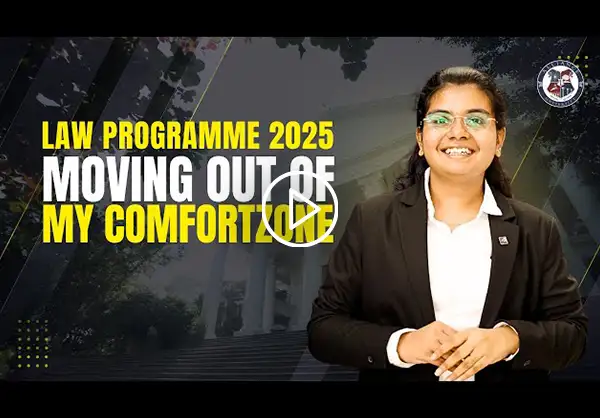
SASHMITHA S S

Jayananthini T
SASHMITHA S S
Bachelor of Business Administration Bachelor of Law (Honors)
Bachelor of Business Administration Bachelor of Law (Honors)
Everything You Need to Know
What is the difference between B.B.A. LL. B. and B.A. LL. B. Hons.?
While a B.B.A. LL.B. (Hons.) emphasises business-related courses and corporate law, a B.A. LL.B. (Hons.) focuses on liberal arts combined with legal studies. Alliance University’s B.B.A. LL.B. (Hons.) programme offers students the opportunity to graduate with dual specialisations.
How many subjects are there in B.B.A. LL. B. Hons.?
The programme spans ten semesters and includes five core subjects along with several non-core subjects, including placement training.
Can I do law without appearing for CLAT?
Yes. Students who have not appeared for CLAT can take the Alliance University Common Law Aptitude Test (ACLAT) followed by an online personal interview for admission.
Which are some of the top recruiters who hire B.B.A. LL. B. (Hons.) graduates?
Top recruiters include Trilegal, Wadhwa & Wadhwa, Khaitan & Co., Fox & Mandal, Cyril Amarchand Mangaldas (CAM), HSBC Bank, and several NBFCs.
What are the eligibility criteria for admission to B.B.A. LL. B. (Hons.)?
Applicants must have a minimum of 50% aggregate marks (45% for SC/ST) from a recognized Board or Council, along with the required diploma qualifications from an AICTE-approved institution.
What kind of internships, moot courts, and industry exposure are provided?
Students receive internship opportunities with prominent attorneys, legal firms, the Supreme Court of India, and high courts. The Alliance Moot Court Society and Legal Service Clinic also help students build advocacy and research skills.
How does this course prepare students for judicial services, corporate law practice, or entrepreneurship?
The curriculum combines legal academics, business-related subjects, and practical skill development to prepare students for careers in judicial services, corporate law, and entrepreneurship.
How does Alliance University support students through legal research, corporate projects, and legal aid clinics?
Alliance University supports students through research centres, publications, corporate internships, live projects, and legal aid clinics that provide real-world legal exposure and community engagement.
Are scholarships available for B.B.A. LL.B. (Hons.) students at Alliance University?
Yes. Merit-based, category-based, and special scholarships are available for eligible students, including defence wards, athletes, differently abled students, and Karnataka domicile students.
How does the B.B.A. LL.B. (Hons.) at Alliance University prepare students for Bar Council exams?
The programme is recognised by the Bar Council of India and includes core legal subjects, moot courts, internships, legal clinics, and elective specialisations aligned with the All India Bar Examination (AIBE).
What is the average course fee for B.B.A. LL. B. (Hons.)?
For detailed information regarding the course fee structure, students can refer to the Admission Process Page.
What is the average salary package after completing B.B.A. LL. B. (Hons.)?
Students can receive packages up to 12 LPA in the corporate sector, while litigation opportunities generally range between 3–6 LPA depending on market standards and candidate profiles.
What is the duration and structure of the B.B.A. LL. B. (Hons.) programme?
The B.B.A. LL.B. (Hons.) programme at Alliance University is a five-year integrated course divided into ten semesters.
Can students pursue LL.M., MBA, or higher studies after this course?
Yes. Graduates can pursue higher studies such as LL.M., MBA, or specialised legal and business education after completing the programme.
What are the core subjects and specialisations in B.B.A. LL. B. (Hons.)?
The curriculum includes Financial & Management Accounting, Business Management & Statistics, IPC, CPC, Evidence, Contract & Family Law, Jurisprudence, and International Law.
What is the duration of the B.B.A. LL. B. (Hons.) program?
Five years full-time.
What is the eligibility criteria?
10+2 or equivalent with minimum required marks.
Does the program integrate business studies?
Yes. Core management, finance, marketing, and commerce domains are integrated.
Are internships included?
Yes. Students complete structured legal and business internships.
Are scholarships available?
Yes. Merit-based and inclusion scholarships are offered.
What career roles are available?
Corporate lawyer, legal consultant, compliance officer, business advisor, entrepreneur, policy analyst.
How does mentorship support students?
Faculty and industry experts mentor students through real-world corporate exposure.


Warning: Undefined variable $word_limit in /home/mkavnn8oi4g7/public_html/alliance-university/wp-content/themes/alliance_child/academics/core-components-tab.php on line 405
Warning: Undefined variable $word_limit in /home/mkavnn8oi4g7/public_html/alliance-university/wp-content/themes/alliance_child/academics/core-components-tab.php on line 409
Warning: Undefined variable $word_limit in /home/mkavnn8oi4g7/public_html/alliance-university/wp-content/themes/alliance_child/academics/core-components-tab.php on line 410
Deprecated: array_slice(): Passing null to parameter #2 ($offset) of type int is deprecated in /home/mkavnn8oi4g7/public_html/alliance-university/wp-content/themes/alliance_child/academics/core-components-tab.php on line 410
The Social Internship is a cornerstone of the undergraduate experience, designed to cultivate a deep sense of civic responsibility and empathetic leadership. By moving beyond the classroom, students engage directly with grassroots realities, bridging the gap between academic theory and the practical challenges faced by marginalized communities.
Core Objectives:
The program aims to transform students from passive learners into active contributors to society. Key objectives include:
a) Empathy & Value Creation: Developing a firsthand understanding of social disparities and building personal value systems rooted in service and respect.
b) Grassroots Exposure: Gaining insight into the complexities of rural and urban social issues, including inequality, environmental sustainability, and human rights.
c) Professional Skill Integration: Applying communication, problem-solving, and organizational skills in a non-corporate, mission-driven environment.