Brief Overview

Bachelor of Business Administration – BBA – Aviation Management

The BBA in Aviation Management programme at Alliance University, offered in partnership with Cockpit Aviation, is designed for students who aspire to become future leaders in the aviation and airline industries.

Blending business management principles with aviation-specific training, the programme provides a comprehensive understanding of airport operations, airline management, aviation law, finance, and marketing.

As one of the top BBA Aviation colleges in Bengaluru, Alliance University combines academic rigour with hands-on learning. Students gain real-world exposure through internships, live projects, and field visits to leading aviation companies — ensuring they graduate industry-ready and globally employable.

Duration

3 Years / 6 Semesters

PEO (Program Educational Objectives)

PEO 1:
Graduates will acquire strong foundations in business administration and aviation management to effectively understand and manage airline, airport, and aviation-related organizations.

PEO 2:
Graduates will develop analytical, managerial, and decision-making skills to address operational, financial, logistical, and regulatory challenges in the aviation industry.

PEO 3:
Graduates will demonstrate professional ethics, leadership qualities, communication skills, and teamwork required for responsible managerial roles in the global aviation sector.

PEO 4:
Graduates will engage in lifelong learning and adapt to emerging trends in aviation such as digital transformation, sustainability, aviation analytics, and global regulatory frameworks.

PSO (Program Specific Outcomes)

PSO 1:
Apply domain-specific knowledge in airline operations, airport management, aviation safety, cargo logistics, and aviation law to solve real-world aviation management problems.

PSO 2:
Analyze aviation business data and apply modern tools such as analytics, digital platforms, and emerging technologies to improve operational efficiency and customer experience.

PSO 3:
Demonstrate industry readiness through internships, industry immersion projects, and capstone projects aligned with airline, airport, and aviation service organizations."

PO (Program Outcomes)

PO1: Apply knowledge of management, economics, accounting, and aviation fundamentals to solve business problems.
PO2: Analyze operational and managerial issues in aviation using quantitative and qualitative techniques.
PO3: Design effective business strategies and operational plans for aviation organizations.
PO4: Conduct research and investigations using appropriate methodologies and data analysis tools.
PO5: Use modern business and digital tools, including analytics, for aviation management applications.
PO6: Understand legal, regulatory, ethical, and societal responsibilities in aviation practices.
PO7: Apply principles of sustainability, safety, and environmental responsibility in aviation operations.
PO8: Demonstrate professional ethics and responsible managerial behavior.
PO9: Work effectively as an individual and as a member or leader of multidisciplinary teams.
PO10: Communicate effectively with stakeholders through reports, presentations, and professional interactions."

Curriculum Structure

Year 1
Semester-wise Syllabus
  • Principles of Management
  • Introduction to Aviation Industry
  • Business Communication and Aviation English
  • Fundamentals of Accounting and Economics
  • Marketing Principles and Practices
  • Environmental Studies
Year 2
Semester-wise Syllabus
  • Airport Operations and Ground Handling
  • Airline Management and Route Planning
  • Aviation Safety and Security Management
  • Aviation Law and Regulatory Framework (DGCA, IATA, ICAO)
  • Financial Management in Aviation
  • Business Analytics and MIS
Year 3
Semester-wise Syllabus
  • Airline Marketing and Customer Relations
  • Aviation HR and Leadership Skills
  • Cargo and Logistics Management
  • Airline and Airport Finance
  • Strategic Management in Aviation
  • Internship / Capstone Project
Courses
Introduction to Aviation Industry
Airline & Airport Management
Air Cargo & Logistics Management
Aviation Law & Regulations (ICAO / DGCA)
Aviation Safety & Security
Airport Operations & Management
Airline Finance & Revenue Management
Aviation Marketing
Aviation Risk Management & Insurance
Advanced Airline Network & Fleet Planning
Sustainable Aviation & ESG Frameworks
Aviation Policy & Global Regulatory Affairs
Leadership in Aviation Organizations
A. Air Cargo & Supply Chain Management
Focuses on air cargo operations, logistics planning, supply chain optimization, and global trade practices
Prepares students for roles in cargo terminals, logistics firms, and freight forwarding organizations.
B. Aviation Digital Transformation & E-Commerce
Covers digital technologies, e-commerce platforms, data-driven decision-making, and digital innovation in aviation business models.
C. Advanced Aviation Analytics & AI (Honors Track)
Introduces analytics, AI tools, and predictive modeling for airline operations, pricing, demand forecasting, and strategic planning.
D. Airport Commercial Management & Non-Aeronautical Revenue
Focuses on revenue generation through retail, real estate, advertising, and passenger experience management at airports.
Courses
Digital Marketing – Aviation branding, customer engagement, and online marketing strategies
Foreign Trade – International trade procedures relevant to air cargo and logistics
Business Analytics – Data analysis for business decision-making
Aviation Tourism – Aviation’s role in tourism development
Cabin Crew Management – In-flight service management and passenger handling
Dissertation

Capstone Project

The Capstone Project is an industry-linked, application-oriented project undertaken in the final phase of the programme. Students work on real aviation problems in collaboration with airlines, airports, or aviation service providers.

Capstone Outcomes

Application of theoretical knowledge to real-world aviation challenges

Development of problem-solving, analytical, and research skills

Exposure to industry practices and professional work culture

Preparation for employment or higher studies

COURSE OF INDEPENDENT STUDY

Independent Study

Components Minor Project – Aviation Case Study Field Visits to Airports / Airline Operations Internship I & II (Airline / Airport / Aviation Industry) Industry Immersion Project (Honors Track) These components ensure continuous industry exposure, bridging the gap between classroom learning and professional practice.

View More
INDUSTRIAL COLLABORATIONS

Industrial Collaboration

Alliance University’s partnership with MH Cockpit Aviation ensures that students gain practical industry experience alongside academic learning.

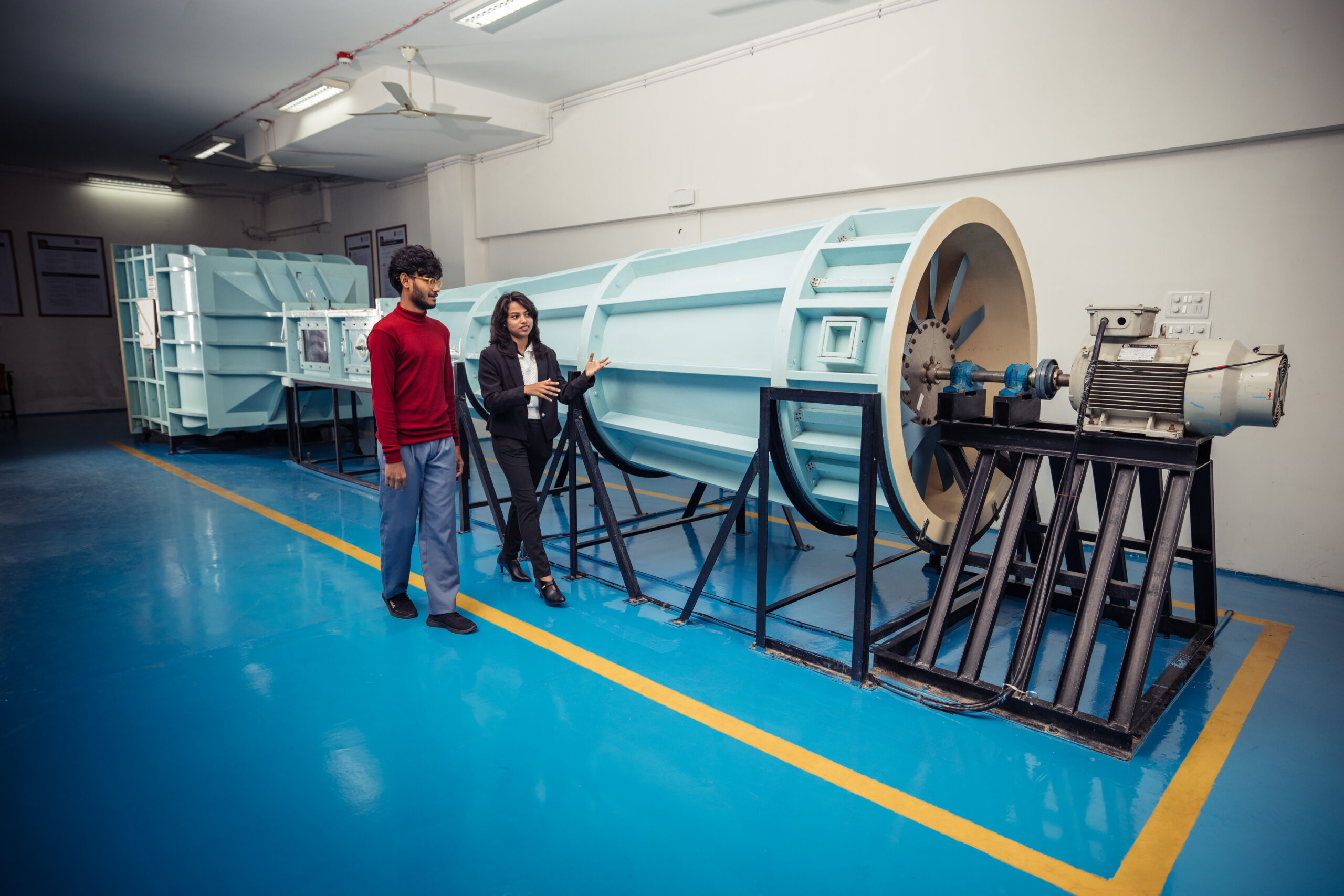
Simulation training using advanced flight and airport operations simulators to understand aviation processes.
Live aircraft familiarization on aircraft systems, cockpit controls, and auxiliary power units.
Industrial visits to major airports, airlines, and aerospace facilities to observe real-time operations.
Internships through MH cockpit’s extensive network in India and abroad providing exposure to global aviation practices.
Workshops and guest lectures from senior professionals and industry experts in the aviation and airline sectors.

ACTIVITY POINTS

Activity Points

The curriculum integrates activity-based learning through:

Workshops on communication, soft skills, and digital tools

Case studies and simulations

Industry visits and live projects

Internships and research-based honors thesis

Activity points encourage holistic development, leadership skills, professional ethics, and industry readiness among students.

Student

Being a B.Tech. IT student at Alliance University has been a truly engaging experience. The program combines strong fundamentals with practical exposure through projects and hands-on learning, helping me understand real-world applications of technology. With supportive faculty and a collaborative environment, I’ve been able to grow in both skill and confidence, preparing me for a career in IT.

Aashish Kumar
Batch: 2022-26

My journey as a B.Tech CSE student at Alliance University has been both challenging and rewarding.The curriculum builds strong fundamentals while emphasising hands-on learning through projects and real-world applications. With approachable faculty and opportunities to collaborate and participate in technical events, learning goes beyond the classroom. Overall, the experience is shaping me into a confident engineer and problem-solver.

Nawneet Raj
Batch: 2022-26

My experience pursuing B.Tech in Computer Science Engineering at Alliance University has been highly rewarding. The program offers a well-balanced curriculum that combines strong theoretical foundations with practical exposure.The faculty members are knowledgeable and supportive, always encouraging us to explore beyond the classroom. Through projects, hackathons, and hands-on learning, I was able to develop both technical and problem-solving skills.The campus environment and infrastructure further enhance the learning experience. Overall, this journey has played a significant role in shaping my skills and preparing me for a career in the tech industry.

Anurag Kumar Prajapati
Batch: 2023-2027

As a final-year BBA student at Alliance University, my journey has been both enriching and transformative.The program strengthened my business fundamentals while giving me hands-on exposure through projects and discussions, building my confidence in decision making. With supportive faculty, collaborative peers, and opportunities beyond academics, I’ve grown both personally and professionally.
Alliance University has shaped me into a confident, career-ready individual.

ARYAN AGARAHARI
Batch: 2023-2026

What I’ve experienced at Alliance University is not just learning business, but learning how to think like one.
Through projects, presentations, and exposure to areas like marketing and finance, I’ve built both clarity in thought and confidence in expression.
The environment constantly encourages you to take initiative, and that has made all the difference in preparing me for the professional world.

Rajnandini Malewadi
Batch: 2025-2029

As a second-year B. Design student at Alliance University, my journey so far has been about learning to think beyond just creating.
The program has helped me move from focusing only on aesthetics to understanding users, context, and the purpose behind every design decision. The learning environment encourages us to question ideas, experiment freely, and develop our own design perspective, while also building discipline in how we execute and present our work.
In these two years, I’ve grown not just in skills, but in the way I approach problems  and that’s what makes studying design at Alliance University truly meaningful.

Anannya Jain
Batch: 2024-2029

Looking back, what stands out about my time at Alliance University is not just what I’ve learned, but how I’ve learned to think.
The shift from simply studying law to questioning, interpreting, and forming my own perspective has been gradual but meaningful. Through moots, discussions, and real-world context, learning has felt active and engaging.
Today, I find myself more confident in how I analyze, articulate, and respond — and that, more than anything else, defines my journey here.

Chelana Sanklecha
Batch: 2021- 2026

Somewhere along my journey at Alliance University, BBA LL.B. became less about subjects and more about understanding connections.
The blend of business and law, through case studies and practical exposure, has helped me think more holistically and respond with clarity.
What I take forward is not just knowledge, but confidence in how I analyse and approach situations.

Shreya Pragadh
Batch: 2023-2028

Studying B.A. LL.B. at Alliance University has changed how I think, more than anything else.
It’s not just about learning law  it’s about learning how to question it. From analysing cases to participating in moots, every experience pushes you to form your own perspective rather than rely on ready-made answers.
What makes this journey meaningful is the environment. The faculty guide without restricting, and the constant exchange of ideas keeps you engaged.Somewhere along the way, you realise you’re not just studying law you’re learning how to think with clarity, argue with purpose, and respond with responsibility.

ISHITA SHUKLA
Batch: B.A.LL.B.

My MBA experience at Alliance University has been highly enriching. The program combines strong academics with practical exposure, helping me develop critical thinking and leadership skills. Supportive faculty, industry-oriented curriculum, and various learning opportunities have prepared me well for a successful career.

Palak Jain
Batch: 2025-2027

My experience pursuing BCA in Artificial Intelligence and Machine Learning at Alliance University has been both challenging and enriching. The program has helped me build a strong foundation in programming, data science, and analytical thinking. Through projects, assignments, and practical exposure, I have gained valuable skills that prepare me for real-world technology and AI applications.

Anuska Ghosh
Batch: 2024-2028

Alliance University has helped me build a strong foundation in computer science and technology. The program combines theoretical knowledge with practical learning through projects and assignments. I have gained exposure to areas like programming, data structures, machine learning, NLP, and AI related concepts so far. The collaborative environment and supportive faculty encourage continuous learning and problem-solving. Overall, it has been a valuable step in developing my technical and analytical skills.

Vishesh Gurnani
Batch: 2024-2028
FAQS

Everything You Need to Know

No, but a BBA in Aviation provides strong industry exposure and understanding of airline operations, safety, and Aviation Business Management.
BBA in Aviation Management is an undergraduate program combining business administration with aviation-specific knowledge, covering airport operations, airline management, safety, logistics, and regulations. Graduates are prepared for managerial roles in airlines, airports, and aviation service companies.
Yes. Students from any stream with 10+2 from a recognised board are eligible to pursue a BBA in Aviation Management with a minimum of 50% marks.
The BBA Aviation Management program at Alliance University emphasises industry exposure, internships, case studies, airport visits, and expert-led sessions, offering a practical understanding of aviation beyond a traditional BBA.
To qualify for the BBA in Aviation Management, students must complete 10+2 on a recognised board. Minimum percentage requirements vary by university. There is generally no mandatory requirement for mathematics or science, making the program accessible to students from diverse academic backgrounds.
A BBA in Aviation Management is a three-year program, divided into six semesters, including core management subjects, aviation modules, internships, and industry projects.
Graduates can work as airport operations executives, airline ground operations managers, customer service managers, cargo coordinators, safety officers, and aviation administrators. Opportunities exist across airlines, airports, MRO companies, aviation logistics firms, and private aviation service providers.
Yes, students participate in internships, airport visits, airline projects, and simulation-based learning, gaining hands-on experience in aviation operations and management.
Domestic and international airlines, airport operators, ground handling agencies, cargo companies, and aviation service firms recruit BBA Aviation graduates. Recruiters include airlines, private airport operators, aviation logistics providers, and travel management organisations.
A regular BBA focuses on general business management, while a BBA Aviation Management integrates aviation laws, airport operations, airline economics, and safety management. Aircraft-focused modules and industry exposure make this program more specific and career-oriented for the aviation sector.
Yes, Alliance University offers placement assistance through its career development cell. Students receive internship support, industry networking opportunities, resume training, and interview preparation, which helps them secure roles in airlines, airports, and aviation-related organisations.
The program combines management fundamentals with aviation operations, safety, and regulatory knowledge. Practical exposure, internships, industry projects, and expert lectures ensure students are job-ready for airline, airport, and aviation service company roles upon graduation.
Yes, students from non-commerce backgrounds are eligible to join the BBA Aviation Management program. The curriculum starts with core business fundamentals, ensuring that students from arts or science streams can comfortably adapt and succeed in aviation management studies.
Yes, the BBA Aviation Management curricula include exposure to emerging areas like drone operations, aviation analytics, airport digitisation, and cargo logistics. These modules prepare students for evolving aviation industry demands and technology-driven roles.
After graduating with a degree in BBA Aviation Management, students can pursue an MBA in Aviation Management, an MBA in Logistics or Operations, an M. Sc. in Aviation-related fields, international aviation certifications, or professional pilot training toward specialised aviation and airline management programs.