Brief Overview

Bachelor of Arts (Honours) - BA (Honours) - Media Studies

\\\\\\\\\\\\\\\\\\\\\\\\\\\\\\\"Discover the perfect blend of conceptual knowledge and technical expertise in media production, media management, and media analysis, under the guidance of top-notch academics and industry professionals.\\\\\\\\\\\\\\\\\\\\\\\\\\\\\\\"

The Department of Media Studies (Journalism & Multimedia Production) offers a comprehensive BA program tailored for students aspiring to succeed in the exciting world of journalism, film, television, and digital media. Our program provides a unique blend of conceptual knowledge and technical skills, equipping students with the tools they need to excel in dynamic roles within the media industry. With a strong emphasis on research methodologies and staying abreast of the ever-evolving nature of media technologies and practices, our program prepares students for a wide range of job opportunities in film production, television broadcasting, social media management, content creation, and media analysis.

Are you passionate about storytelling, filmmaking, journalism, or digital media? The Department of Media Studies offers an exciting and future-ready programme that combines strong conceptual knowledge with cutting-edge technical skills, preparing you for a vibrant career in the ever-evolving media world.

Here, you will explore the full spectrum of media including Journalism, Animation, VFX, Filmmaking, Audio-Visual Production, Digital Communication, International Communication, Public Policy, Media Design, Storytelling, and Digital Art, opening doors to diverse and rewarding professional pathways.

From day one, you will engage with key texts and ideas in media history and theory, sharpening your ability to think critically about how media shapes societies locally and globally. You will also apply what you learn through real-world projects and community outreach, building both your confidence and your impact.

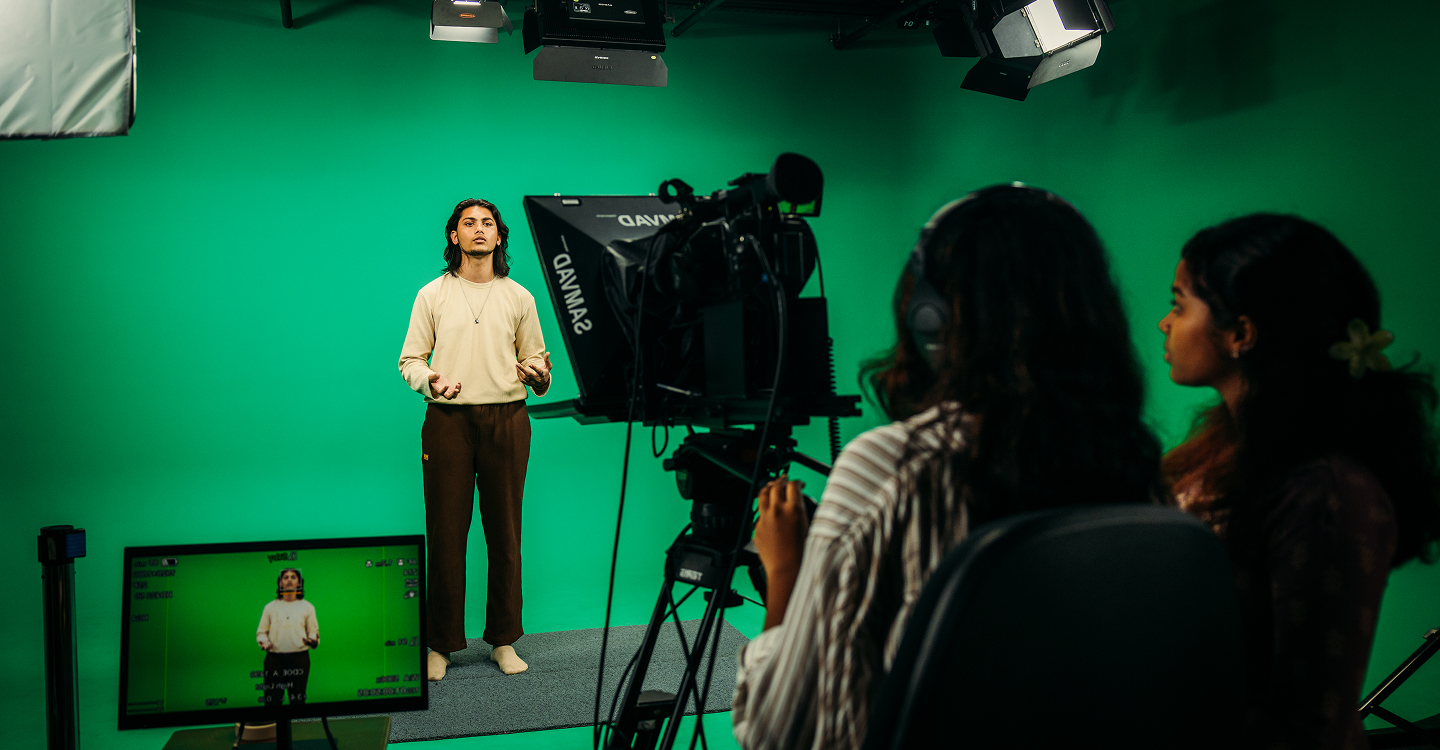
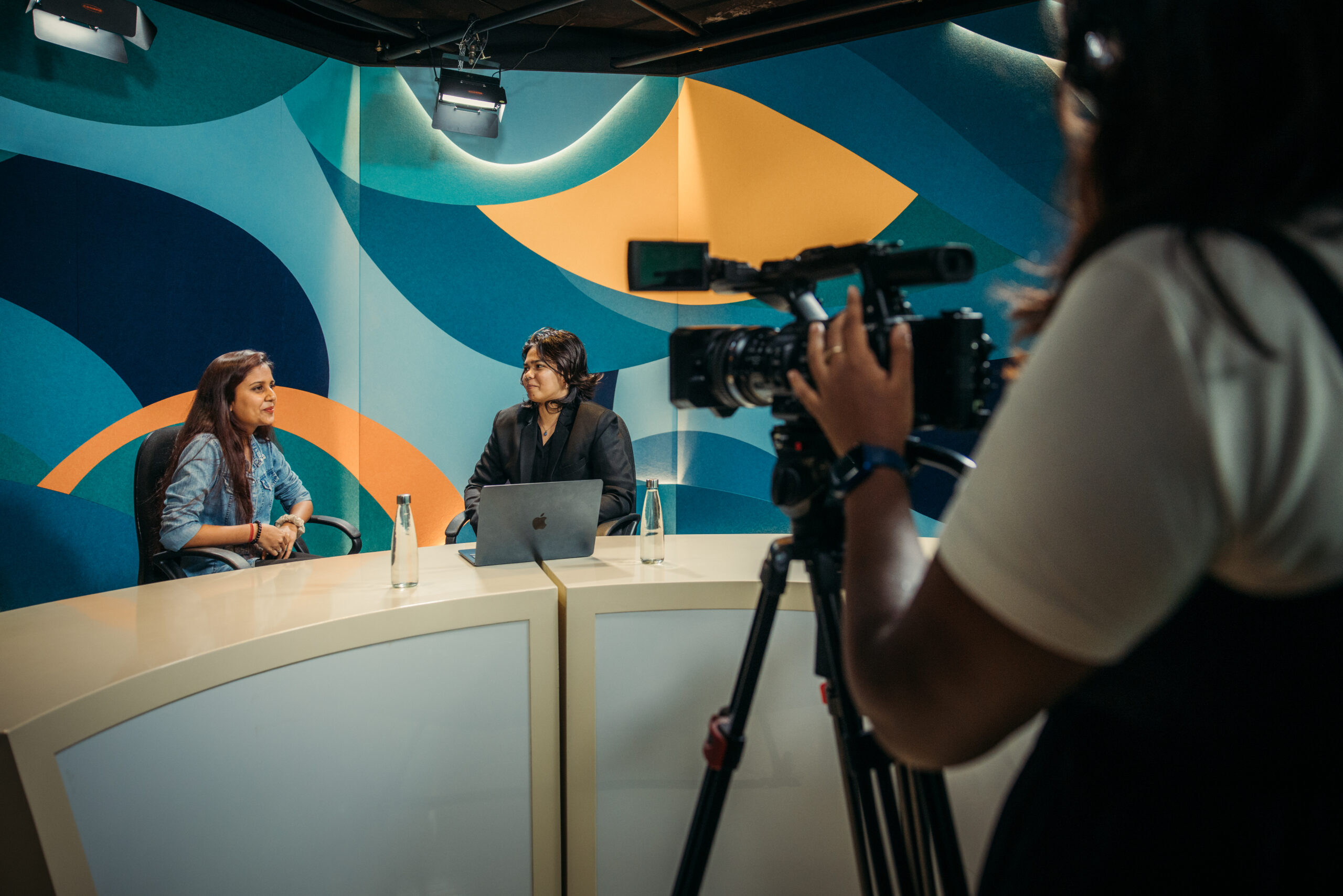
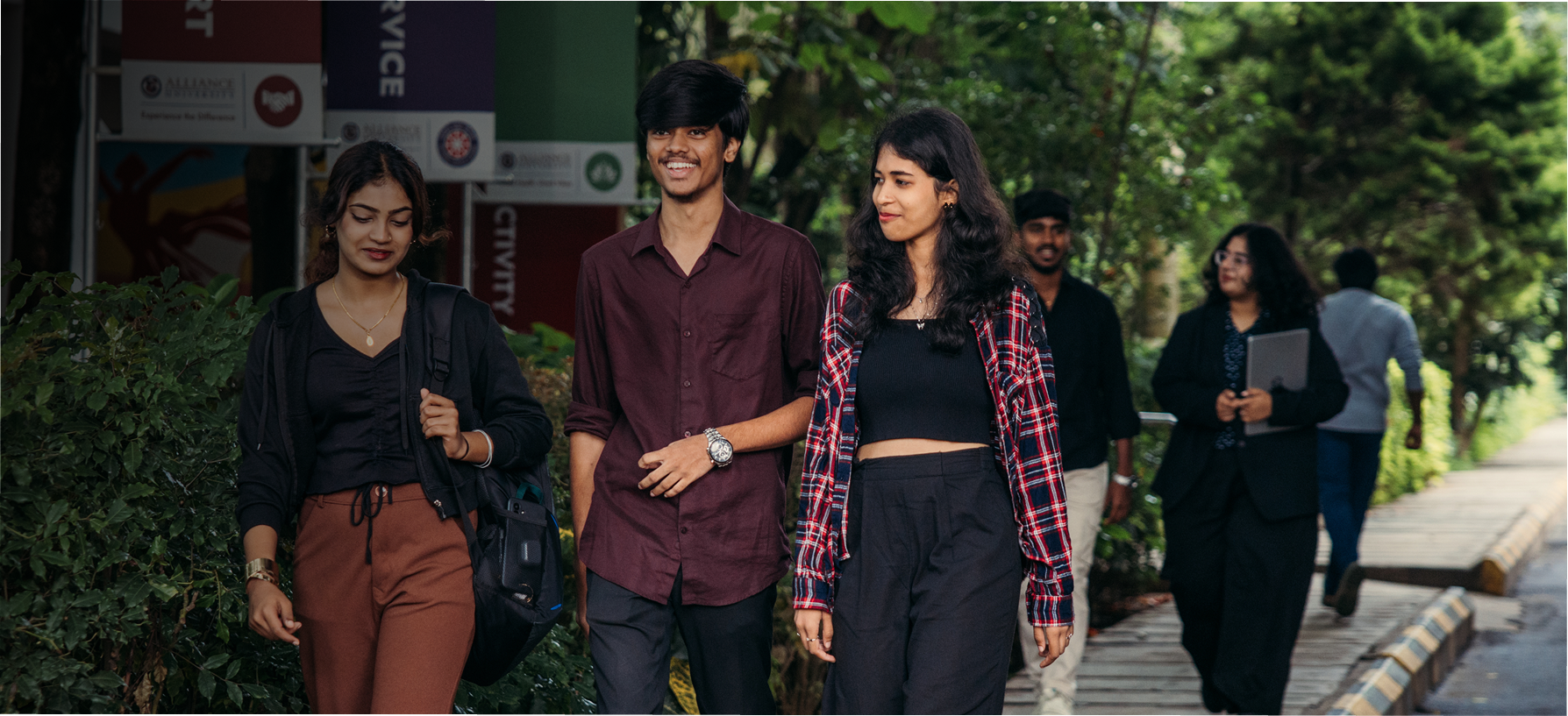
Our state-of-the-art media lab and studio, managed entirely by students, offers a truly immersive experience, simulating a fast-paced professional environment. You will participate in documentary filmmaking, newspaper and magazine production, podcasting, social media management, film and literary festivals, and even run film clubs and debate societies. Regular field visits and top-tier internships further enrich your learning journey.

If you are looking to gain practical experience, deepen your understanding, and make your mark in the media industry, the Department of Media Studies is your launchpad. Join us to turn your creative vision into reality and become a media professional who not only understands the world but also helps shape it.

PEO (Program Educational Objectives)

PEO 1:

Professional Excellence & Innovation

Graduates will establish themselves as successful professionals who integrate disciplinary depth, modern analytical and digital tools, and interdisciplinary perspectives to solve complex, real-world problems and deliver evidence-based, context-sensitive solutions in interconnected professional environments.

PEO 2:

Leadership & Effective Communication

Graduates will be advance into leadership or influential collaborative roles, demonstrating the versatility to work in diverse, multicultural, and interdisciplinary teams, and the ability to communicate, negotiate, and persuade effectively across audiences, platforms, and contexts.

PEO 3:

Ethical Practice & Societal Impact

Graduates will act with professional integrity, applying ethical reasoning, social responsibility, and sustainability-oriented thinking to champion inclusive, community-engaged, and socially responsive initiatives that create measurable and meaningful impact at local, national, and global levels.

PEO 4:

Lifelong Learning & Career Adaptability

Graduates will proactively adapt to the evolving global, technological, and socio-political landscapes by pursuing continuous learning, advanced education, and skill enhancement, enabling career mobility, resilience, and long-term professional relevance.

PSO (Program Specific Outcomes)
PO (Program Outcomes)

PO1:

Interdisciplinary & Multidimensional Understanding

Integrate knowledge, theories, and methodologies from multiple disciplines, cultural contexts, and analytical traditions to interpret, connect, and critically analyze complex local, national, and global phenomena in an interconnected world.

PO2:

Critical Thinking, Analysis & Problem Framing/Solving

Critically evaluate diverse perspectives, question assumptions and power relations, synthesize complex information, and apply robust analytical frameworks to frame and solve problems effectively and develop innovative, evidence-based responses to real-world challenges.

PO3:

Research Design, Methods & Ethical Inquiry

Design and conduct rigorous, independent, and collaborative research using qualitative, quantitative, and mixed methods, demonstrating the ability to collect, interpret, and ethically assess evidence to generate meaningful academic and applied knowledge.

PO4:

Application, Practice & Experiential Learning

Apply theoretical knowledge to real-world contexts through internships, fieldwork, simulations, labs, and experiential projects that connect academic learning with industry, governance, and civil society.

PO5:

Ethical Reasoning, Justice & Responsibility

Demonstrate ethical judgment by critically assessing the social, political, and moral implications of actions and decisions, and by upholding values of integrity, inclusivity, justice, sustainability, and responsible citizenship in personal and professional life.

PO6:

Strategic, Digital & Multimodal Communication

Communicate complex ideas clearly, persuasively, and responsibly across written, oral, visual, and digital formats, tailoring messages effectively for diverse, interdisciplinary, and global audiences.

PO7:

Innovation, Initiative & Entrepreneurial Thinking

Exhibit creativity, adaptability, and initiative by identifying opportunities, navigating uncertainty, and designing innovative social, cultural, policy, or entrepreneurial solutions in dynamic socioeconomic environments.

PO8:

Collaboration, Leadership & Autonomous Practice

Work effectively as ethical collaborators and reflective leaders in diverse, multidisciplinary, and multicultural teams, while demonstrating self-directed learning, accountability, and autonomy in individual work.

PO9:

India in a Global & Comparative Perspective

Critically examine India’s historical, cultural, political, and socio-economic realities within comparative and global frameworks, applying contextual understanding to contemporary national and international debates.

PO10:

Civic Engagement, Democracy & Public Action

Participate actively and responsibly in civic and democratic life, demonstrating a sustained commitment to pluralism, dialogue, participation, and the advancement of the public good at local, national, and global levels.

PO11:

Self-Reflection, Well-Being & Personal Development

Develop self-awareness, emotional intelligence, and reflective capacity, balancing intellectual ambition with mental, emotional, and physical well-being to support resilient, ethical, and purposeful personal growth.

PO12:

Lifelong Learning & Intellectual Adaptability

Demonstrate intellectual curiosity and adaptability by embracing continuous learning, re-skilling, and reflective self-renewal, recognizing the evolving nature of knowledge, society, and professional life.


Curriculum Structure

Core
Semester-wise Syllabus
  • Media, Power & Culture
  • Film, Communication & Culture Industry
  • Reporting and Editing for Print, Broadcast, and the Web
  • Media Ethics, Policy and Regulation
  • Television & Digital Media Production
  • Advertising, Writing & Storytelling
  • Media, Polity & Legal System in India
  • Media, Economics and Management
  • New Media & Digital Journalism
  • Public Relations and Media Psychology
  • Communication, Public Policy & Sustainable Development Goals
Electives
Semester-wise Syllabus
  • Kannada Journalism
  • Photography & Visual Storytelling
  • Sports Journalism
  • Hindi Journalism
  • Fashion and Lifestyle Journalism
  • Sociological Theories & Contemporary Issues
  • International Communication and Global Media Politics
  • Data Journalism
Courses
BSc Computer Science
BSc Data Science
BSc Psychology
BFA Fine Arts
BA Economics
BA Literary & Cultural Studies
BA Media & Film Studies
BA Political Science
BA Sociology
Courses
International Relations
Philosophy
Mathematics
Physics
Chemistry
Courses
Governing the Metaverse: Digital Sovereignty and Virtual Politics
Experimental Drawing: Beyond Traditional Boundaries
The Art of Seeing: Fundamental of Visual Perception
Branding and Identity Design: Logos & Beyond
Digital illustration & Vector Art
Visual storytelling and Media Entrepreneurship
Podcasting and Immersive Audio Storytelling
Science Technology and Society (STS)
Community Engagement
Communicative English for the Workplace
Reading Popular Culture: Cinema, Comics, and Contemporary Media
Foundation of Economic Analysis
Indian Economy
Everyday mind: psychology in daily life
Psychology of interpersonal relationships
Human-computer interaction
Practical Ethics
Philosophy: An Introduction
Dissertation

Capstone Project

Undergraduate students in their fourth year may choose to pursue either a capstone project or a research dissertation for upto 12 credits. The key differentiator between the two will be that in the capstone project, students will be expected to associate with an industry/organization during the winter break, identify a real-world problem in consultation with the host Develop and implement solutions as part of the Capstone project. organization and develop and implement solutions as part of the Capstone project.

COURSE OF INDEPENDENT STUDY

Independent Study

Course of Independent study is an avenue where students may take-up a real-world problem and propose solutions to the same through rigorous research and/or experimentation. Those who opt for a CIS credit will be expected to ready a publication-worthy research finding through the guidance of a faculty supervisor. The School will publish their list of projects/topics annually and students may opt for one of these.

View More
INDUSTRIAL COLLABORATIONS

Industrial Collaborations

Lorem Ipsum

ACTIVITY POINTS

Activity Points

In addition to the list of activities in the guidelines, the school encourages students to participate in academic conferences, literary events, film festivals, art/theatre/video productions or departmental magazines for which activity points may be accorded upon the recommendations of the respective Heads of the Departments.

FACULTY
STUDENT

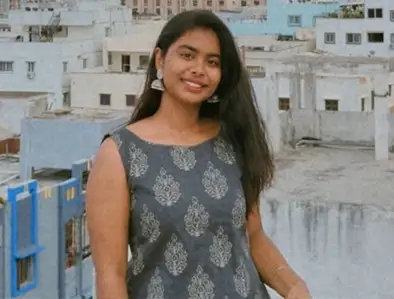
Since pursuing new studies at Alliance school of Liberal arts, I feel excited to learn about journalism. Exposure to foundation courses and research methodology makes me understand the value of learning about journalism within a liberal arts framework.

Rushali Gupta
Branch: Media Studies

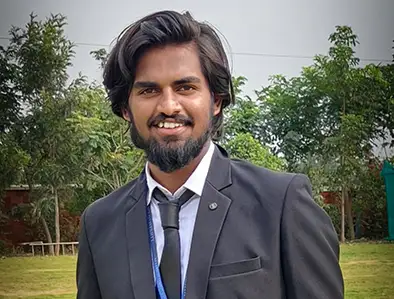
Attending Alliance has been a transformative experience, particularly in pursuing a degree in media studies. Through rigorous coursework and practical projects, I’ve gained a comprehensive understanding of media’s role in shaping society. This degree has equipped me with critical thinking skills, media literacy, and hands-on experience in various mediums, preparing me for a dynamic career in the ever-evolving media landscape. The interdisciplinary nature of media studies has broadened my perspective, allowing me to analyze media from cultural, historical, and ethical standpoints. Overall, my college experience in media studies has been invaluable, empowering me to navigate and contribute meaningfully to the media industry.

Jonathan S Mathew
Branch: BA (Hons.) - Journalism and Mass Communication

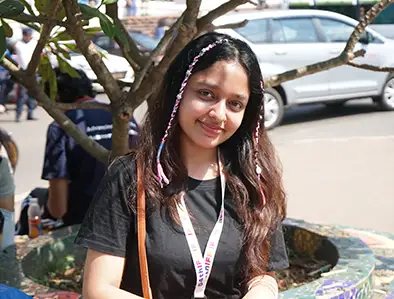
At Alliance School of Film and Media Studies, I have been actively involved in a research project on the History of the First Newspaper in Karnataka. Presently, our focus is on a newspaper production assignment as part of the course titled “Art of Communication.” Through engaging discussions and practical projects, I’ve come to appreciate the significant influence that media wields in shaping society, politics, and culture. Our school is equipped with state-of-the-art media labs, providing us access to cutting-edge technology that enhances our ability to work on various projects related to video production and design.

Ananyaa Rajat Agrawal
Branch: BA (Hons.) - Journalism and Mass Communication

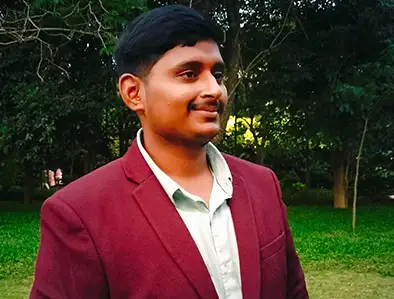
“As a Media Studies student, I am able to navigate the complex intersection of media, culture, and society with confidence. The interdisciplinary approach of the program allowed me to explore various facets of media, from traditional to digital platforms, preparing me for a dynamic career in the field.”

Gade Pavithra Reddy
Branch: BA (Hons.) - Journalism and Mass Communication

When I first came to Alliance University, I chose media studies as one of my electives. I had no idea that I was interested in media, but after studying that topic, my interest grew. Through media studies, I learned how to critically analyze content and use numerous platforms to successfully deliver messages. My media studies experience has been both empowering and enriching thanks to the professors here. As we have the media lab it gives us the means and technology to turn our ideas into reality, whether they be in filmmaking or journalism.

Sakshi Bansal
Branch: BA (Hons.) - Journalism and Mass Communication

“I chose to pursue a BA in Media Studies because of my passion for understanding the role of media in shaping public discourse and cultural narratives. The program provided me with the tools to critically analyze media texts and production processes, preparing me for a career in media production, journalism, or research.”

Thirumala Rajasekha Reddy
Branch: BA (Hons.) - Journalism and Mass Communication

“When I came to Alliance from Nepal, I had yet to decide on my second degree. I picked the media elective in my first semester on a whim, and it made me realize the interest I hold in the subject. I am currently in my 2nd year, and I am glad I went ahead with my decision to major in Media studies. Being surrounded by talented professors, I learned something new every semester. I wrote a research paper and contributed to the making of a documentary, and I intend to do many more in the future.”

Shalini Agrawal
Branch: BA (Hons.) - Journalism and Mass Communication

“In Media Studies program offered a perfect balance of theoretical knowledge and hands-on experience, empowering me to not only comprehend media phenomena but also to actively engage with them through creative projects and research.”

Pentela Karthikeya Chowdhary
Branch: BA (Hons.) - Journalism and Mass Communication
Program Eligibility Criteria

Eligibility Criteria

Alliance School of Liberal Arts follows a holistic admissions process. In addition to meeting the eligibility criteria, you should be a curious risk-taker and prepared to explore new fields of study, creative, empathetic and have a socio-cultural and environmental conscience (responsibility). You should have varied interests. Eligibility: Pre-University/Higher Secondary/10+2 Examination from any recognized Board or Council in any discipline Obtained at least 50% marks in the relevant subjects taken in standard 12 Valid entrance test score. The tests accepted are AUSAT, SAT, ACT and Pearson Undergraduate Entrance Exam You may visit our website for more information: Liberal Arts Undergraduate Programme, Alliance School of Liberal Ats, Alliance University.

STUDY ABROAD OPTIONS

Study Abroad Options

We have multiple partners internationally who offer semester exchanges, short-term immersion programs, higher education pathways, and so on. Most recently we have our students taking up these opportunities in US, , UK, Hong Kong, and Russia.

Learn More